

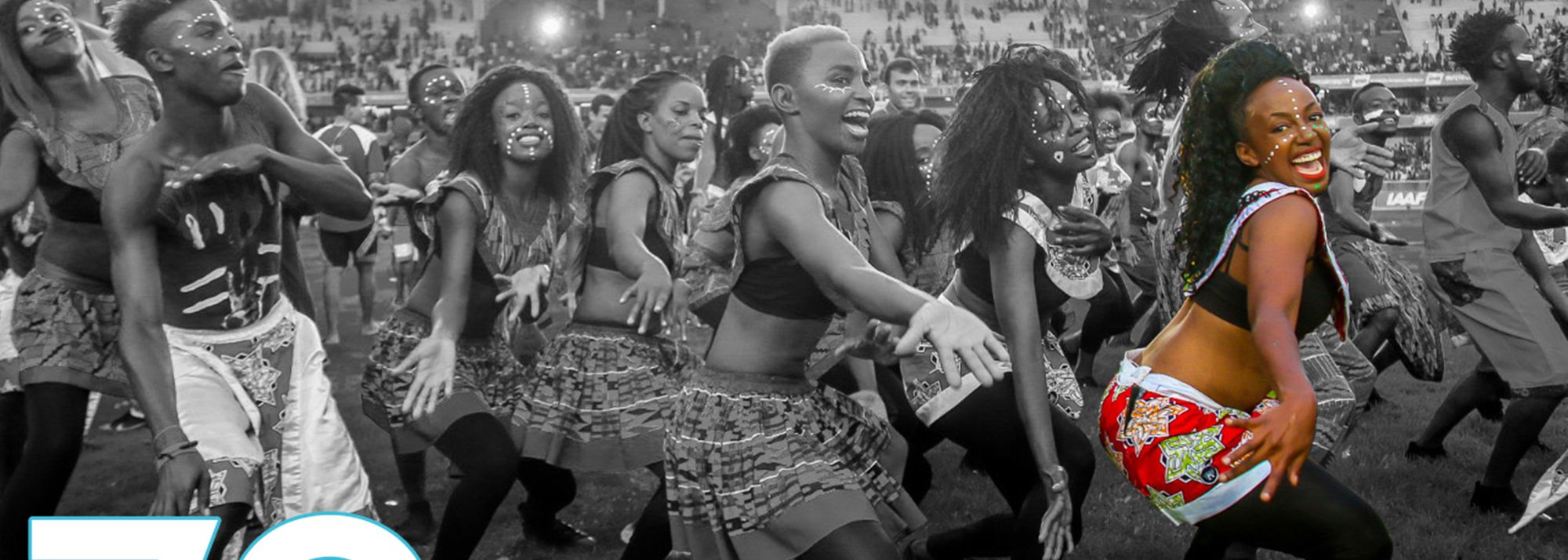


2 DAYS TO GO
By Mercy Namachanja
Aug 15, 2021
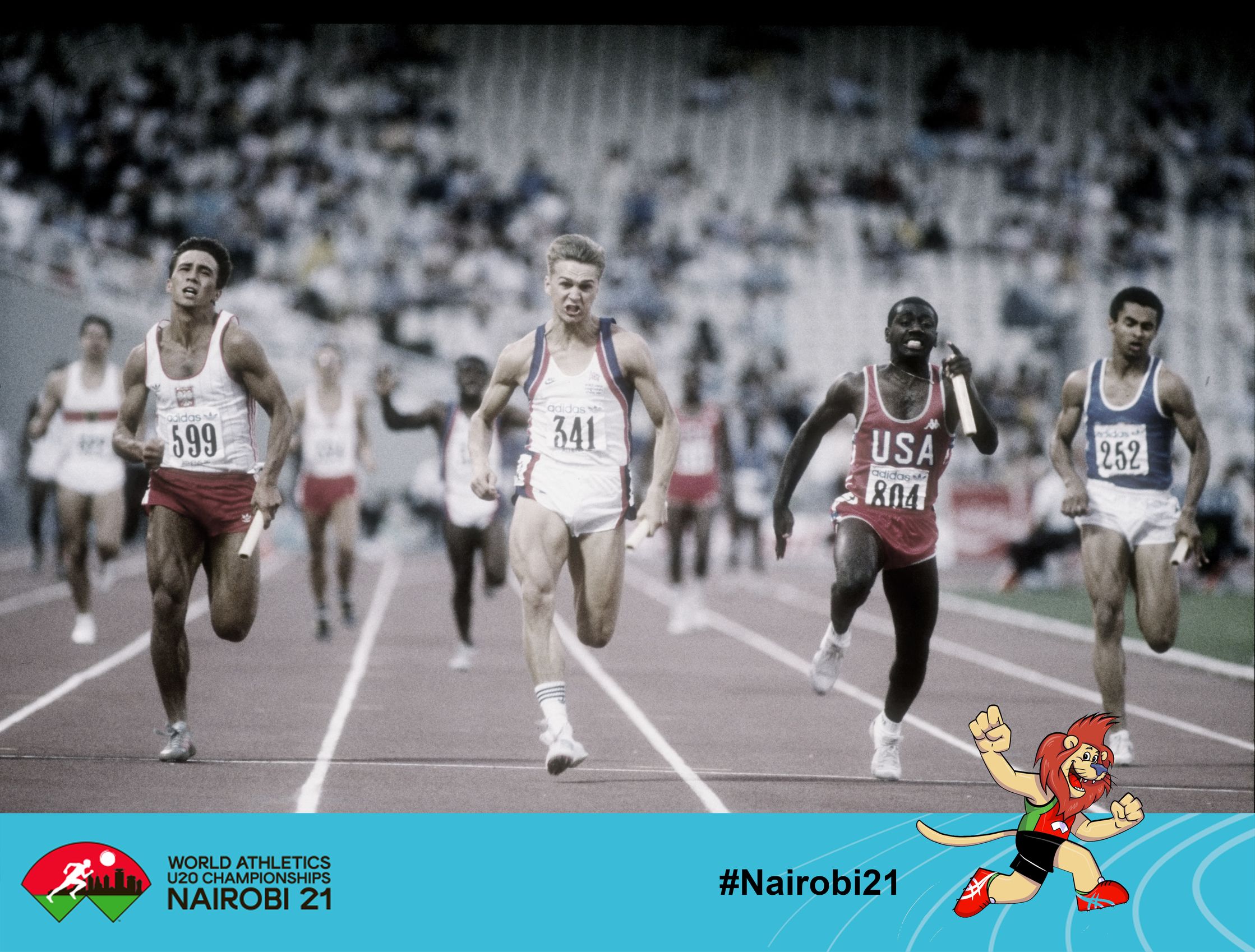
The World Athletics Championships are an international athletics competition held every two years and organized by World Athletics (formerly IAAF, International Association of Athletics Federations). The World Championships were founded in 1976 in response to the International Olympic Committee's decision to remove the men's 50 km walk from the 1976 Montreal Olympics' Olympic program, despite the fact that it had been a part of the games since 1932.
Instead, a month and a half after the Olympics, the IAAF elected to stage its own world championship event. It was the IAAF's first World Championships that were not part of the Olympic Games (traditionally the main championship for the sport). In 1980, a second limited event was organized, and the first championships were held in 1983, marking the official start of the tournament.
Olympic champions were also regarded reigning World champions until 1980. These championships were formerly held every four years until 1991, when they were moved to a two-year rotation.
The concept of an Athletics World Championships existed long before the competition's inaugural event in 1983. The International Association of Athletics Federations (IAAF) established in 1913 that the Olympic Games would serve as the World Athletics Championships. For more than 50 years, this was deemed enough until the late 1960s, when many IAAF members expressed a desire to host their own World Championships.
An Athletics World Championships separate from the Olympic Games was agreed in 1976 at the IAAF Council Meeting in Puerto Rico.
The IAAF Council awarded the inaugural tournament to Helsinki, Finland, after receiving bids from both Stuttgart, West Germany, and Helsinki, Finland. The competition will be held in the Helsinki Olympic Stadium in 1983. (where the 1952 Summer Olympics had been held).
The Global Championships in Athletics were first held in 1983 after two IAAF world championship competitions. The 1976 World Championships featured only one event: the men's 50-kilometer walk, which was deleted from the 1976 Summer Olympics Olympic program, prompting the IAAF to create their own competition.
Only two newly sanctioned women's events (400 meter hurdles and 3000 meter) were included in the 1980 World Championships, none of which were on the 1980 Summer Olympic program.
The competition has risen in size over time. A total of 1,300 athletes from 154 countries competed in 1983.
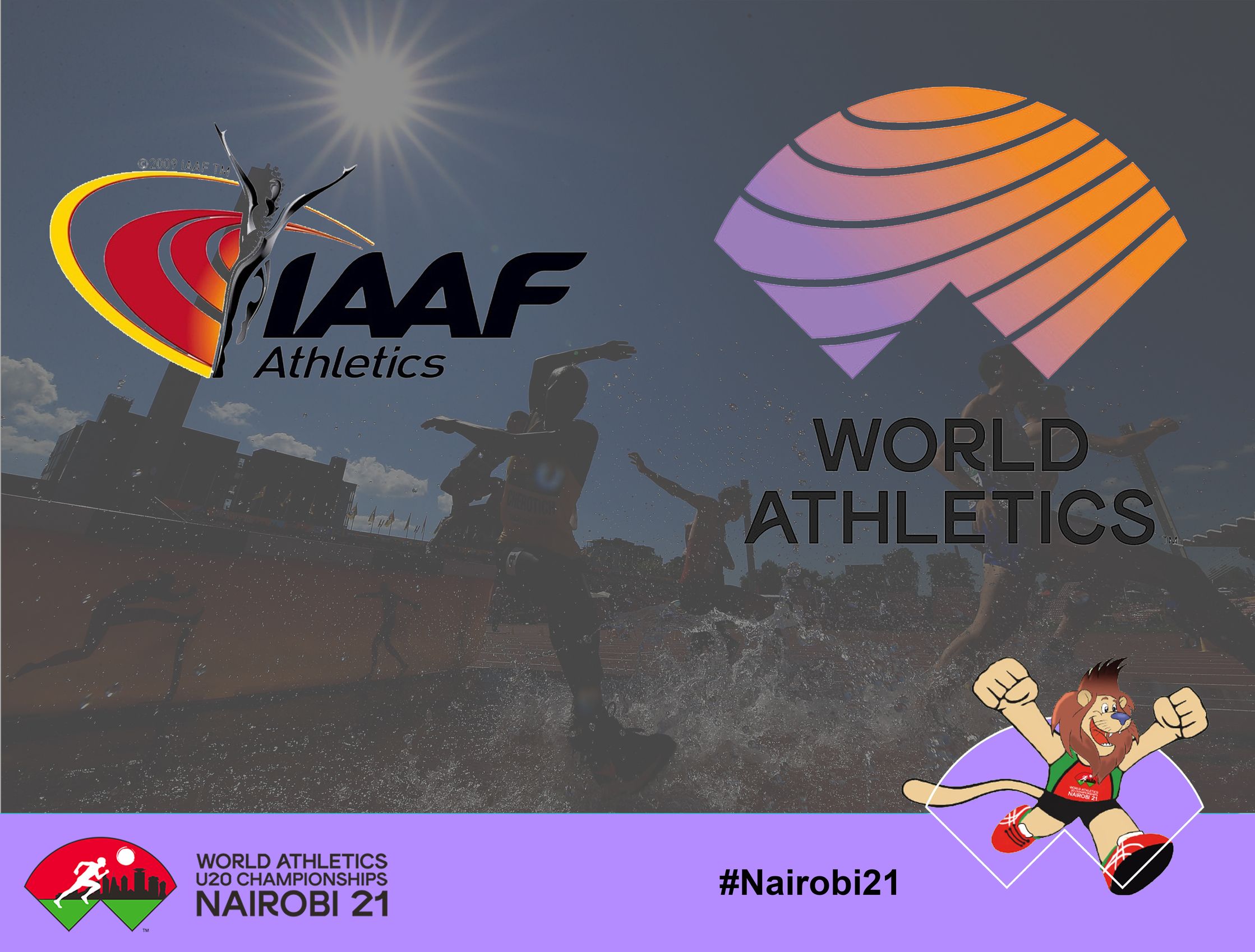
World Athletics, formerly known as The International Amateur Athletic Federation (from 1912 to 2001) and the International Association of Athletics Federations (from 2001 to 2019, both abbreviated as IAAF) are the international governing bodies for the sports of track and field, cross country running, road running, racewalking, mountain running, and ultra running, respectively.
Standardization of sports rules and regulations, recognition and management of world records, and the organization and sanctioning of athletics tournaments, notably the World Athletics Championships, are among its responsibilities. Sebastian Coe of the United Kingdom is the organization's president, having been elected in 2015 and re-elected unopposed in 2019 for another four years.
A president is in charge of World Athletics. There are 26 elected members on the World Athletics Council, including one president, four vice presidents (one senior), the presidents of the six area associations, two members of the Athletes' Commission, and 13 Council members.
The World Sports Congress, a biennial gathering of athletics officials that includes the Council, Honorary Members, and up to three representatives from each of the national member federations, elects each member of the Council for a four-year term. The Congress also elects chairpersons and members of committees that govern specialty ministries.
The Cross Country Committee, Race Walking Committee, Technical Committee, and Women's Committee are the four committees. In 2019, three new committees were formed: Development, Governance, and Competitions. The World Athletics Constitution lays out the governance framework, which can be changed by the Congress.
The World Athletics Council appoints a chief executive officer (CEO) who is responsible for expanding the sport's coverage and advancing the organization's business interests. This position was formed and amalgamated with the existing General Secretary position. Jon Ridgeon, a former athlete and businessman from the United Kingdom, was appointed to the position in December 2018. In 2016, Olivier Gers became the first official CEO/General Secretary, succeeding temporary CEO/General Secretary Jean Gracia.
Athletics, a sport that dates back to antiquity, has evolved over the centuries to become a vibrant, life-enhancing sport. Following the closing ceremony of the Olympic Games in Stockholm, Sweden, on July 17, 1912, delegates from 17 national athletics federations convened in Stockholm to form the International Amateur Athletic Federation (IAAF) as the international governing organization for track and field athletics.
Athletics underwent major changes over the past ten decades, reflecting the wider world's political and socioeconomic evolution. To reflect the growth of a professional sporting world, the IAAF changed its name to the ‘International Association of Athletics Federations' in 2001 which did not exist in 1912, and then to 'World Athletics' in 2019.
World Athletics was established to meet the demands for a global regulatory body, a competition program, standardized technical equipment, and an official world record list. All of these conditions are still in place now.