

Sustainable Events Management:
Sustainable Procurement - Best Practice Guidance & Examples

Electric vehicles at the Salzburg Marathon (© Salzburg Marathon)
This page includes:
- Best practice examples from events
- Best practice guidance for organisers from the World Athletics Sustainable Events Management System, and
- additional resources
Attention event organisers:
- Did you know that our Sustainable Events Resource Centre has 13 templates available to help with your sustainability planning and reporting?
- What are some of the ways that you have incorporated sustainability into your event's procurement policy and practices? Let us know so we can share them here with others. Get in touch at sustainability@worldathletics.org.
Last updated: 16 December 2025


Sustainable Procurement - Best Practice Examples
02 August 2025
Using recycled materials at the Berlin Half
All catering contracts at the 2025 Generali Berliner Halbmarathon required suppliers to use reusable containers, deposit systems, waste separation and to refrain from using disposable and portion packaging.
Organisers encouraged participants to use hydration backpacks, which could be filled at water refill stations, to lower the number of water cups needed.
Nevertheless, the cups were made of recycled material. Rather than runners leaving cups at the side of the road, large waste bins were placed along the course for runners to leave them after drinking.
At the end of the race, runners were offered optional foil blankets made from recycled material to stay warm. Despite being used, the blankets could also be recycled and returned directly to the manufacturer as a raw material to make new foil blankets.
15 June 2025
Sourcing locally at the Genève Marathon
Vegetarian meals produce five to 14 times less greenhouse gas emissions than a meat-based meal.
That is why at the 2025 Generali Geneve Marathon event village, organisers created an exhibitor charter requiring all food trucks to offer at least one vegetarian menu option. The event also partnered with Genève Terroir to promote and showcase the products and producers of the canton of Geneva.
Since 2012, runners have been supplied with Geneva tap water, up to 1,000 times more environmentally friendly than bottled water. Cardboard cups and plastic cups provided by Services Industriels de Genève, the event’s official water and energy partner, are used at refreshment stations instead of PET bottles to reduce waste.
The marathon was powered on Vitale Vert electricity composed of low carbon energy certified "naturemade star" and produced thanks to more than 600 solar installations in the canton of Geneva.
16 December 2024
Developing a responsible procurement toolkit for the Cardiff Half Marathon
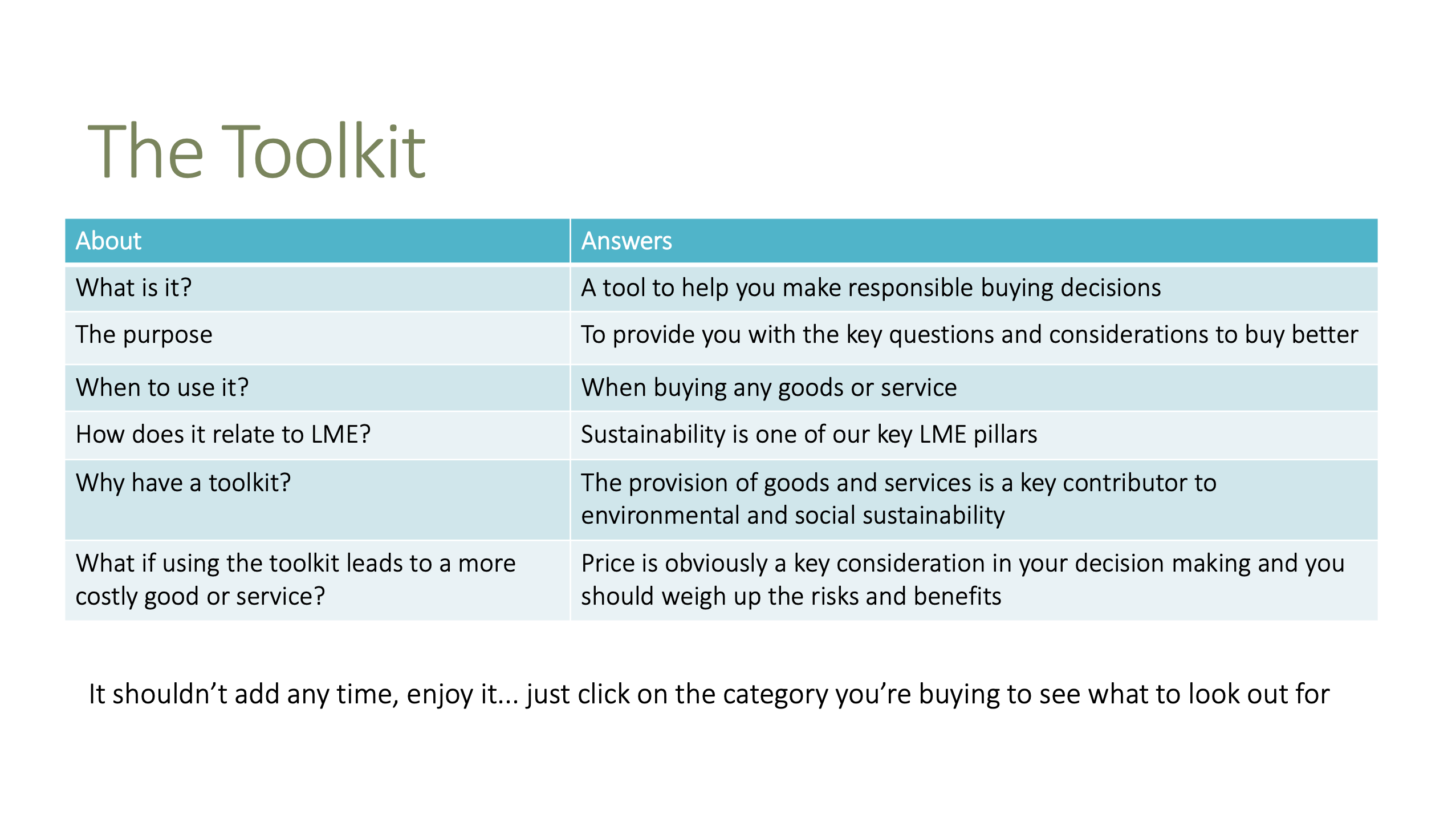
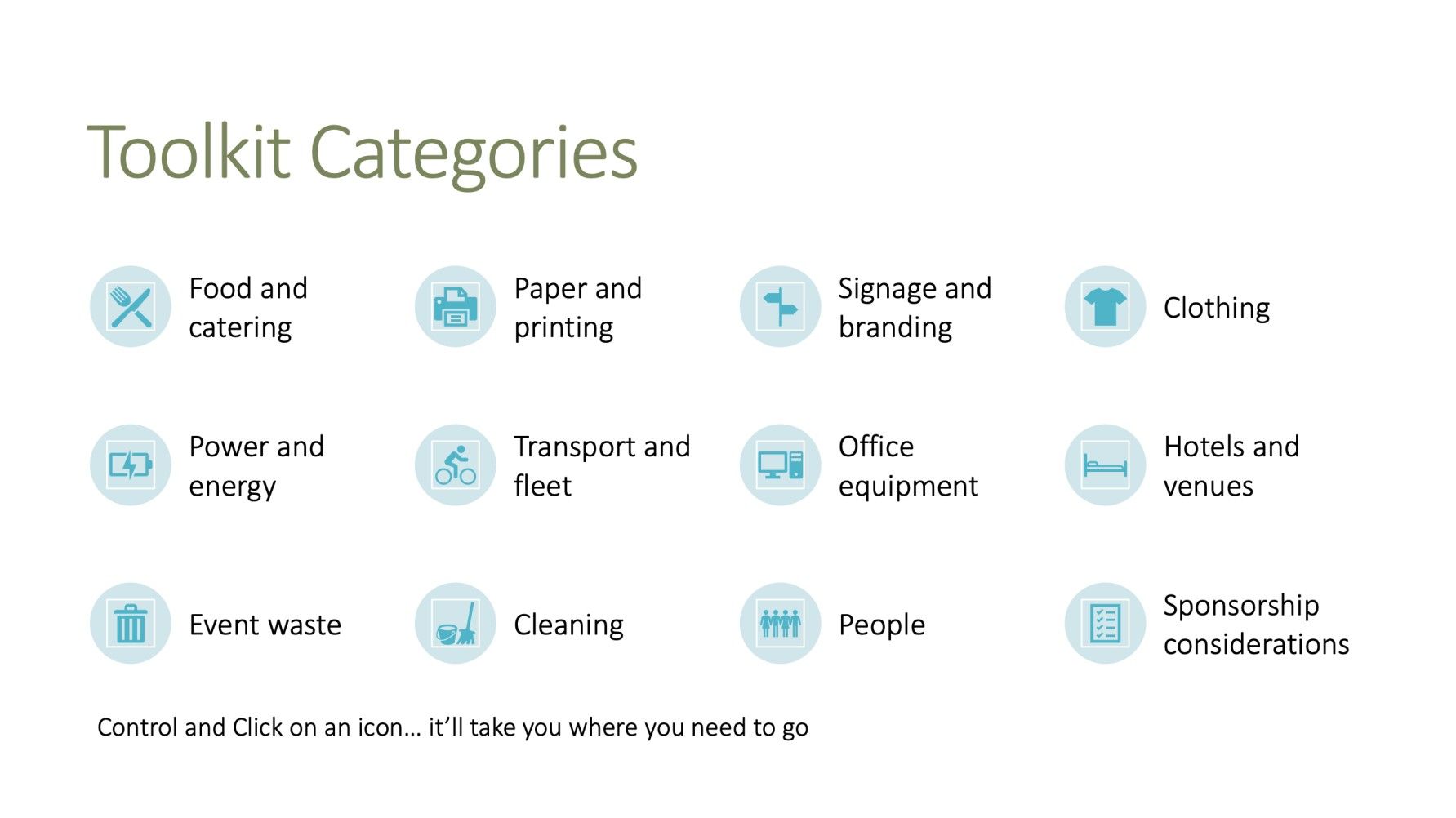
Run 4 Wales, organiser of the 2024 Principality Cardiff Half Marathon, co-developed a dynamic Responsible Procurement Toolkit as part of its Green Action Plan, highlighting environmental and social governance factors when tendering for services and choosing suppliers.
The toolkit was a collaboration among members of the Mass Participation Sports Organiser's sustainability group, which was set up during the Covid-19 pandemic.
 |
 |
01 November 2024
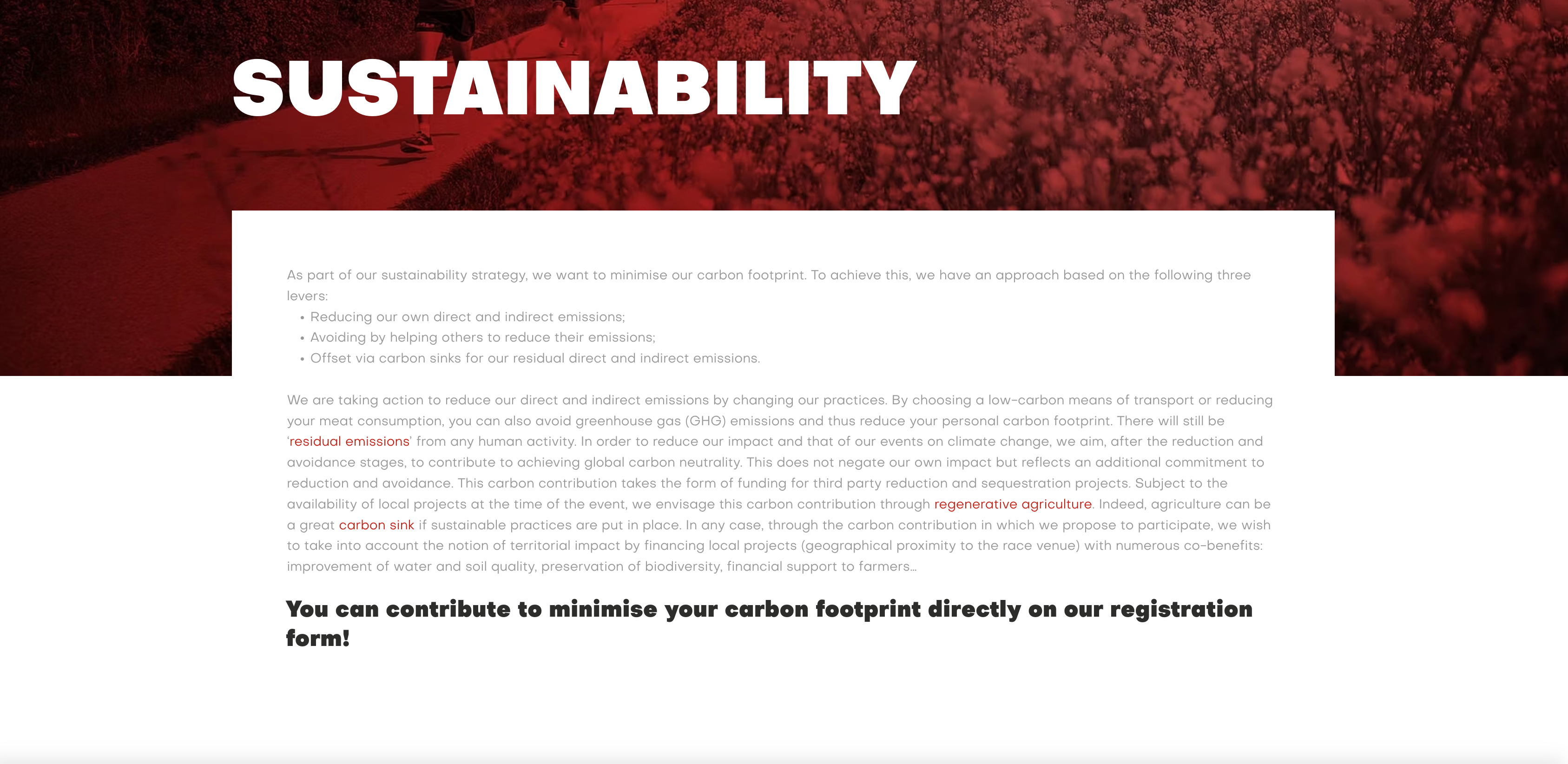
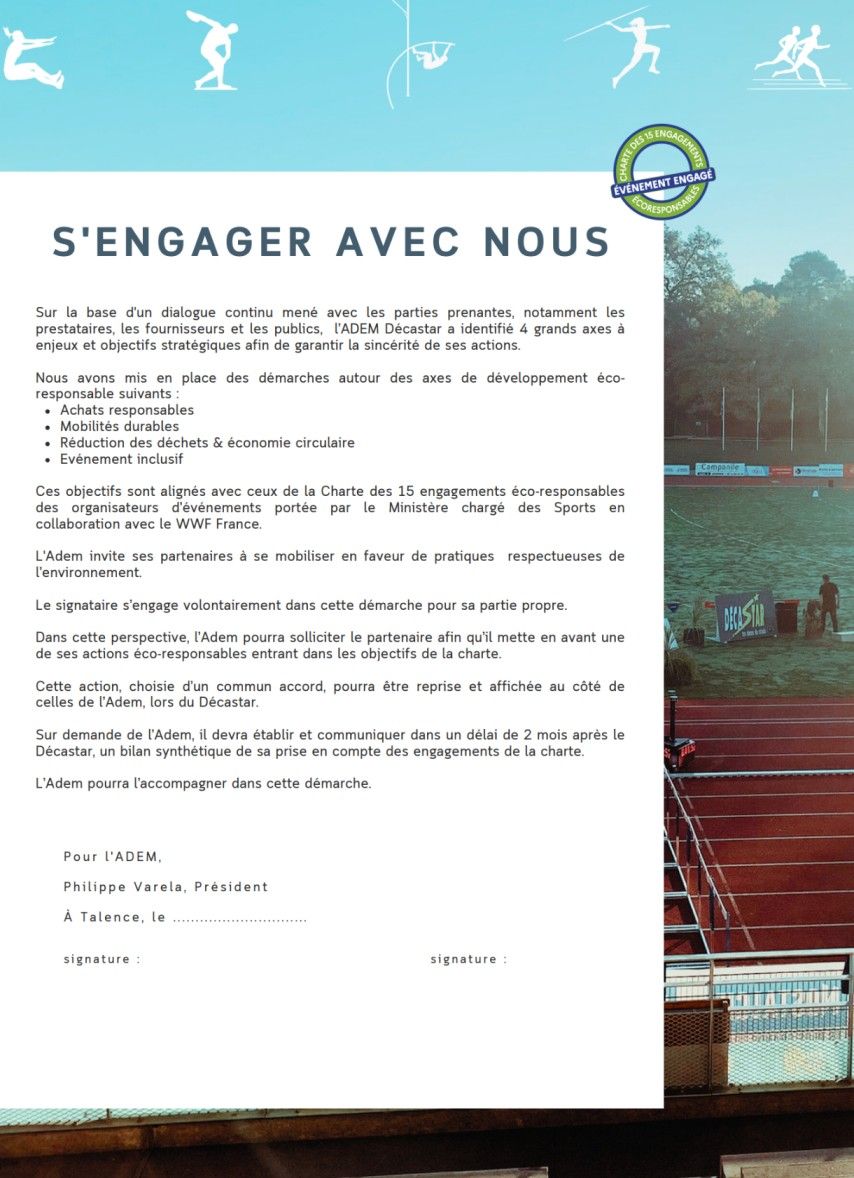
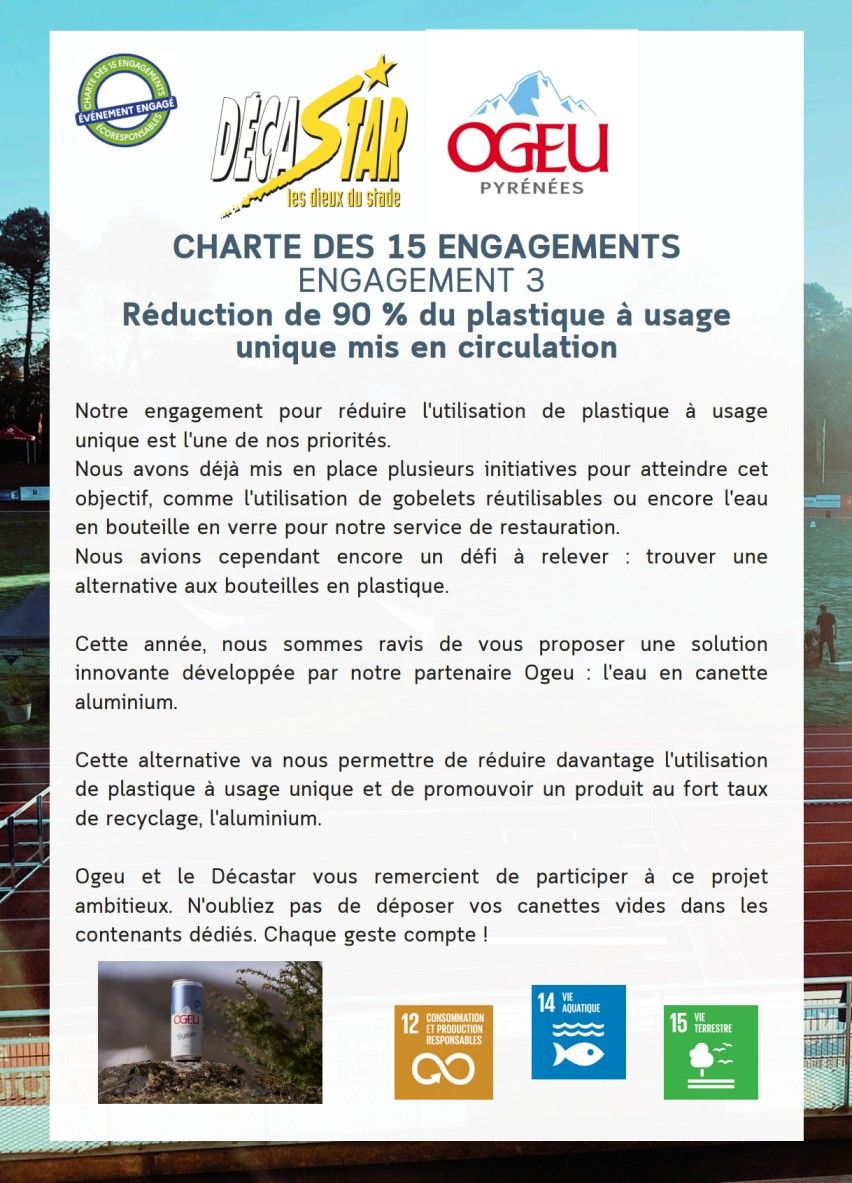
Partners encouraged to sign eco-responsible charter at the 2024 Décastar
Since 2012, the annual Décastar competition has committed to a strong eco-responsible approach with the French National Olympic and Sports Committee.
In December 2021, organiser of the annual Décastar competition, ADEM, decided to reinforce its commitment to sustainability by signing the charter of ‘15 eco-responsible commitments for sporting event organisers’, promoted by the Ministry of Sport in collaboration with WWF France. In 2024, ADEM encouraged each of the event’s partners, such as water company OGEU, to join them in working towards fulfilling 15 commitments based on the 17 United Nations Sustainable Development Goals.
Based on ongoing dialogue with stakeholders including service providers, suppliers and the public, ADEM identified four key areas to ensure the integrity of its actions:
- Responsible purchasing
- Sustainable mobility
- Waste reduction and circular economy
- Inclusive events
 |
 |
Sustainable Procurement - Best Practice Guidance
A significant proportion of the sustainability impact from events will be the result of products and services procured through the supply chain by the event delivery team and required to stage successful world class events.
Managing the supply chain effectively can ensure timely delivery of products/ services, minimise any negative impact and deliver wide reaching value and social benefits, particularly for the local communities that are hosting the events. World Athletics sustainable procurement guidance focuses on ensuring an ethical supply chain that minimises environmental impact and builds a legacy of local resilience within the host community.
The buying process is generally well understood and proposals from suppliers are assessed based on the quality of the service or product and the price. Sustainable procurement re-defines “quality” which includes factors around the social, ethical, and environmental impact of the product or service as well as the look, feel and performance of a product.
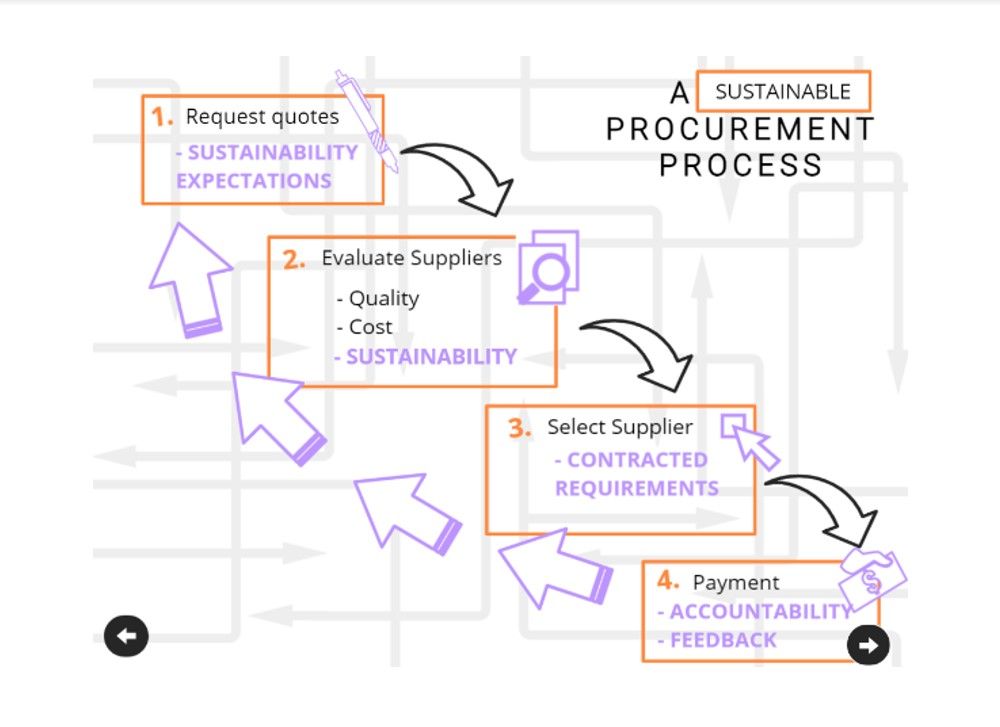
In simple terms – the buying process is:
1. Request for quotes (RFQ): ensure the sustainability requirement identified are included in the RFQ
2. Evaluate suppliers: Review their social, environmental and economic policies and management
3. Evaluating the product or service: Evaluate the product or service they are providing asking 5 key questions (which follow)
4. Select the supplier and contract the service including the sustainability requirements
5. Provision of service/product should also include the provision of evidence of compliance with sustainability requirements. These should be checked on site through audits against the specified requirements and action taken to address any non-conformities
6. Payment on delivery of contracted services including final data reporting and evidence of compliance
1. Request for quotes
RFQs should include the sustainability requirements that have been identified in the sustainability strategy and are important in the local context. Specification of materials should align with the waste management plan and are key to delivering the objectives and targets of a sustainable event.
2. Evaluating suppliers
The procurement process should evaluate the type of company providing the product or service. Critical will be assurance of the look, feel and performance of the product or service and the reliability of the supplier. However, questions in the RFQ should include those about the company to mitigate reputation risk as well as ensuring and promoting the use of responsible suppliers. Simply asking for their social, environmental and economic policies and management processes will be a start. This may be evidenced through certification schemes such as ISO14001 (Environmental Management) or ISO20121 (Sustainability Management).
You are looking for assurances across:
- Conditions of workers providing the products or service
- The company paying staff living wages
- Health and safety of employees
- Environmental performance of the company ensuring minimal environmental impact or carbon neutral services
- Locale of the company and its own supply chain to help build local resilience and local economic impact
3. Evaluating products or services
There are five key questions to ask when looking at the sustainability of products and to some extent services:
- Where does it come from - who made it?
- What is it made of?
- What is it wrapped in?
- What impact does it have in use?
- What will happen to it after the event?
Sustainable procurement is looking to ensure negative environmental and social impacts are minimised through the buying choices made by the event team. World Athletics has developed a comprehensive procurement code that identifies products and materials to avoid. This can be shared on request.
4. Selecting suppliers and contracting the services
Once the preferred supplier is selected to provide the product or service, a contract that clearly specifies the sustainability requirements should be drawn up. As a minimum these should include:
- Compliance with the event’s sustainability policy and on-site procedures, including but not limited to waste management, spill prevention, eliminating single use materials, low carbon transport
- Specification of materials in manufacturing of product and clearly stating materials to avoid
- Provision of evidence and assurance of materials used
- Provision of required data to report to the event team at conclusion of service – e.g., travel and transport impact, quantities of product/ materials
5. Provision and audit of the service or product
As the supplier provides the service, the certifications or evidence of the provenance of materials should be provided at the same time and an on-site audit carried out to check against the specified requirements.
Working closely with suppliers will help to ensure the understanding and importance of these sustainability requirements. As events are able to pave the way with pushing more sustainable products, the demand for those with a more damaging social and environmental impact will decrease.
Suppliers may also be able to improve their service offering as you work closely with them to achieve the sustainability requirements.
6. Payment on delivery of contracted service
Provision of the required data is part of the contracted service and is often overlooked. Ensuring the supplier understands payment is dependent on delivery of the service to the specification as well as the sustainability data requested. This may be around the product, quantities of materials, evidence of sourcing if not already provided, transport and travel distances due to service provision.
These actions should be implemented throughout the event planning and delivery cycle:
1. During event planning
Request for quotes
- Embed sustainability criteria into all procurement documents, including the Request for Quotes (RFQ)
- Sustainable procurement code is implemented, eliminating packaging waste, where possible
- Create a sustainable procurement matrix detailing service provision and associated sustainability impact and scale to prioritise the procurement process
Evaluating suppliers, products or services
- Identify suppliers that have a certified Environmental Management System (EMS) to ISO14001 or Sustainability Management System (SMS) to ISO20121
- Suppliers without certified management systems, request details of social, environmental and economic policies
Selecting suppliers and contracting services
- Integrate environmental, social and ethical responsibility into criteria for determining “value for money” and selection of suppliers/ contractors
- Ensure that sustainability requirements, including provision of post event monitoring/ evaluation data, is embedded, clearly, into service agreements
2. During event delivery
Provision and audit of product or service
- Assign responsibility to audit and ensure compliance to sustainable procurement commitments throughout event delivery
- Assign responsibility to ensure that suppliers/ contractors minimise packaging and take responsibility for any waste
3. Post event wash up
- Post event review meeting with suppliers/ contractors to constructively review service delivery and capture lessons learnt to drive continual improvement
- Review data provided and provision of services before payment is signed off
- Feed data and achievements to owner of post event report
Additional Resources
November 2025
IOC and Sports for Nature – Sustainable Sourcing Factsheets
The International Olympic Committee (IOC) and Sports for Nature collaborated to produce six Sustainable Sourcing Factsheets that provide recommendations and guidance to sport organisations about:
- Catering services
- Gifts and promotional products
- Rubber and rubber-containing products
- Sport equipment
- Textiles and textiles-based products
- Wood and wood-based products
May 2024
Sports Environmental Alliance – How to implement a sustainable procurement strategy in your sporting organisation
As part of the organisation's Beyond the Summit webinar series, Sport Environmental Alliance produced a webinar to help sport organisations approach sustainable procurement.
IBM – What is sustainable procurement?
Overview of sustainable procurement, which IBM defines as 'the integration of environmental, social and governance (ESG) criteria into an organization’s procurement processes.'
World Athletics Sustainable Event Best Practice Guidance
[Sustainability Leadership] [Developing Your Sustainability Plan] [Sustainable Procurement] [Waste Management] [Energy Management] [Food Management] [Water Management] [Travel Planning] [Accommodation] [Carbon Neutrality] [Air Quality] [Diversity, Accessibility and Inclusion] [Health Safety Wellbeing] [Monitoring and Reporting] [Communications]