

Sustainable Events Management:
Developing Your Sustainability Plan - Best Practice Guidance & Examples
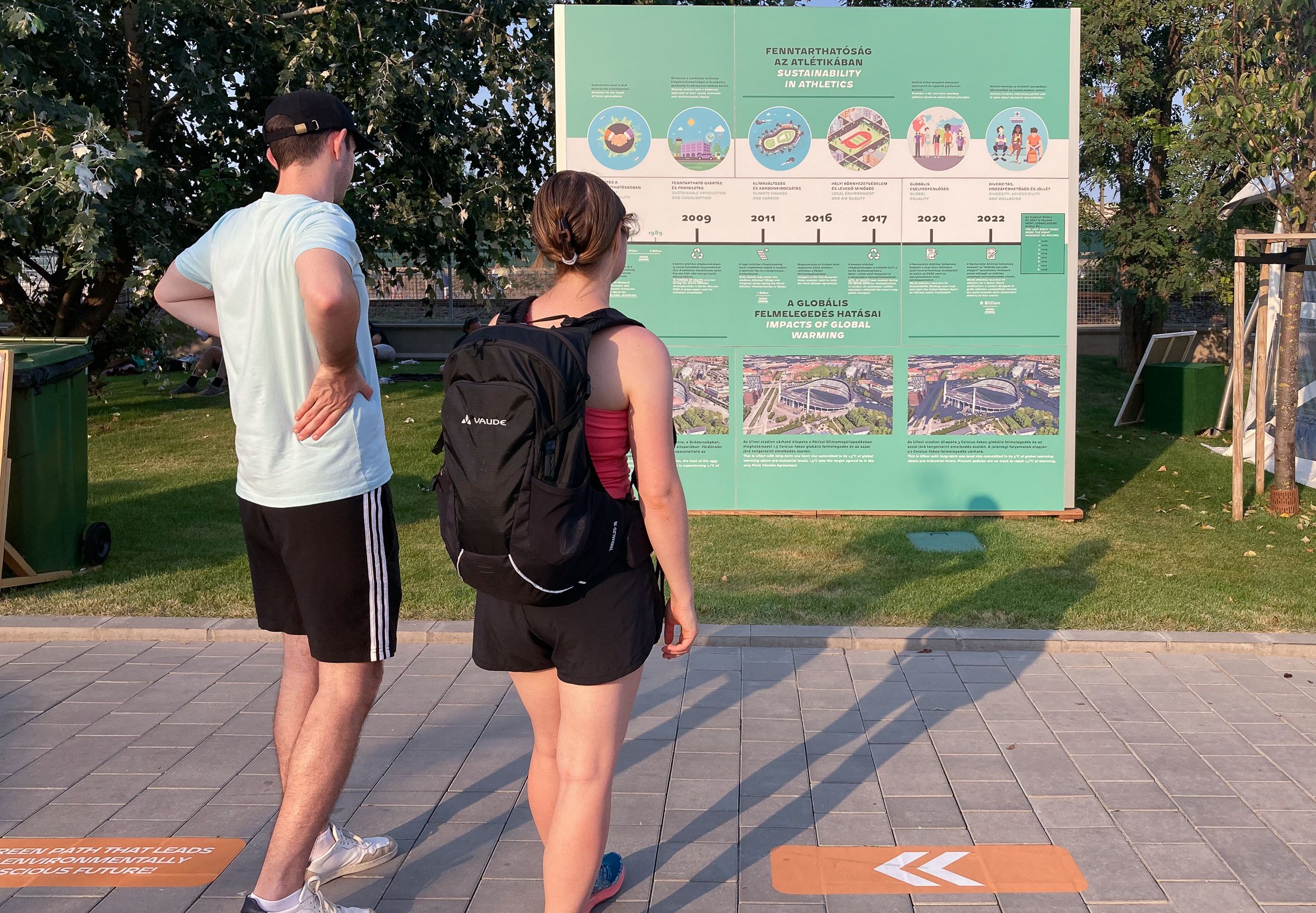
Fans reading the sustainability wall at the Green Zone in Budapest (© Bob Ramsak)
This page includes:
- Best practice examples from events
- Best practice guidance for organisers from the World Athletics Sustainable Events Management System, and
- additional resources
Attention event organisers:
- Did you know that our Sustainable Events Resource Centre has 13 templates available to help with your sustainability planning and reporting?
- What are some innovations that you have incorporated into your event's sustainability planning? Let us know so we can share them here with others. Get in touch at sustainability@worldathletics.org.
Last updated: 17 August 2025


Developing Your Sustainability Plan - Best Practice Examples
Sustainability Plan template available
To help get you started, World Athletics has produced a Sustainability Plan template that covers all points mentioned here. The more detail you add, the more plans that the Athletics for a Better World Standard requires can be created. It is available to all event organisers from the World Athletics Sustainable Event Resource Centre. If you don't have access, send a request to sustainability@worldathletics.org.
04 July 2025
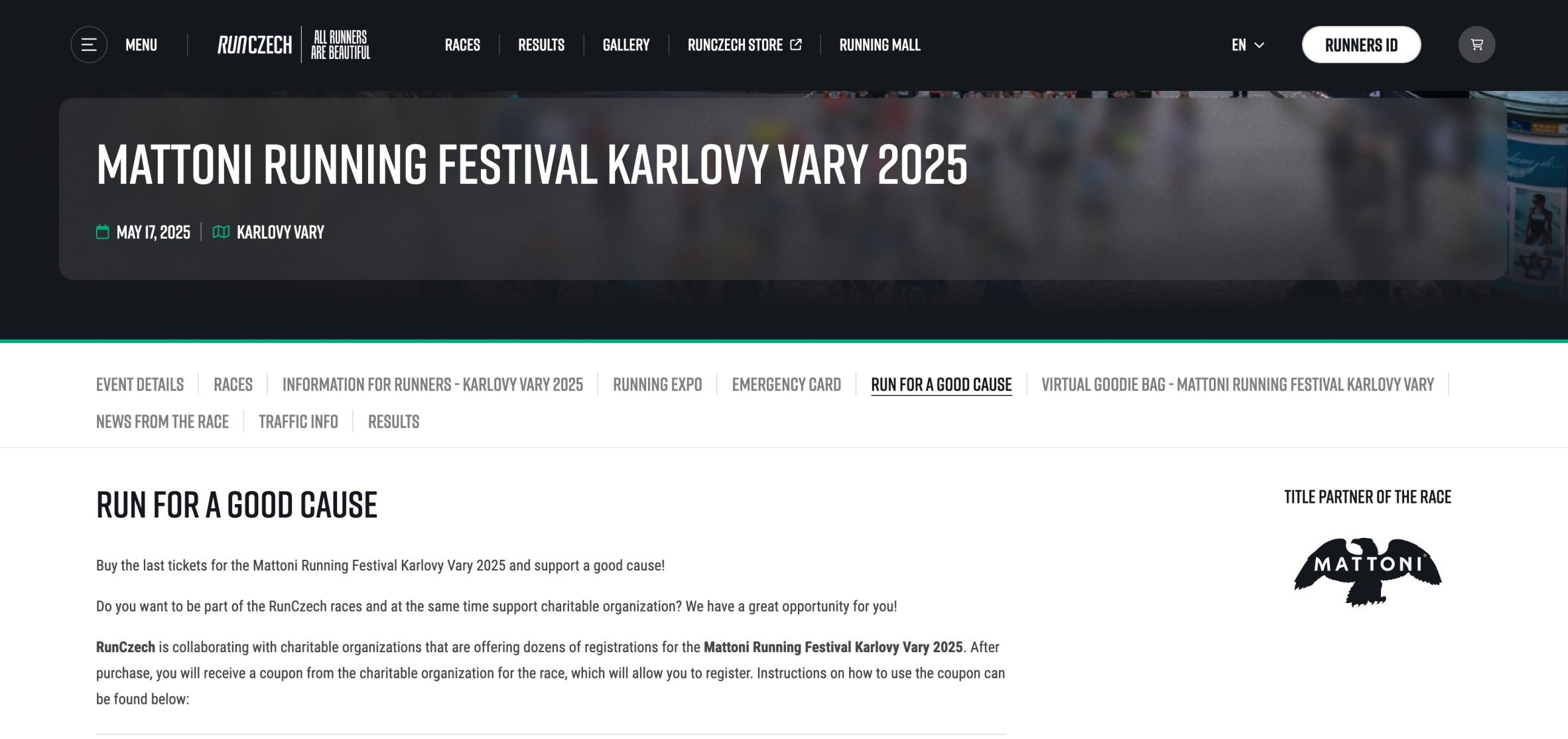
Connecting runners with charities at the Mattoni Half Marathon Karlovy Vary
RunCzech, organisers of the 2025 Mattoni Half Marathon Karlovy Vary, focused on connecting runners to its charity partners to deliver local benefits to the community.
The race’s main charity was AutTalk, the Kateřina Sokolová Foundation (Nadační fond Kateřiny Sokolové). AutTalk supports families affected by autism by funding therapies, educational programmes and awareness campaigns.
RunCzech enabled race participants to engage with AutTalk and the race’s other charities with the Run for a Good Cause programme, which included two key components. First, runners could purchase a race entry directly through local non-profit organisations, allowing them to support a specific cause while securing their race spot. Second, the only way to join the event once general race capacity sold out was by purchasing an entry through one of RunCzech’s event partners. This removed the burden of charity recruitment because runners actively sought them out.
The Run for a Good Cause programme is used across the annual RunCzech race season and generates millions of Czech koruna to directly fund these organisations.
28 June 2025
Riga Marathon’s three sustainability pillars
The Rimi Riga Marathon is the first national sports event in the Baltic region to not only assess its impact on the environment by calculating its carbon footprint, including Scope 3 emissions, but also to compensate for its footprint by investing in sustainable and emission-reducing projects in Riga and Latvia.
The organisers’ sustainability strategy, Run for Future, consists of three pillars:
Reduction: After a sustainability audit conducted with a researcher and environmental expert from the University of Latvia, organisers have lowered the marathon’s carbon footprint by digitising several materials required for the race and using recyclable/recycled materials.
Education and involvement: Using various methods such as blogging, training and videos, organisers educate participants to help them develop sustainable, environmentally-friendly habits.
Compensation for created footprints: The race is the first large-scale national sports event to financially compensate for its carbon footprint. Money is directed towards sustainability projects in Riga and Latvia, in partnership with Riga Forests and the Riga City Council.
Organisers have also outlined Run for Future’s path forward, including compensating for the marathon’s carbon footprint in full by investing in environmentally sustainable and emission-reducing infrastructure projects in Riga, rather than the more common practice of investing in developing countries.

11 January 2025
Engaging and tracking partners at the 2024 Rome Marathon
Developing a holistic sustainability plan requires involving event partners to ensure that all stakeholders are on the same page and working towards the same goals.
Organisers of the 2024 Acea Run Rome The Marathon tracked the collaborations and efforts of their partners in a spreadsheet to clearly demonstrate which areas of sustainability they were focusing on. All waste and emissions were reported and shared transparently, clearly illustrating the event’s sustainability journey.
The range of initiatives included Joma providing jerseys made from recycled fabric, ACEA providing water tanks and organic cups to reduce water and plastic waste, and Banco Alimentare volunteers collecting surplus clothes, food and beverages to support those in need – among many others.

Developing Your Sustainability Plan - Best Practice Guidance
The starting point for all events should be to develop your sustainability plan. There are a few simple steps to take that will help you define your level of ambition, your opportunity, the quick wins and managing sustainability risk.
Steps in developing your plan:
1. Identify your activities and the sustainability impacts resulting from these activities
2. Identify your key stakeholders and their expectations of the event - including World Athletics, potential commercial partners, host city, athletes, fans, staff and volunteers
3. Work out your priorities, taking into consideration the level of impact and risk, your expectations of key stakeholders
4. Identify a clear goal - what social or environmental impact would you like the event to have delivered?
5. With a clear goal in mind, and the priority issues identified, set out your measurable objectives and targets that address the issues along with actions to deliver these objectives
6. Measure, monitor and evaluate delivery against your targets
The Sustainable Event Management System best practice guidance in will help you identify, evaluate and address the key sustainability issues you will face delivering your event.
The key priorities, or sustainability strategy pillars of World Athletics should be addressed, namely:
- Leadership – communications and advocacy
- Carbon management – reduction and neutrality
- Sustainable procurement and waste management
- Local environment and air quality impact
- Diversity, accessibility and wellbeing – athletes, staff and fans
- Global equality – inclusivity and capacity building
World Athletics is a signatory of the Sport for Climate Action framework collaborating with nearly 300* sporting bodies aligned on achieving global carbon targets and undertaking positive action on climate. Your event may want to consider also aligning to this global sporting movement.
Roles and responsibilities will need to be clearly assigned, aligned to each target, and supported by adequate resources, whether that be in terms of time, expertise or finance. There may be a need to upskill the delivery team; support is available from World Athletics to achieve this.
The best practice guidance is set out to identify the actions required in the planning, delivery and post-event stages.
Communications and advocacy are a key part of event sustainability, and each event should identify the internal, external and on-event communications. This may involve identifying athlete advocates for delivering a wider impactful message.
As part of the event planning, sustainability activations may be identified that can be useful platforms to engage commercial partners and are an opportunity to influence wider societal change often leaving a significant event legacy for the local community. There are many good examples of these across sport.
Monitoring and measurement are critical to ensure you are delivering against the plan that was set out and reaching the targets identified.
These actions should be implemented throughout the event planning and delivery cycle:
1. During event planning
- Define your sustainability mission/ level of ambition. What do you want to achieve, what does ‘great’ look like?
- Identify all business activities and associated sustainability risks. Prioritisation of issues should consider likelihood/ level of impact, legal compliance, key stakeholder expectations
- Utilising the prioritised list of sustainability issues, define objectives, SMART targets with a detailed action plan, complete with KPIs to measure achievement
- Allocate ownership and resources (financial, time and human) to the action plan
- Engage with stakeholders (internal and external) to educate around sustainability and your specific ambitions to achieve buy-in and support
- Secure collaborative partnerships to influence wider societal change and identify legacy opportunities
- Sustainability ambitions and commitments are integrated into event communication plan
2. During event delivery
- Ensure all event staff have been briefed/ educated on the sustainability commitments, are aware of their role in achieving sustainability goals and are empowered to ‘lead by example’, demonstrating best practice behaviours
- Implement programme of monitoring/ auditing throughout delivery to ensure adherence to the plan and identify non-compliance in order to implement corrective measures, efficiently
- Internal and external (e.g. athletes) sustainability ‘champions’ demonstrate and communicate best practice, amplifying messaging across stakeholders
- Sustainability messaging (both onsite and through media channels), as part of the communication plan, drives awareness and actions to fuel compliance and achievement across stakeholder groups
3. Post event wash up
- Post event review meeting with venue/partners/ suppliers/ contractors to constructively review service delivery and capture lessons learnt to drive continual improvement
- Produce transparent post event report providing fact-based evidence, obtained through the monitoring programme, of sustainability achievements and lessons learnt
Additional Resources
December 2025
How sport management can address sustainability: Creating and testing a scale
Research into sport management practices that can improve the sustainability of sport events.
May 2024
Every Move | Sport England's Environmental Sustainability Strategy
Video about Sport England's sustainability strategy and action plan, EveryMove, that was launched in 2024. The strategy aims to support England's sport sector to become environmentally sustainable and increase opportunities for everyone to participate in sport and physical activity.
December 2023
IOC's Sustainability Essentials series
The International Olympic Committee has produced several sustainability related guides and texts that provide excellent guidance that can be useful to event organisers. Volumes from their sustainability library can be found here.
World Athletics Sustainable Event Best Practice Guidance
[Sustainability Leadership] [Developing Your Sustainability Plan] [Sustainable Procurement] [Waste Management] [Energy Management] [Food Management] [Water Management] [Travel Planning] [Accommodation] [Carbon Neutrality] [Air Quality] [Diversity, Accessibility and Inclusion] [Health Safety Wellbeing] [Monitoring and Reporting] [Communications]