

Sustainable Events Management:
Health, Safety & Wellbeing - Best Practice Guidance & Examples

This page includes:
- Best practice examples from events
- Best practice guidance for organisers from the World Athletics Sustainable Events Management System, and
- additional resources
Attention event organisers:
Did you know that our Sustainable Events Resource Centre has 13 templates available to help with your sustainability planning and reporting?
Do you have any innovative examples of how you've incorporated health, safety and well-being into your event? If so, we'd love to hear about them and help promote them. Let us know at sustainability@worldathletics.org.
Last updated: 15 October 2025


Health, Safety and Wellbeing Planning - Best Practice Examples
10 September 2025
Medical information on race bibs at Prague Marathon and Half Marathon
In collaboration with event partner HEDVEA, organisers of the 2025 ORLEN Prague Marathon and Half Marathon, RunCzech, implemented a scheme that linked medical information to runners' race bibs, enabling faster, more informed health care.
To enable this simple system that could save lives in an emergency, runners had to register on HEDVEA’s website using their RunCzech RunnersID. To ensure the data was accurate, race participants had to check a box that confirmed the truthfulness of the information they entered. Data on the emergency card could also be changed at any time to ensure it was up to date.
04 September 2024
Volunteer guidance at the Belfast Marathon
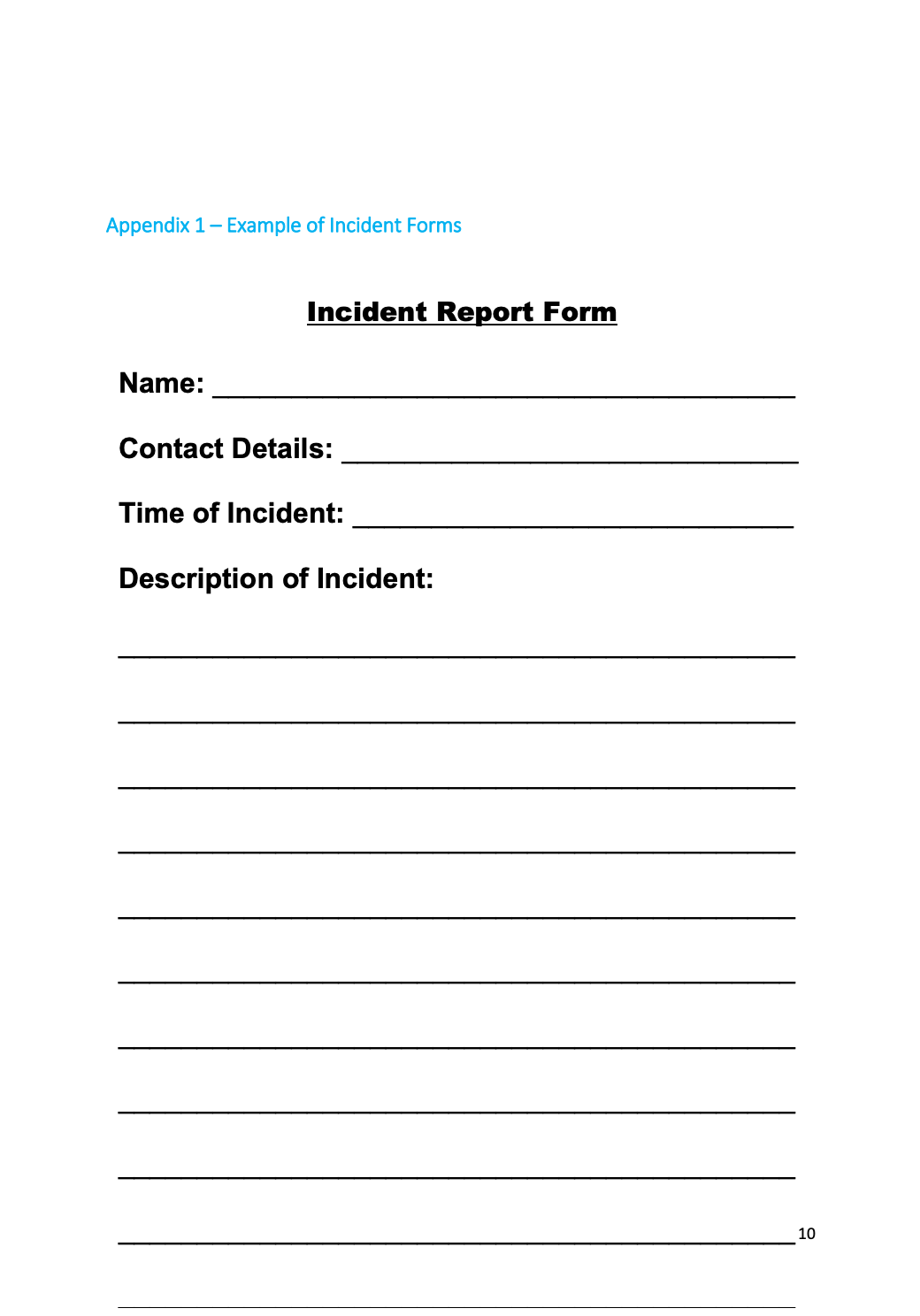
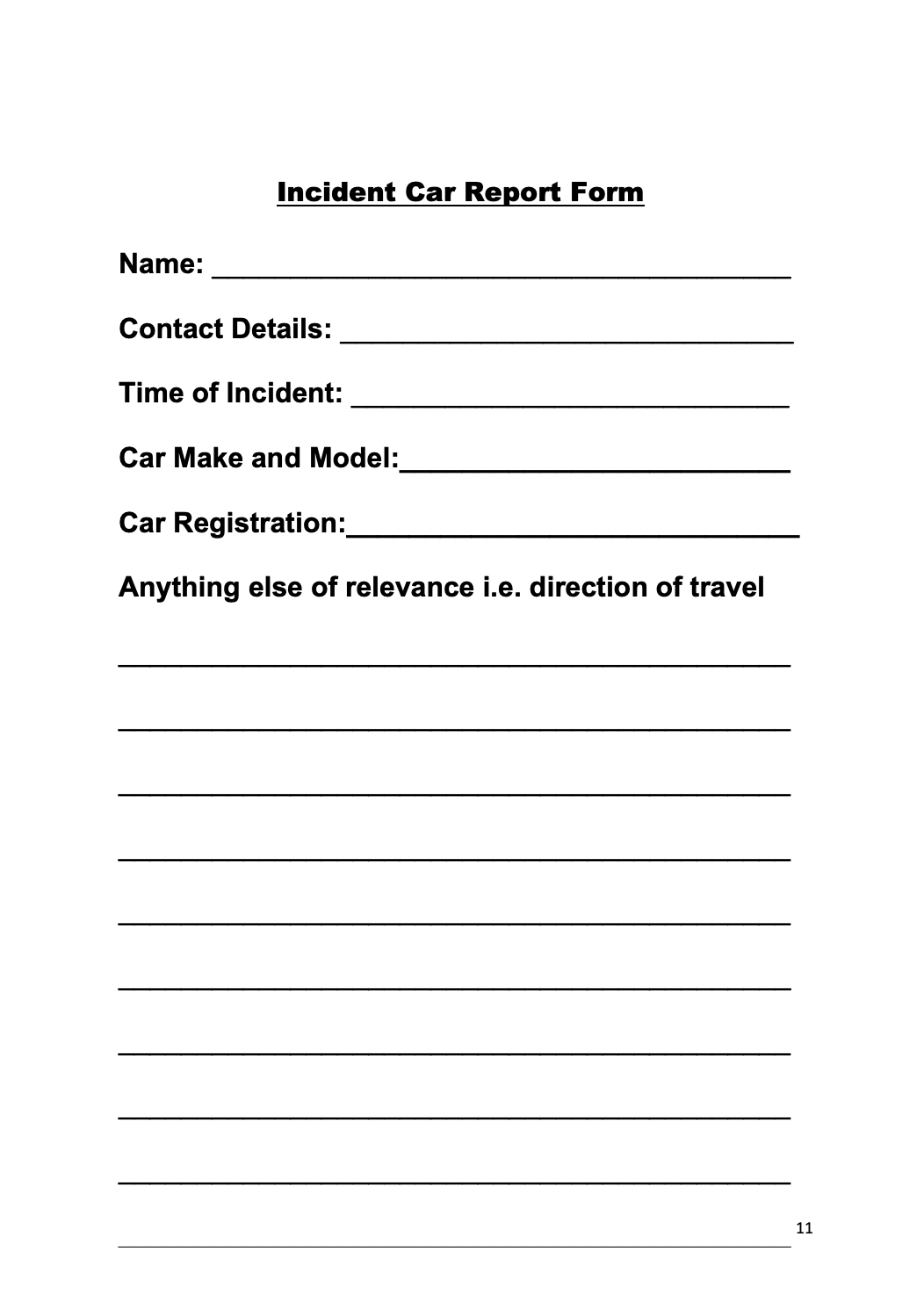
Organisers of the 2024 Moy Park Belfast City Marathon distributed a handbook to volunteers that included an Incident Report Form and Incident Car Report Form. The forms included details to fill in names, contact details and time of incidents for volunteers to fill in.
The handbook advised volunteers about relevant road closure legislation and how to engage with motorists about road closures for the event.
With over 19,000 participants participating across the Marathon, Team Relay and 8-Mile Walk events, volunteers were also advised how to ensure everyone’s safety and security, supporting the event’s commitment to equality.
 |
 |
10 June 2024
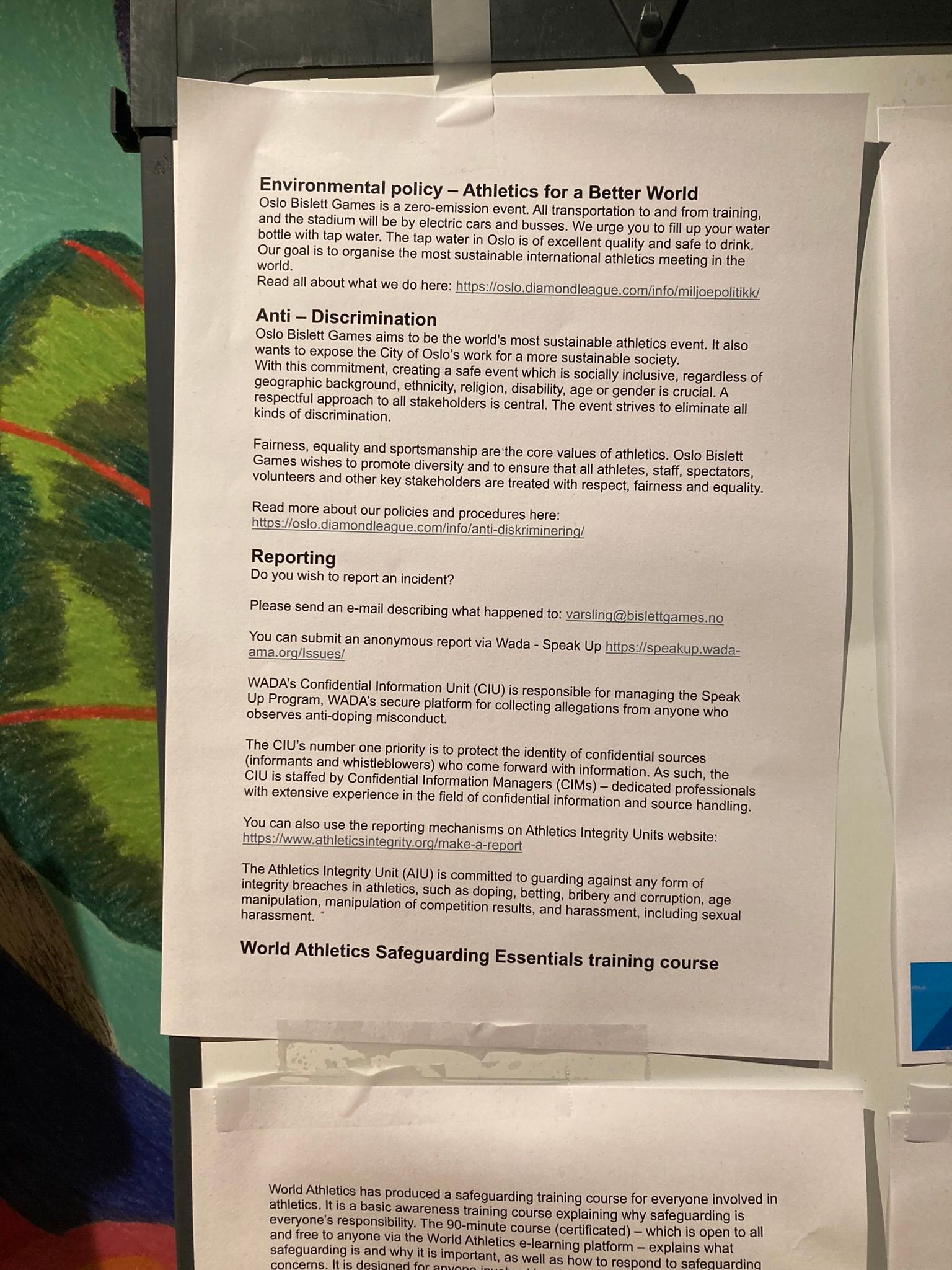
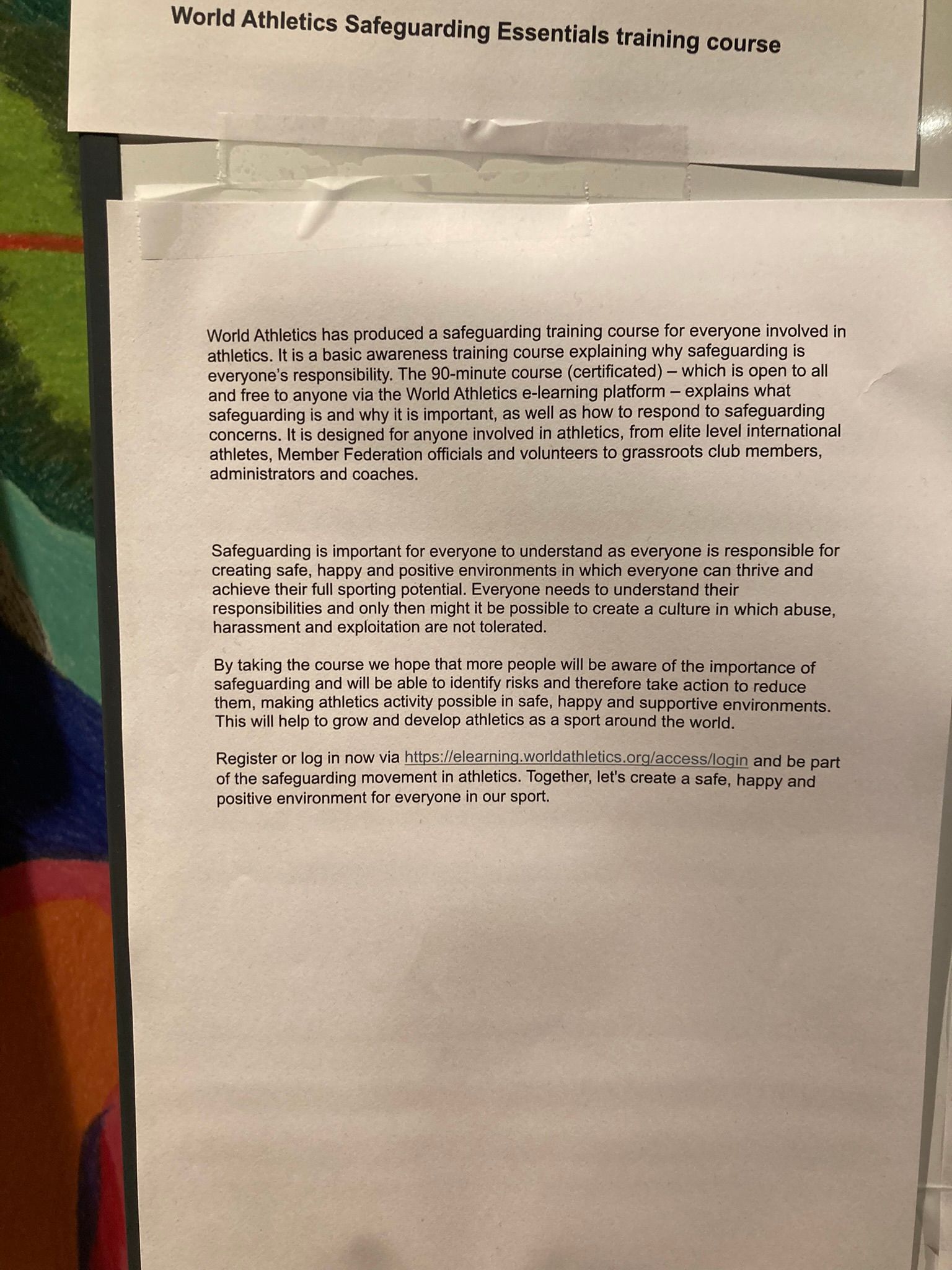
Sharing World Athletics Safeguarding Course information at Oslo and Stockholm Diamond League meetings
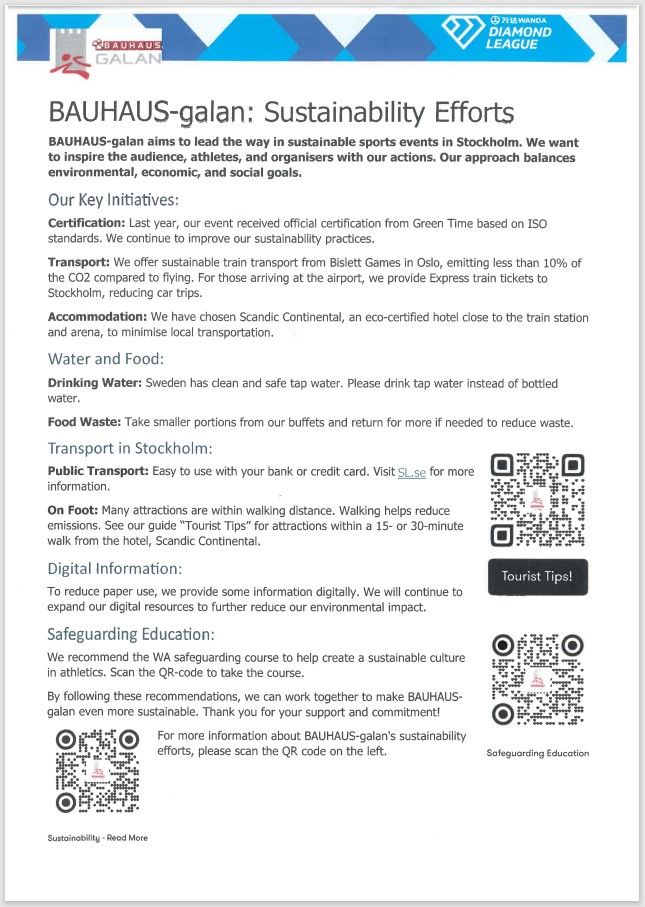
Here are a few recent examples of ways in which event organisers are sharing their meeting's environmental and anti-discrimination policies and links to the World Athletics Safeguarding Essentials training course with athletes.
Athletes competing at the BAUHAUS-galan Diamond League in Stockholm received the following leaflet with their accreditation and check-in materials at the hotel, a convenient 'one-stop shop'. Similarly, Oslo organisers kept it simple, too, bundling all the information into the info packet that was distributed to athletes at check-in. It was also posted on the info board by the information desk at the hotel.
|
|
|
07 March 2024
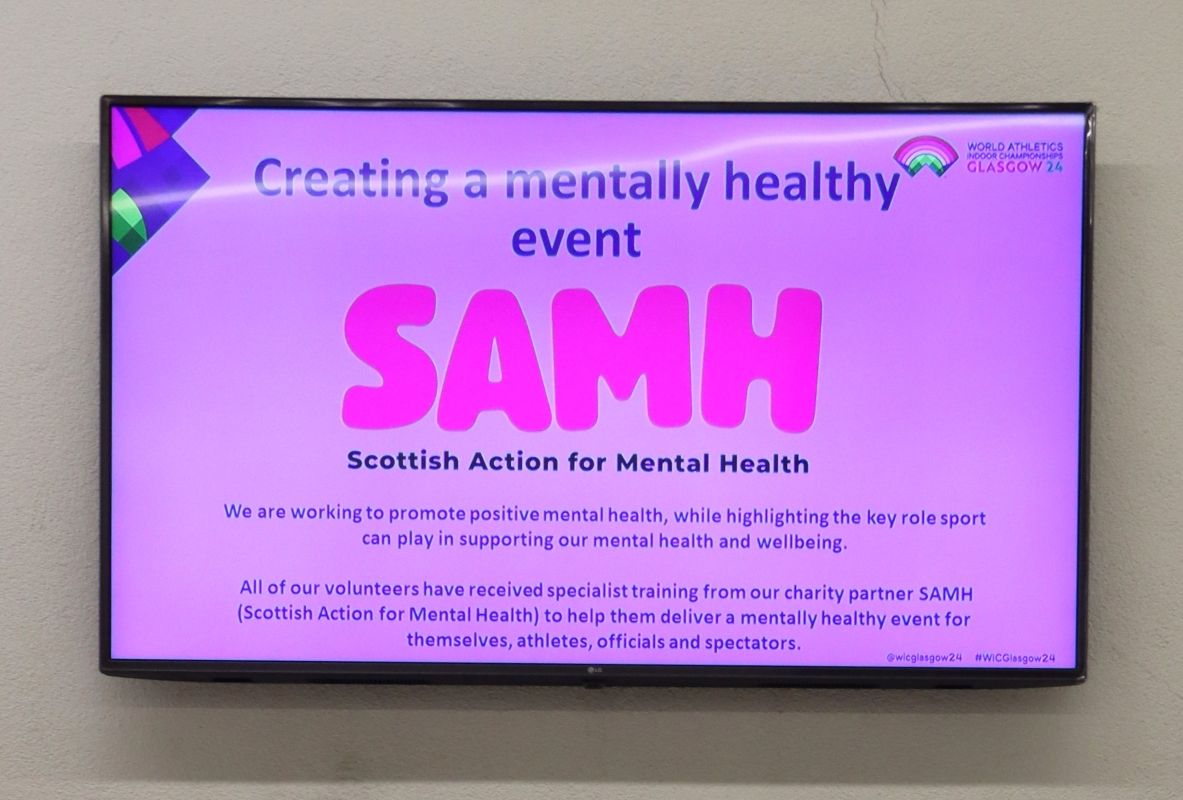
800 staff and volunteers received mental health training at Glasgow 24
Efforts to include social impact and environmental sustainability into the delivery and legacy of the World Athletics Indoor Championships Glasgow 24 was a strong focus for event organisers who delivered several pioneering initiatives.
Among them:
More than 800 staff and volunteers received mental health training to help them deliver a mentally healthy event for themselves, athletes, officials and spectators. The project, developed by the event's official charity partner, SAMH, the Scottish Action for Mental Health, was a first of its kind for an event in Scotland.
|
That included not only those who ultimately were accepted as volunteers, but everyone who applied.
Organisers increased the scale of this partnership by committing to embedding mental health awareness across the event, with organisers signing Scotland’s Mental Health Charter for Physical Activity and Sport. The charter uses the power of sport to reduce barriers to engaging, participating and achieving in physical activity and sport.
That was the first time the charter had been signed by a World Athletics Championships and marked a significant milestone in sport’s recognition and involvement in mental health. An objective of the programme is that staff and volunteers would take their new skills and knowledge gained through SAMH training into future events and back to their clubs and communities, creating a legacy of improved mental health support for sport in Scotland.
Health, Safety & Wellbeing- Best Practice Guidance
Event organisers are responsible for ensuring that overall safety at the event is maintained throughout all stages of the event so that, as far as reasonably practicable, all event attendees, including employees, event staff, contractors, suppliers, athletes, visitors and fans are not exposed to risks to their health and safety.
All event organisers have duties concerning event health and safety, including:
- having health and safety policies and arrangements in place to control risks
- planning to ensure the policy is put into place
- ensuring co-operation and proper co-ordination of work activities
- providing employees and others with relevant information on any risks to their health and safety
- ensuring the competence of event staff to undertake their role safely
- monitoring health and safety performance and compliance
- auditing and reviewing health and safety performance
Health and Safety documentation
The Event Safety Plan should include:
- An Event Management Plan: providing comprehensive event overview and a framework for embedding safe practices across event delivery
- A Risk Assessment: highlighting any potential hazards that may affect the event, control measures to eliminate/ minimise risk
- An Emergency Action Plan: to facilitate effective and efficient response to health and safety risk(s) and/ or other emergencies that may occur
Developing an Event Safety Plan as part of the planning and preparation is vital to ensuring the right health and safety procedures are in place and, also, may be required in the event of a legal dispute arising from an incident.
Effective management and monitoring of health and safety risks must be in place throughout the event, including build up, load in, event delivery, breakdown and load out. This will include:
Management
Having appropriate management systems in place for each phase of the event to make sure health and safety risks are controlled. While the numbers onsite during the event period will be significantly greater, the need for safety management during build up, load-in, breakdown and load-out is just as important.
Co-ordination
Ensure co-operation and proper co-ordination of all work activities across the event site.
Information
Provide event employees and others, including contractors, with relevant information on any risks to their health and safety identified by your risk assessment/s. All contractors will need to do the same for their employees.
Competence
Staff should be competent to undertake their role safely. There should also be an appropriate level of competent supervision, proportionate to the risk, nature of the work and the personnel involved.
Monitoring and review
Agreed methods for controlling risks should be checked and tested to make sure they are working and being followed. The event risk assessment should set out the frequency of checks, allocate responsibility and detail methodology.
As an event organiser, you also have a responsibility for safeguarding the wellbeing, behaviour and culture of your workforce, officials, athletes and wider event attendees, requiring a focus on supporting them to ensure they are healthy and safe throughout their engagement with the event.
This best practice is implemented across the event planning cycle as follows:
1. During event planning
- Ensure knowledge of, and compliance to, all health and safety regulations.
- Event organisers have all relevant insurances in place to cover the event and hold copies of relevant third party insurance certificates.
- Safety Advisory Group (SAG) established consisting of representatives from local authorities, LOC, emergency services, event organisers and other relevant bodies.
- All health and safety documentation is complete.
- All contractors/ suppliers are aware of their health and safety responsibilities.
- The project plan facilitates a co-operative and co-ordinated programme of work throughout build up, load in, event delivery, load out and breakdown.
- The project plan ensures adequate breaks, rests and compliance to all relevant ‘working time’ legislation and your own employment policies.
- An athlete wellbeing information pack is put together and distributed, in addition to standard joining instructions/ event information, containing information specifically promoting athlete wellbeing. This could include information about environmental factors, such as weather conditions, altitude, humidity, air quality, effect of jet lag; wellbeing support available during the event and how to access; availability of, and access to, training facilities; and drug screening procedures.
2. During event delivery
- All personnel receive health and safety training, including a site induction and briefing, prior to them commencing work on event.
- Daily meetings are scheduled to ensure clarity around current phase of work, key daily activities/schedule, environmental considerations and any elevated health and safety considerations.
- Health and safety information relevant to event attendees is available for all with clear signage across venue, as appropriate.
- Programme of regular health and safety checks/ audits is in place to ensure Event Safety Plan is working correctly and effectively. Any non-compliance is reported, recorded with remedial action taken, as required.
- Athlete wellbeing support is readily available.
- Implement a programme of Periodic Health Evaluations (PHE) to safeguard athlete health.
- Engage local athletics community to deliver on site activations that raise awareness of the health benefits of regular physical activity and opportunities to participate in athletics to enhance a healthy lifestyle.
3. During event wash up and review
- Collate output from all health and safety checks/ audits, including any non-compliance issues for review and reporting to drive continual improvements.
- Anonymous data relating to uptake of athlete wellbeing support is collated.
- SAG de-brief is held to capture all lessons learnt.
Videos
video
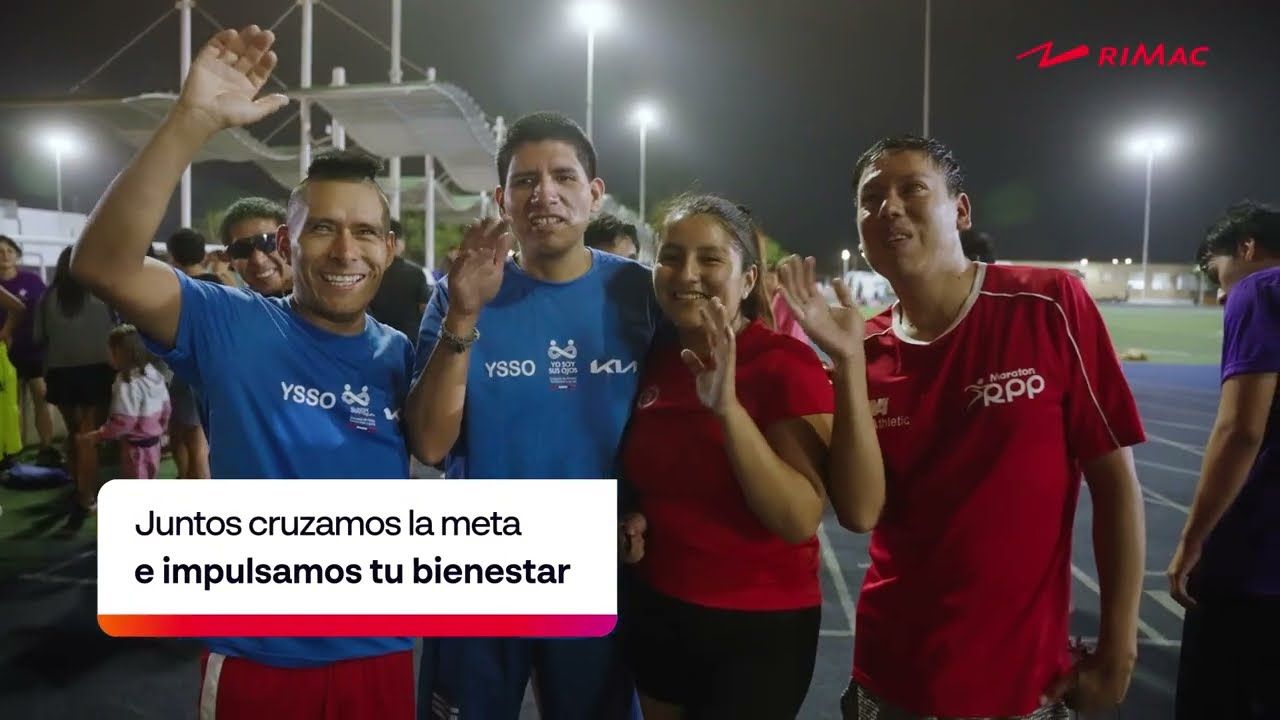
Maratón adidas RIMAC Lima 42K junto a Yo soy sus ojos

video
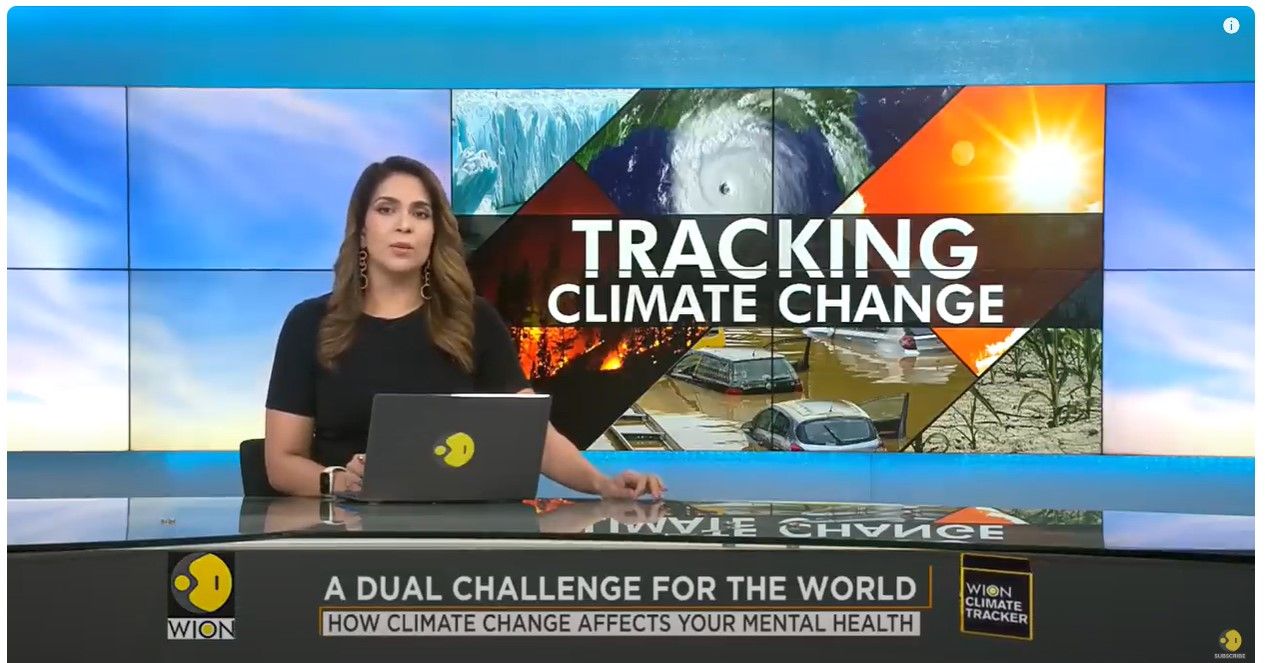
WHO policy on Mental Health & Climate Change | A dual challenge for world
video
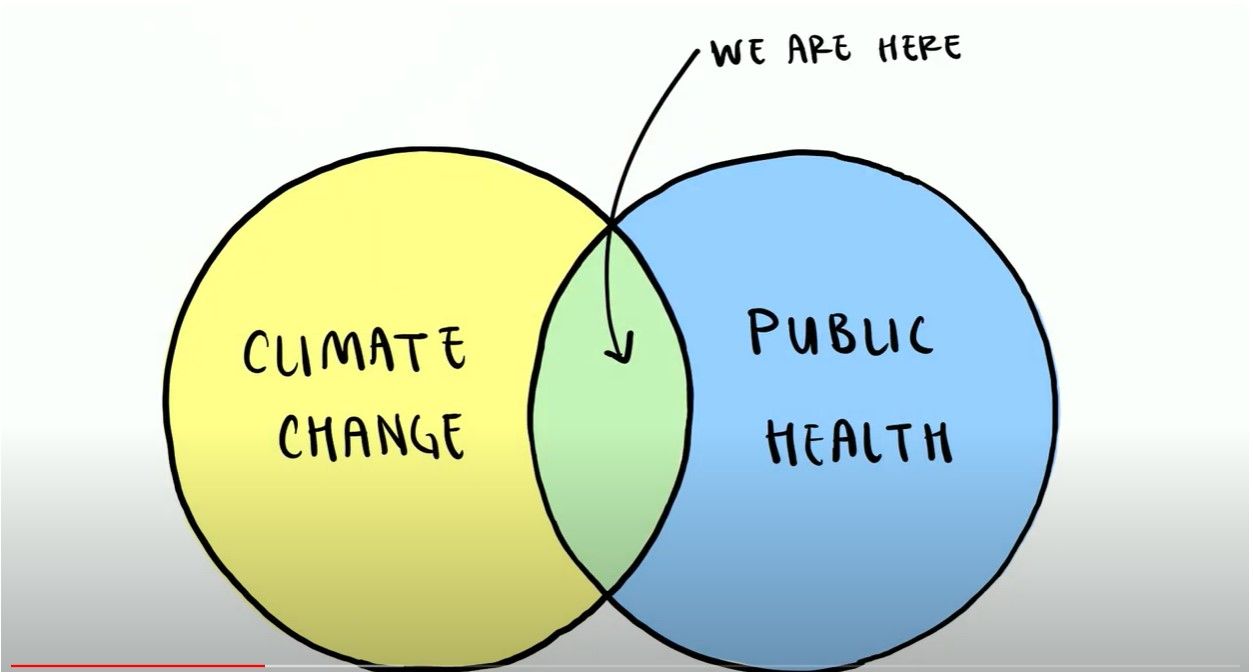
Mental Health & Climate Change - Let's Talk About It | Action for the Climate Emergency

video
Eco-anxiety to Climate Optimism | Lyn Stoler | TEDxManhattanBeach
video
Is climate change affecting our mental health? | BBC Ideas

Additional Resources
22 July 2024
Research examines links between extreme heat and mental health
In a post on Carbon Brief, researcher Alessandro Massazza summarises some recent studies, research and findings on the links between extreme heat and mental health.
Some highlights:
- Research indicates that heatwaves can trigger increases in both the hospitalisation of people with mental-health challenges and emergency psychiatric visits.
- Suicide rates have been shown to increase in higher temperatures and are expected to rise in a warmer world.
- Extreme heat can have significant implications for sleep, which impacts mental health.
- A growing body of research links extreme heat with an increase in violent behaviour, such as homicides, sexual violence and assaults.
Massazza notes that while there are other factors and social drivers that need to be considered in these connections, it is clear that "climate change represents one of the biggest threats to physical and mental health globally. Extreme heat is deadlier than hurricanes, floods and tornadoes combined. Heat stress can exacerbate underlying illnesses – such as cardiovascular disease, diabetes, asthma – and can increase the risk of accidents and transmission of some infectious diseases. And this is not considering the huge hidden cost of increasing cases of poor mental health."
More.
World Athletics Sustainable Event Best Practice Guidance
[Sustainability Leadership] [Developing Your Sustainability Plan] [Sustainable Procurement] [Waste Management] [Energy Management] [Food Management] [Water Management] [Travel Planning] [Accommodation] [Carbon Neutrality] [Air Quality] [Diversity, Accessibility and Inclusion] [Health Safety Wellbeing] [Monitoring and Reporting] [Communications]