

Sustainable Events Management:
Accommodation Best Practice Guidance & Examples

Sustainability advice at ibis Zurich City West
This page includes:
- Best practice examples from events
- Best practice guidance for organisers from the World Athletics Sustainable Events Management System, and
- additional resources
Attention event organisers:
- Did you know that our Sustainable Events Resource Centre has 13 templates available to help with your sustainability planning and reporting?
- What are some of the ways sustainability has been incorporated into and advanced by the accommodation providers that you've selected for your events? Let us know so we can help promote them. Let us know at sustainability@worldathletics.org.
Last updated: 15 November 2025


Accommodation Planning - Best Practice Examples
09 August 2025
Eco-certification at Rome Diamond League
L’Hotel Midas Roma by Barceló Group was chosen by organisers of the 2025 Golden Gala, The Eternal City’s Diamond League meeting, for its athlete hotel.
The hotel has a Google eco-certified badge. As a member of the Travalyst coalition, Google labels hotels as 'eco-certified' when they report earning a certification from an agency that Travalyst has identified as meeting certain standards, including a focus on four key areas:
- Energy efficiency
- Water conservation
- Waste reduction
- Sustainable sourcing

11 February 2025
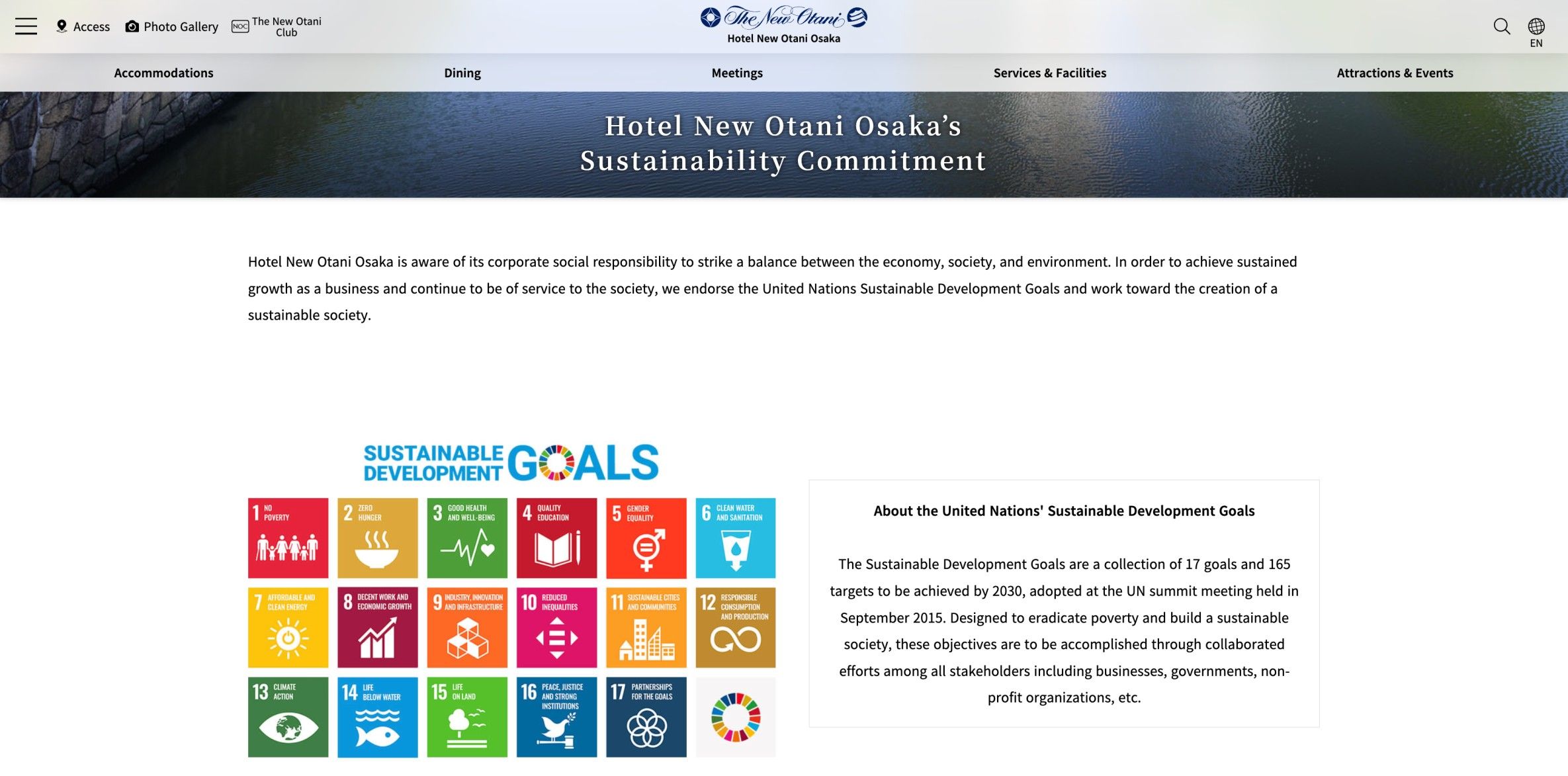
Osaka Women’s Marathon commits to the SDGs
Organisers of the 2025 Osaka Women’s Marathon chose the Hotel New Otani Osaka for its athlete hotel.
The hotel’s website includes a dedicated page for sustainability, explaining its commitment to the United Nations Sustainable Development Goals, as well as detailing specific initiatives such as eco-friendly room cleaning, installing water saving devices in guestrooms, and offering eco-friendly amenity items and cutlery.
18 December 2024
Choosing an athlete hotel for the Valencia Medio Maratón with a sustainability certification
The AC Hotel Valencia by Marriott, used by athletes for the 2024 Medio Maratón Valencia Trinidad Alfonso Zurich, was issued an E1 Ecostars sustainability certification, indicating the hotel’s sustainable practices including implementing guest room recycling and electric car charging.
The rating was based on an analysis of the hotel’s environmental, social and governance (ESG) policies.

Accommodation Planning - Best Practice Guidance
A reduction in environmental impact and increase in social impact can be achieved through the choice of the goods and services it selects – through a sustainable procurement process.
Accommodation is one such service and the selection should be reviewed with this in mind, with impacts typically around energy management, waste production, food provision, local staffing and staff diversity, health and wellbeing. However, these may seem difficult choices on the outside but there are a number of certification schemes for ‘green hotels’. Whilst self-catering is less likely to be assessed to a certification scheme, it is likely that self-catering provision will be less energy intensive for longer periods of time due to laundry, heating/ cooling communal areas, etc particularly for multi-occupancy.
When choosing accommodation all aspects of the provision should be considered. Within the hotel environment more aspects are under the control of the provider leaving just choice to your event team logistical coordinators.
This best practice is implemented across the event planning cycle as follows:
1. During event planning
- Develop accommodation plan covering all staff, maximising efficiency in number of room nights.
- Research and select accommodation considering:
o Any green standards, certification or marks
o Proximity to the venue to limit need for cars/ taxis and enable effective use of either public transport, walking or cycling.
o Hotels with sustainable food standards
o Hotels with high employment standards for their staff
- Selected accommodation should be made aware that no bottled water should be supplied – unless filtered, potable water cannot be provided.
- Additional sustainability requirements can be stipulated in hotel negotiations/ contracts. E.g. disposable shower kits and single use sachets should be removed, a reduced cleaning schedule implemented and no single use plastics provided.
2. During event delivery
- Communicate your sustainability commitments to event staff members and athletes by sharing a list of traveller tips, which include:
o Turning off lights, TV and other equipment including phone/ iPad chargers when not in use and when they leave their room.
o A list of the most sustainable restaurants and cafes including meat-free options nearby with a reference to sustainable modes of transport to get there.
o Energy/ temperature management: “comfortable” room temperature, turn off a/c.
- Reduce amount of laundry necessary by washing clothing together (ensure branded clothing is named beforehand), and use a sustainable laundry service provider (limited use of chemicals etc).
- Encourage staff and athletes to put towels and sheets for laundry only when necessary.
3. Post event wash up
- Collate total number room nights at different types of accommodation.
- Collect data relating to methods of transport utilised through duration of event to report on the effectiveness of the accommodation choice in reducing carbon impact from staff travel.
- Carry out post event review meeting capturing achievements and lessons to be learned.
Additional Resources
December 2025
Accommodation Certifications
- EarthCheck - "The world’s leading certification, consulting and advisory group for sustainable destinations and tourism organisations."
- EcoStars - "The Leading ESG AI Platform for Hotels."
- EU Ecolabel - The European Union's quality standard.
- Global Sustainable Tourism Council - Establishes and manages global standards for sustainable travel and tourism, known as the GSTC Criteria.
- Green Globe - A global Sustainable Tourism Certification.
- Green Key - "A leading standard for excellence in the field of environmental responsibility and sustainable operation within the tourism industry."
- Travelife - Provides a comprehensive set of GSTC-recognised requirements that cover emissions, biodiversity, human rights, fair labour, child safeguarding and animal welfare.
June 2025
Sustainable Hotels of Tomorrow - Accor roundtable
Accor roundtable discussion covering a range of topics at the intersection of hospitality and sustainability, including how leading hotels can reduce their carbon footprint, enhance operational efficiency and create long-term value through sustainable practices.
April 2018
10 Eco Friendly Hotels
These eco-friendly hotels can offer insipration to seek out and use accomodation with sustainable practices.
April 2018
UN Sustainable Development Goals - Overview
UNICEF video providing an overview of the United Nations Sustainable Development Goals.
World Athletics Sustainable Event Best Practice Guidance
[Sustainability Leadership] [Developing Your Sustainability Plan] [Sustainable Procurement] [Waste Management] [Energy Management] [Food Management] [Water Management] [Travel Planning] [Accommodation] [Carbon Neutrality] [Air Quality] [Diversity, Accessibility and Inclusion] [Health Safety Wellbeing] [Monitoring and Reporting] [Communications]