

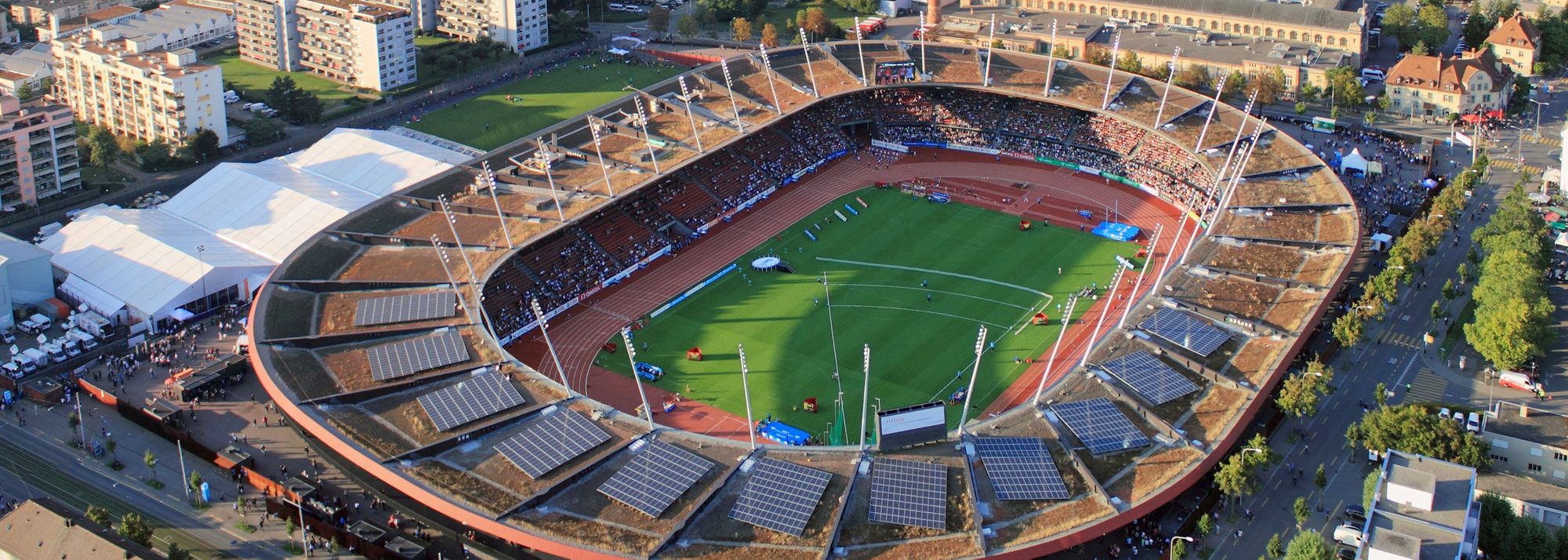


Zurich's Letzigrund Stadium
The 2025 edition of the Weltklasse Zurich earned platinum level recognition against the Athletics for a Better World (ABW) Standard, the tiered evaluation system implemented by World Athletics that measures an event’s achievements in sustainable delivery.
The annual Wanda Diamond League fixture, which last year hosted the Diamond League final over two days in two venues, is only the second one-day athletics event to achieve the standard’s highest level since its launch in 2024 and just the fourth event overall.
“The Weltklasse Zurich's pioneering efforts in this space began nearly two decades ago, when few sports organisations were even talking about sustainability and ways to reduce the environmental impact of their events,” said World Athletics President Sebastian Coe. “And in that time, they've created an approach that all sports, not just athletics, can greatly benefit from. Congratulations to the entire Zurich team.”
Trailblazers in sustainability in athletics
Indeed, Weltklasse Zurich organisers have been measuring their event’s carbon emissions since 2008 and staged their first carbon neutral event the following year. Using those editions as their initial baseline measurement, the meeting’s sustainability team, led by co-meeting director Christoph Joho, have continued to find ways to reduce the event’s environmental impact and expand its social benefits over the ensuing 17 years.
Those experiences provided key insights into the development and eventual implementation of the ABW Standard. Underscoring their efforts, in 2022 Zurich hosted a team of researchers from the Sant’Anna School of Advanced Studies who audited the event’s sustainability initiatives and actions for GAMES, an EU Commission-funded project that explored how sports can adopt more practices to mitigate their impact on climate change. They also hosted a roundtable discussion ahead of the event, the first of its kind at a Diamond League event, to discuss how athletics events can become more sustainable.
Powered by renewables
In 2025, strong initiatives and progress were documented across the ABW Standard’s six pillars, including energy management, procurement, and athlete, partner and city engagement.
During the Welktklasse, Letzigrund Stadium is 100% powered by renewable energy, mainly hydro, sourced in Switzerland through a tariff scheme with a local energy provider.
Through a partnership with the Zurich Transport Network (ZVV), a public transport ticket to the stadium is included in the price of the admission ticket. Nearly 70% of spectators took advantage of that with another six percent either walking or bicycling.
All of the event's 364 tonnes of CO2e emissions will be offset, about half through funding for a sustainable forest management project in Switzerland and half through a joint Wanda Diamond League project. Both projects are certified.
Local sourcing
Through its strong procurement policy, local sourcing was another strength. More than 85% of the event’s suppliers were located within 100km of Zurich. Through a long-standing partnership with Migros, the majority of the food consumed at the meeting was sourced from the region and organically produced. A variety of vegetarian and vegan options were available in the athlete dining areas, at the city centre event on the first day and throughout the stadium on the second. Additionally, the Migros distribution centre is just two kilometres from the stadium, keeping the transport distances to a minimum.
Five of the event’s official hotels have publicly facing sustainability commitments and three have certifications via the international GreenKey sustainability standard.
Water stations were installed at those hotels and the stadium in a continuing push to reduce the number of single-use plastic bottles at the event. All volunteers received a reusable water bottle as part of their kit.
Another effort to minimise the use of single-use plastic was the introduction of compostable wooden cups at the Sechseläutenplatz venue, which were recycled in separate collection bins.
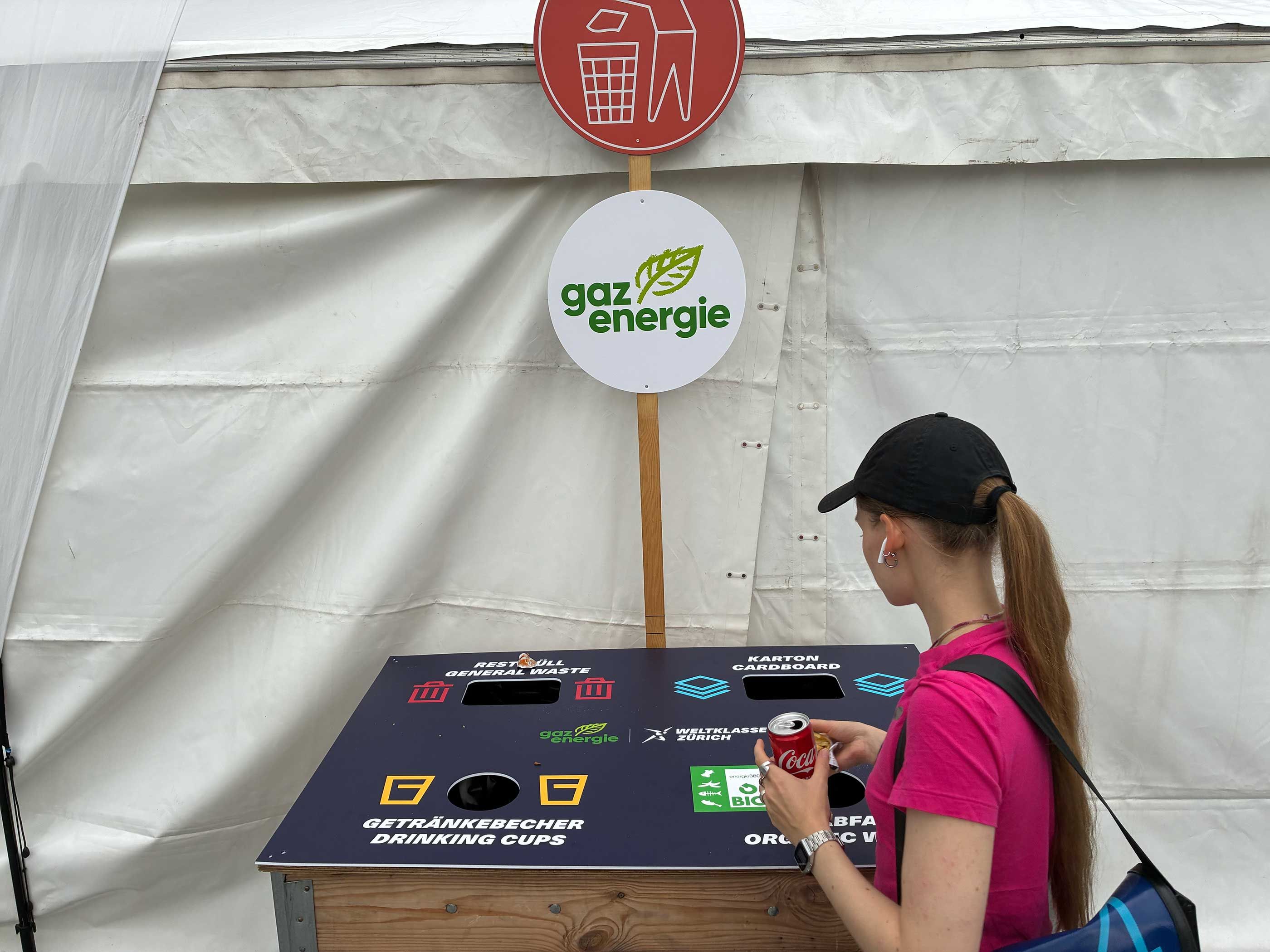
Rubbish collection at Weltklasse Zurich
Athlete engagement to inspire
Athlete engagement was particularly strong, forming a strong foundation for the event's social impact.
National and international stars including Mujinga Kambundji, Dominic Lobalu, Femke Bol and Bayanda Walaza led youth training sessions for 500 lucky young athletes who were selected from a pool of 3000 applicants, an experience dubbed as ‘Switzerland's most popular training session’.
National stars Audrey Werro, Simon Ehammer, Ditaji Kambundji and Jason Joseph also made themselves available at many of the UBS Kids Cup events, which is, with 160,000 participants annually, Switzerland's largest youth development project. Its final is staged during the Weltklasse.
The meeting also invests CHF 500,000 annually in LC Zurich, the local athletics club, which enables around 300 athletes to train regularly and benefit from professional facilities, contributing to and ensuring long-term athletics development in the region.
About the Athletics for a Better World Standard
In January 2024, sustainability reporting through the Athletics for a Better World Standard became a requirement for most global elite competitions managed or awarded by World Athletics. In total, 104 events completed sustainability reporting for their 2024 editions and more than 120 have either started or completed their ABW Standard reporting for 2025. When fully adopted, the ABW Standard will be the largest sustainability evaluation system in the sport industry.
The Weltklasse is the fifth event to earn platinum recognition against the ABW Standard. The Oslo Bislett Games reached the top tier in 2024 and again in 2025. The World Athletics Indoor Championships Glasgow 24 and World Athletics Championships Tokyo 25 also achieved platinum.