





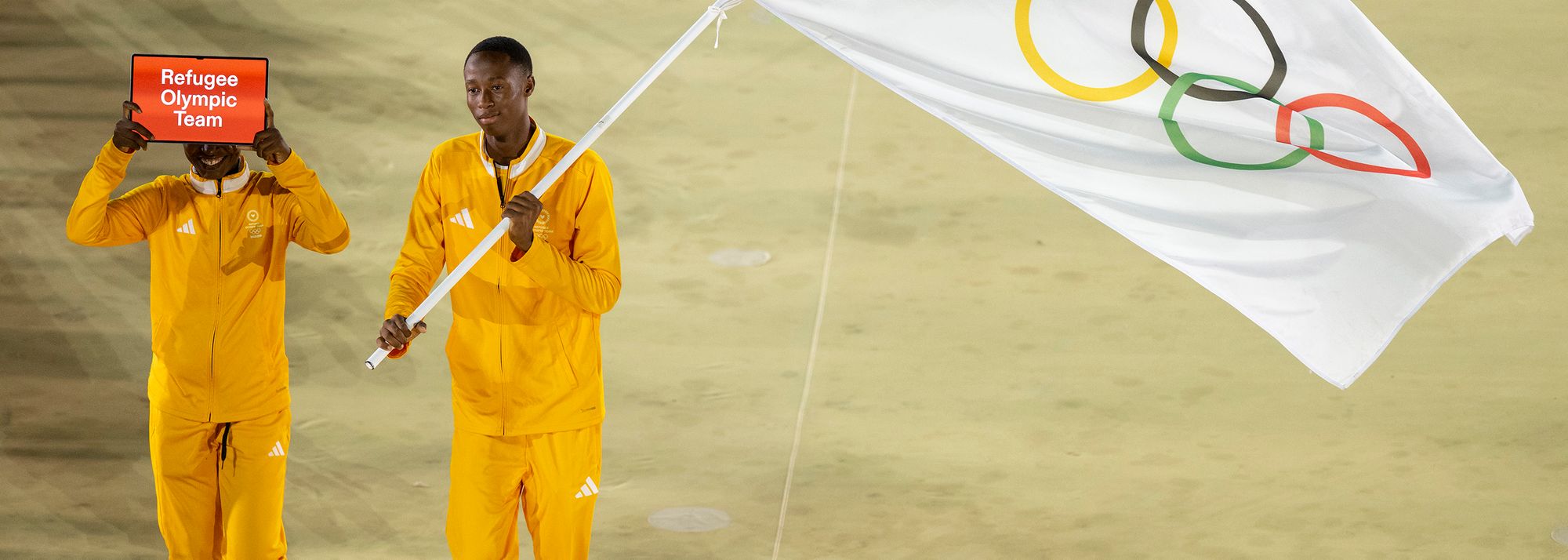


Flag bearer Rachid Rochene in Dakar (© OIS/IOC  Will Palmer)
The Dakar 2026 Youth Olympic Games marked a historic first for the Refugee Olympic Team, which made its debut at the event.
For the six young athletes who have been shaped by displacement and uncertainty, competing in Senegal was about more than running races.
More than a decade ago, a five-year-old Rachid Rochene fled war in the North Kivu province in DR Congo, leaving behind the only home he had ever known in search of safety.
On 31 October 2026, he proudly carried the Refugee Olympic Team flag at the opening ceremony.
“Carrying the flag was a dream come true for me,” said the 16-year-old. “I practised in the tunnel before we came out and I felt very proud. Not everybody gets the opportunity to carry a flag, so being a flag bearer meant a lot to me.
“I felt like I was carrying all the refugees on my shoulders. That flag represented hundreds of refugees back home, and I was proud to represent them. It meant so much to me.”
He competed in the 200m heats in the sweltering conditions at the Complexe Iba Mar Diop, clocking a personal best of 24.32.
“I am so happy to be here. It was my first time, my first experience, and I think I have done my best,” he added. “I'm so proud of myself, considering where I come from.
“I have learnt a lot from my fellow athletes. They are not necessarily better than me; they only have the experience that I do not have. That's what I am lacking, but I know I will make it.”
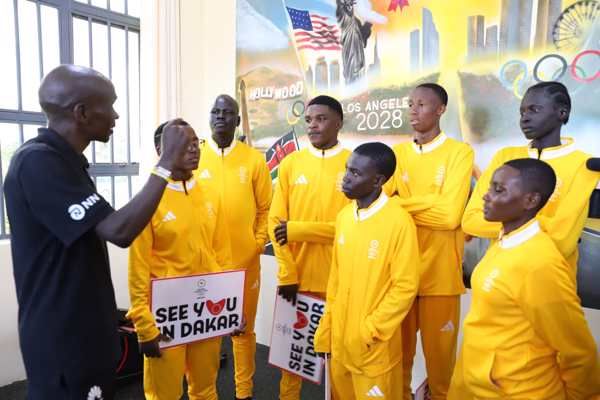
The team was mentored by marathon great Eliud Kipchoge, who was moved by watching the athletes embrace their identities and rise above their circumstances.
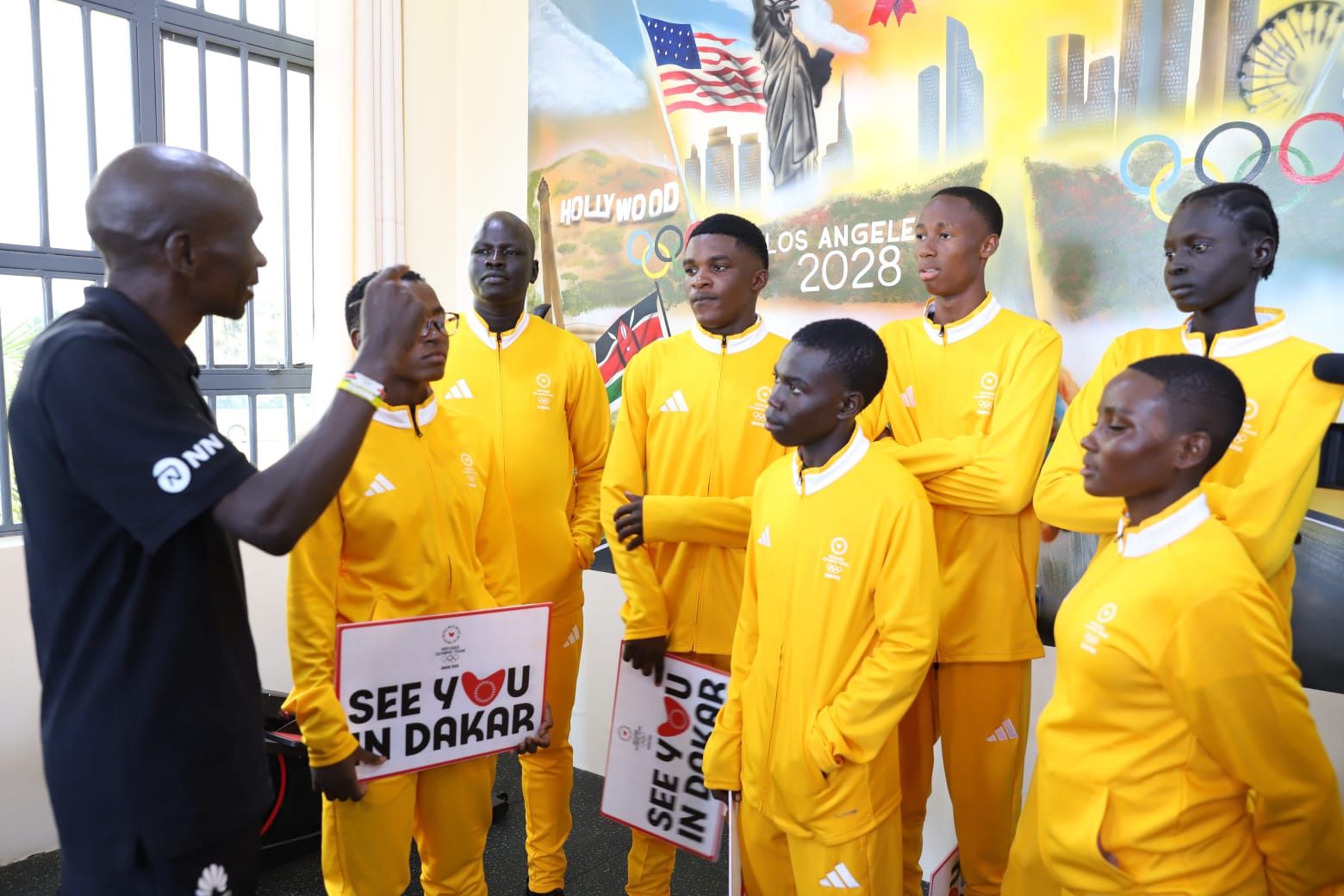
Eliud Kipchoge addresses Refugee Olympic Team for 2026 Dakar Youth Olympic Games during a mentorship session (© Stephen Rutto)
“I have been mentoring the refugees for the last three years, but to see that, to come up and accept that they are refugees and then they move on, is what has actually stayed with me,” said the two-time Olympic champion.
“I told them that we are all equal. All of us in this world, we are equal, so compete with everybody because this is the world. Respect the sport and let us all use sport and unity, make a sports family so that we can walk around the world to be united, to be together, to bring peace and to bring belonging.”
Rochene’s teammate Florence Masumbe also posted a personal best of 29.53 in the women’s 200m heats.
“I feel happy because I am here. It means a lot because I have colleagues I left in Uganda. The race went well. I need to listen to my coach more and I will get better,” she said.
“I want all refugees to know that anything is within their reach. If I have been able to compete here, anything is possible.”
An unfortunate last-minute injury barred Nyataba Gatloth Kuek from taking to the track in the women’s 800m, but the trip for the South Sudan native was full of lessons, nonetheless.
“I was really looking forward to competing and testing the training I had gone through,” she said. “However, having seen the level of competition here, I have realised that I need to double my efforts and work even harder. I believe I could have been among the best, but I am also sure the other competitors would have challenged me.”
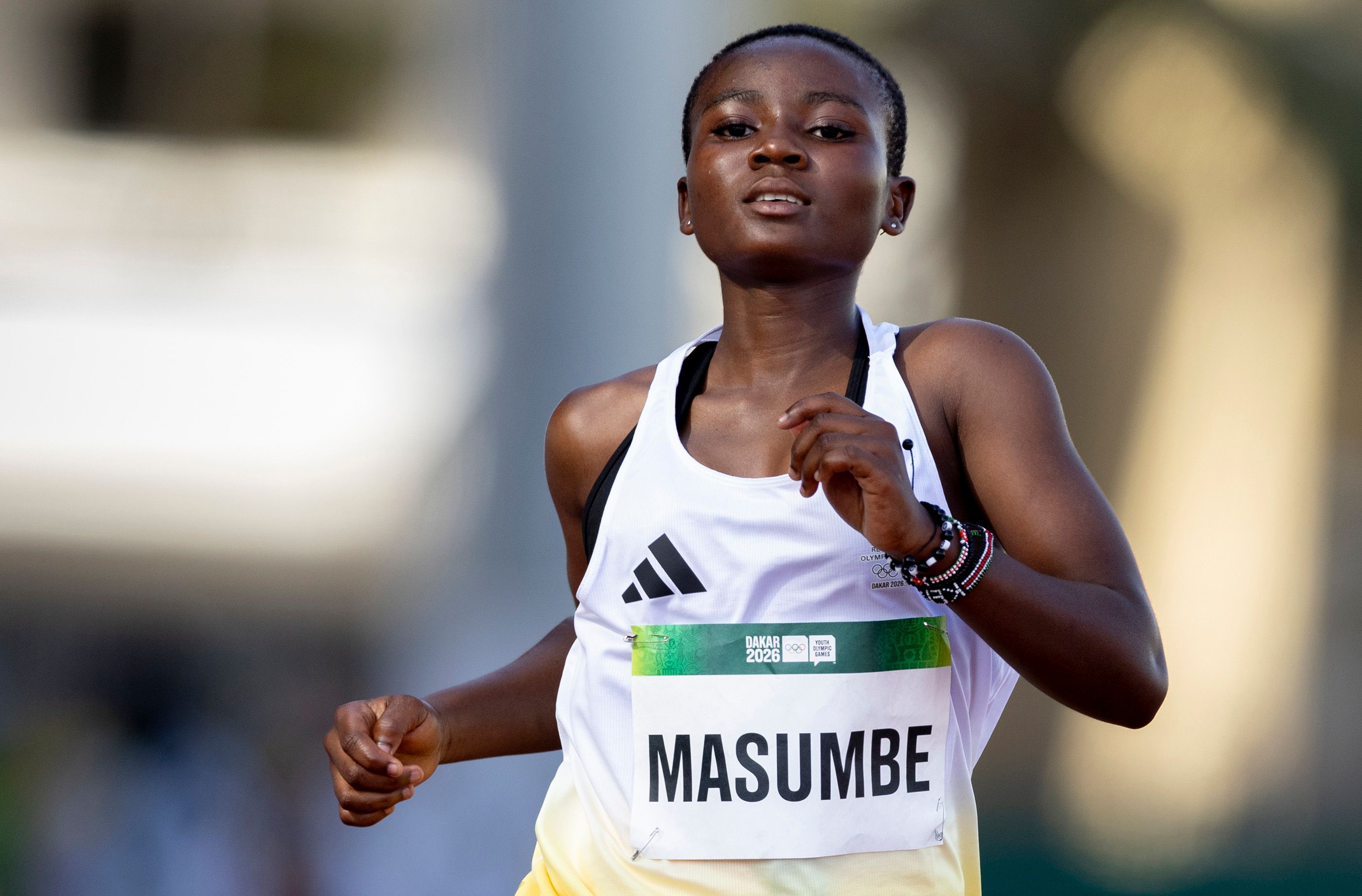
Florence Masumbe at the Dakar 2026 Youth Olympic Games (© OIS/IOC  Kieran Cleeves)
Clement Niyomuhoza, who set a personal best in the men’s 800m, wants to use the experience in Dakar to be ready for future events, including the 2028 Los Angeles Olympics.
“It was difficult for me because I did not win, but I was still very happy because I have competed at the Youth Olympic Games,” he said. “I will always remember that day. I have gained experience that I can share with my fellow athletes. They will see me competing again in Los Angeles.”
In addition to the four track and field athletes, the team also had Lourance Namukiza (taekwondo) and Arno Yafunga (judo) who reached the bronze medal match.
Beyond competing, the team explored Senegalese culture and food, and met IOC President Kirsty Coventry and the Honorary President, Thomas Bach.
They also visited the African Renaissance Monument in Dakar, Gorée Island and the Museum of Black Civilisations. A trip to Saly, one of the three venues for Dakar 2026, also gave them an opportunity to watch beach wrestling, a popular sport in Senegal.
“We enjoyed our stay at the village, visited different places, went to the zoo to see the animals and had an opportunity to visit the island,” said Kuek. “We enjoyed it so much, and this has been one of the best experiences for me.”
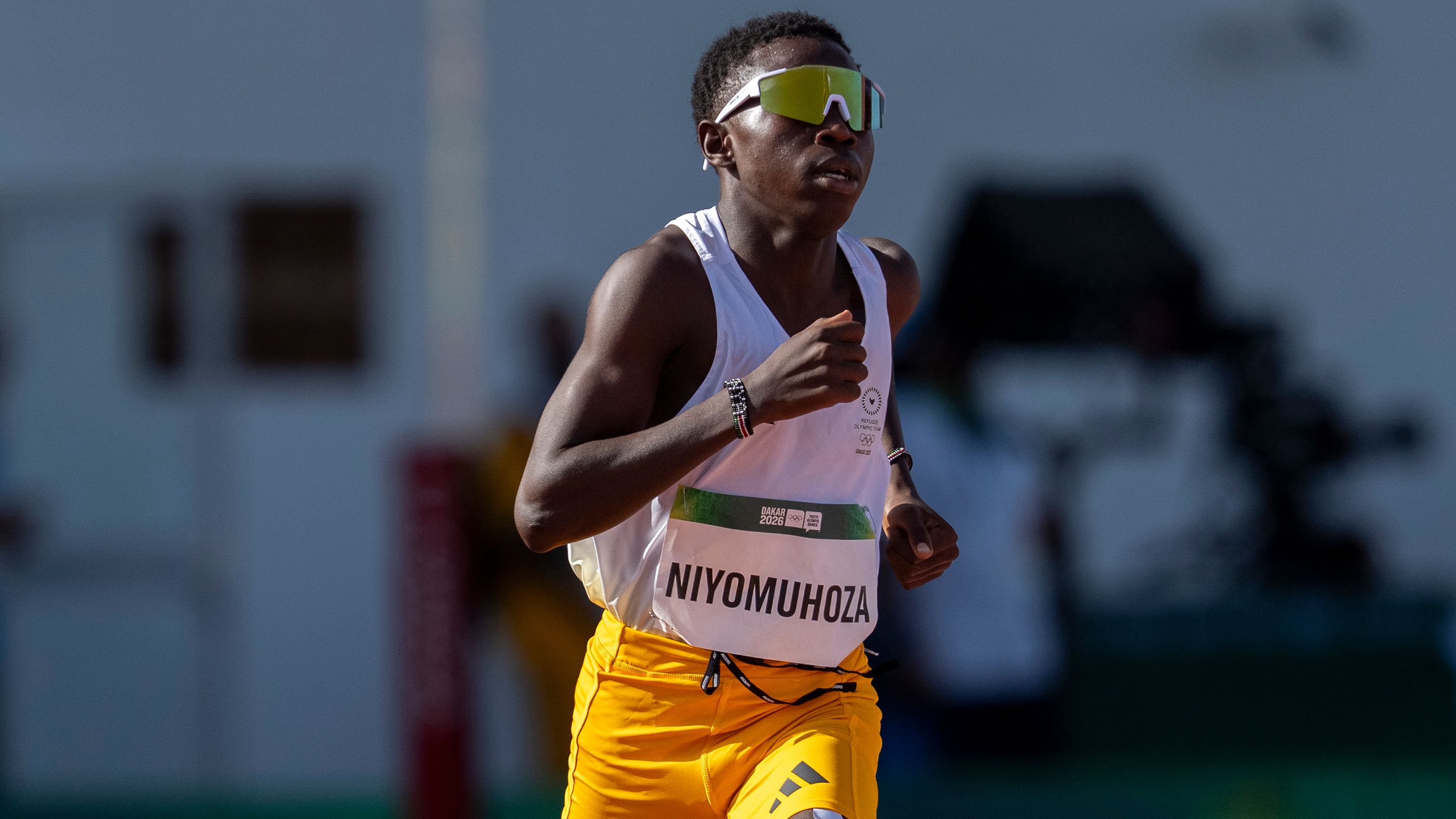
Clement Niyomuhoza at the Dakar 2026 Youth Olympic Games (© OIS/IOC Joel Marklund)
The Olympic Refuge Foundation (ORF) collaborated with World Athletics, UNHCR and the national Olympic committees and national federations of Kenya and Uganda to make the trip a success for the athletes.
“For these athletes, Dakar was about much more than competing,” said Olympic Refuge Foundation Senior Manager Gonzalo Barrio. “It was an opportunity, friendship, belonging and an opportunity to represent something bigger than themselves. They represented the first Refugee Olympic Team at a Youth Olympic Games with determination and pride and showed the world what is possible when we give opportunities to refugee athletes. For the ORF, these Youth Olympic Games represent the starting point of new opportunities for young refugee athletes around the world.”
Refugee Olympic Team Head of Office and UNHCR Senegal and Protection officer Fanette Blanc said: “Dakar 2026 has shown the world what refugee youth are capable of when given the opportunity to learn, compete and thrive. The participation of the refugee youth team is more than a sporting achievement; it is a testament to the power of inclusion and the importance of investing in the potential of displaced young people. Through sport, we can build confidence, strengthen protection, and create pathways towards belonging, opportunity and solutions.”
World Athletics Community Relations & Public Affairs Senior Manager Alice Annibali said: “The participation of the first refugee team at the Youth Olympic Games will long be engraved in their hearts and minds. They competed among peers from around the world and were received with open arms and generosity. This is Athletics for a Better World. These young refugee athletes return having experienced the value of inclusion, dignity, identity and the true sense of belonging.”
The Dakar experience offered the six athletes an opportunity to compete on an international stage, which will offer a springboard for their careers.
Kipchoge, meanwhile, has a dream that goes beyond athletics.
“I hope in future we will get rid of refugees, because if people accept each other and live in peace and unite the whole world, then there is no fight, there is no war.”
Martin Moses for World Athletics