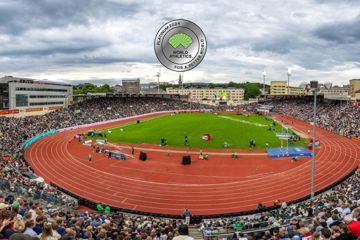




The Oslo Bislett Games (© Diamond League AG  Thomas Windestam)
In 2024, the Oslo Bislett Games became the first one-day athletics event to earn platinum level recognition against the Athletics for a Better World (ABW) Standard, the evaluation system implemented by World Athletics that year that measures an event’s achievements in sustainable delivery. With their 2025 edition, the storied Wanda Diamond League meeting became the first event to retain the system’s highest level, underscoring its role as one of the sport’s finest examples of sustainability in action.
Strong initiatives and progress were documented in several key areas, including energy, communication, procurement, and athlete partner and city engagement.
Pioneering energy and power initiatives
Bislett Stadium is 100% operated by renewable energy, which lies at the core of its energy planning and operation. LED lighting has been installed across most areas while the stadium's solar panels and backup battery storage contribute to the venue’s pioneering model for self-sufficiency and resilience.
At least 74% of spectators used public or active transport to reach the stadium. That effort was supported by a collaboration with Ruter, the local public transport authority, which ensured that a round-trip ride on the transport system tickets was included with the event's admission ticket.
All of the event's 372 tonnes of CO2e emissions – about 99% of those from athlete travel – will be offset, one-third through local partner Hafslund and two-thirds through a joint certified Wanda Diamond League project.
Another innovation introduced this year was the use of mobile solar powered battery in the hospitality area, offering another example of how fossil fuels, in this case typically diesel, can be eliminated from the back-up energy system.
Oslo-Stockholm train connection
Once again, one of the most noteworthy initiatives was a zero-emission transfer of 109 athletes, personnel and media from Oslo to Stockholm for the Bauhaus-Galan meeting in the Swedish capital, via a collaboration between organisers of the respective events that was five years in the making.
The journey began at the Oslo meeting hotel, located just a few hundred metres – a short walk – from Oslo's central station, where specially-booked trains awaited. The five-hour train journey, which passed through serene settings that included dense forests and clear Nordic lakes, ended at the central station in Stockholm, just across the street and a two-minute walk from the meeting's main hotel. That one-way train journey released 356.86kg (0.35 tonnes) of CO2 equivalent into the atmosphere, 30 times less than the CO2e that would have been emitted if those 109 people flew. That contributed to a substantial reduction in the event's carbon footprint and saving 10.5 tonnes of CO2e.
The collaboration grew in 2025 to include the Paavo Nurmi Games in Turku, Finland, with a biogas-powered ferry across the Baltic Sea.
Improved sustainability messaging and communication
A more unified communication plan, introduced in 2025, focused on improving sustainability messaging and communication across the event. Those efforts witnessed an increase in sustainability stories and engagement on social media platforms, more effective messages to spectators, and strengthened internal sustainability-related communication to staff and volunteers.
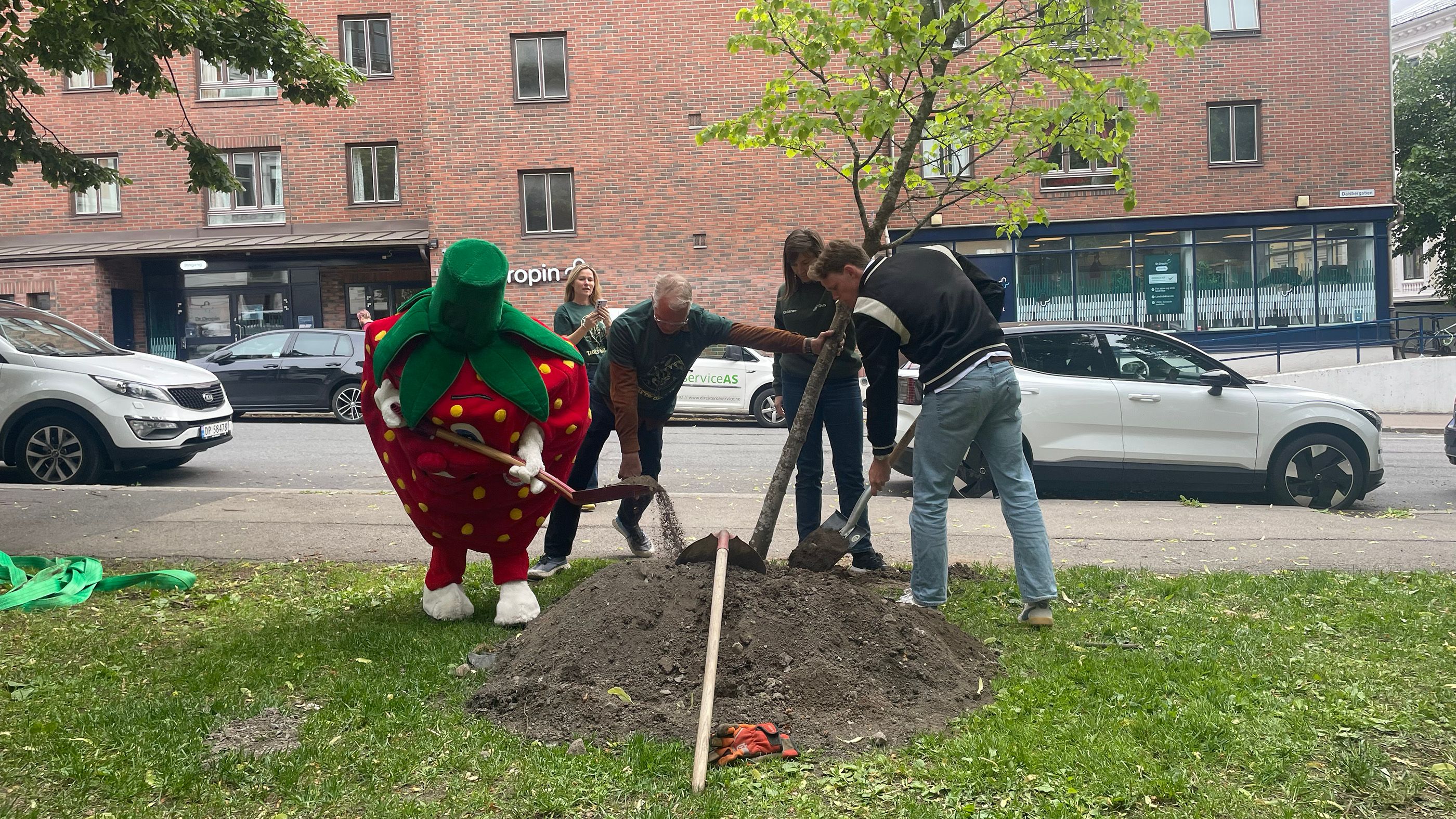
Athletes, including Karsten Warholm, Markus Rooth and Sander Skotheim, participated in several sustainability actions and campaigns, included tree-plantings, waste reduction campaigns and other community outreach activities, which were amplified across their own and event social media channels.
Procurement and catering highlights
Procurement has continued to follow internal sustainability guidelines, in alignment with the ABW Standard, with an emphasis on local sourcing, circularity and environmental certifications. More than 90% of suppliers are located within 100km of Oslo, with key suppliers, including the VIP team and cleaning partners, now having sustainability clauses in contracts.
Food and catering remained a high priority area. All catering partners follow the event's sustainability criteria, with more 80% of ingredients sourced locally. Vegetarian and vegan options were offered across all guest groups including 100% plant-based hot meals for volunteers. VIP catering fully complied with washable and reusable dishes and cutlery.
Also noted were continuing improvements in waste reduction. Materials recycling increased to 56.5%, shy of the event’s 70% target but still a marked improvement from 23% in 2022.
On the social impact side of the event, notable achievements include a 50/50 gender balance in the organising committee, implementation of universal design and accessibility measures at the venue and collaboration with local athletics clubs to ensure active volunteer participation. All volunteers and staff were also provided with anti-discrimination and safeguarding information.
About the Athletics for a Better World Standard
In January 2024, sustainability reporting through the Athletics for a Better World Standard became a requirement for most global elite competitions managed or awarded by World Athletics. More than 100 events completed sustainability reporting for their 2024 editions and more than 100 have either started or completed their ABW Standard reporting for 2025. When fully adopted, the ABW standard will be the largest sustainability evaluation system in the sport industry.