




Athletes contest the marathon during the World Athletics Championships Tokyo 25 (© World Athletics  Mattia Ozbot)
World Athletics and Siemens Healthineers have joined forces to support medical teams with point-of-care testing (POCT) and diagnostic imaging at major athletics events, helping to enhance athlete safety and refine how medical teams support athletes and spectators.
Deploying the epoc Blood Analysis System and the Acuson Sequoia ultrasound system at events is helping to set new benchmarks for specialised medical care in what is increasingly referred to as ‘endurance medicine’.
Endurance events such as marathons, race walking, trail and mountain running pose unique health risks, often requiring immediate and specialised care in remote or high-pressure environments. Traditionally, athletes requiring diagnostic tests would be transferred to hospital, but transport during large-scale events can delay clinical decisions and affect recovery. As a result, race directors and medical teams are increasingly prioritising on-site testing.
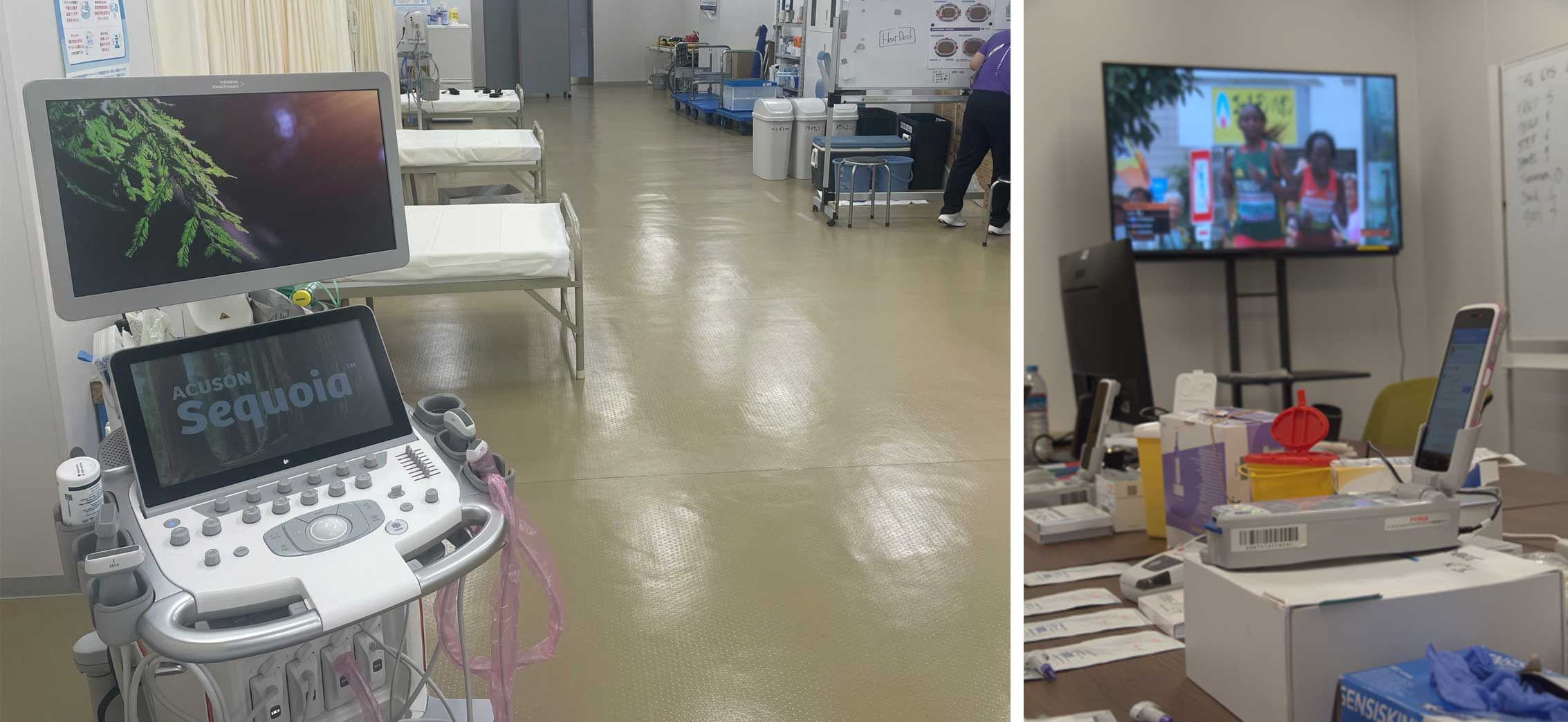
Point of care critical care solutions (© Siemens Healthineers)
“The benefit of point-of-care testing is being able to care for people in need wherever they are, as soon as possible, to make the biggest impact,” said Bob Stowers, Head of Point of Care Diagnostics at Siemens Healthineers.
In 2025, Siemens Healthineers supported the World Athletics Health and Science Department and local organising committee medical teams at three major global events, providing blood point-of-care testing and diagnostic imaging. At the World Athletics Indoor Championships Nanjing 25, the Acuson Sequoia system was used to help manage musculoskeletal injuries and other medical challenges among more than 1200 elite athletes from about 130 countries.
Musculoskeletal injuries such as strains, tears and contusions are common in high-intensity disciplines including sprints, hurdles and jumps. Rapid assessment is essential to guide decisions on treatment, participation and recovery. Having ultrasound imaging available directly at competition venues reduced the need for hospital transfers, minimised waiting times for diagnoses and provided athletes and teams with immediate, clear information on injuries. Scans conducted in medical areas also enabled a more discreet, athlete-centred approach. World Athletics is working to equip event medical facilities with the tools and protocols needed to support this model of care.
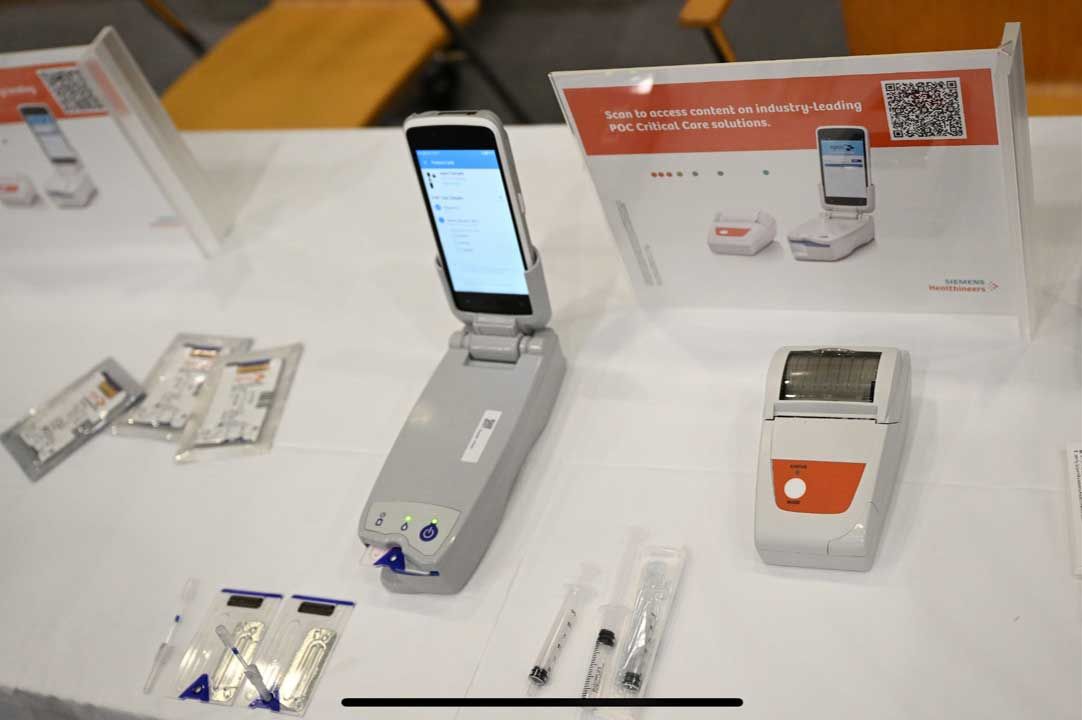
Point of care critical care solutions (© Siemens Healthineers)
Last year, a research project on elite athlete heat adaptation and hydration strategies was conducted during the World Athletics Championships Tokyo 25. The epoc system was used to analyse small blood samples and assess key markers such as electrolytes, lactate, pH and creatinine to help manage dehydration, overhydration and heat-related illness. Sampling was conducted with support from the Faculty of Sport Sciences at Waseda University (Saitama, Japan). Results are expected in the coming months.
“Having point-of-care devices on site is a game changer to provide better care and treatment during endurance events by responding faster and more effectively to heat-related and hydration emergencies,” said Dr. Stéphane Bermon, director of the Health and Science Department at World Athletics. “This evidence generation will help support our effort to share best medical practice and standardise point-of-care testing across the world-renowned endurance events we support.”
“We look forward to publishing our findings to improve athletes’ knowledge and contribute to the next iteration of care provided by endurance medical teams,” added Dr Yuri Hosokawa, Faculty of Sport Sciences, Safety and Performance Optimisation Laboratory at Waseda University.