

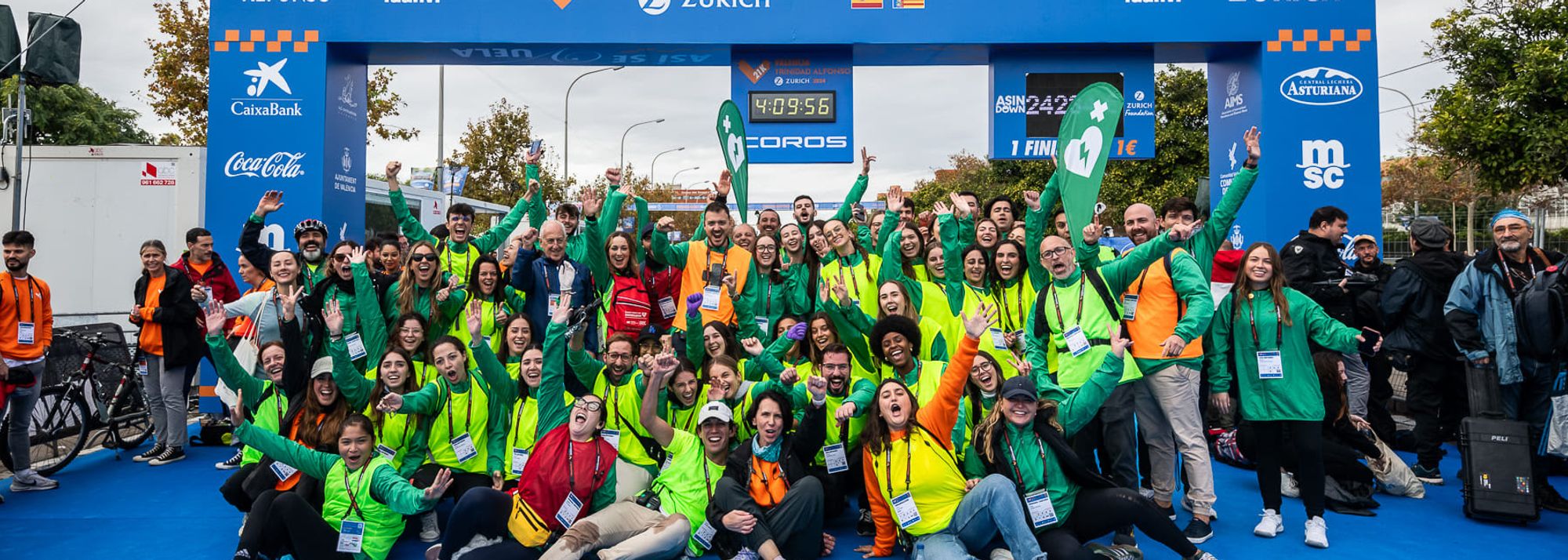


Valencia Marathon 2024 - Medical Staff
Virginia Lopez, Medical Director of the Valencia Marathon, shares her insights and highlights the positive impact the Race Emergency Medicine Course has had on their medical operations:
“I’m the Medical Director for the Valencia Half Marathon and Marathon, and from the moment I accepted the position, I knew it would be one of the biggest challenges of my professional life. I became deeply focused on ensuring the safety of both races and developed clear objectives and action plans to reach the highest standards in both.
One of the first actions I took was to build my own team of healthcare professionals for the races. This loyal and efficient team allowed me to train them not only in emergency medicine specific to races, but also in the unique aspects of the event itself, which further strengthened their commitment. Since then, the protocols for managing the main health issues of the runners have been deeply ingrained in each team member. Thanks to their quick detection and early intervention, the number of transfers to city hospitals has been significantly reduced, which was one of the organization’s key goals.
Cardioprotection for both races was another major initiative. With the collaboration of local and national companies, we managed to distribute up to 58 defibrillators throughout the Valencia Marathon, along with properly trained personnel. This has enabled us to restore spontaneous circulation to six runners over the past seven years, right at the site of their cardiorespiratory arrest.
However, these actions initially lacked theoretical and institutional support, which I was able to gain through the Race Emergency Medicine Course (REMC) Level 1, I attended in Lisbon in 2022. This course not only provided me with the tools I needed to face the medical challenges that arise during competitions but also taught me how to manage large teams of healthcare professionals and develop effective prevention strategies.
Currently, one of my main objectives is to strengthen healthcare volunteering through incentive initiatives that can help attract more volunteers and improve their retention. After completing the REMC Level 2 in Rome this past March, I must admit that I returned with many fresh ideas to enrich my project, thanks to the specific theoretical insights and the exchange of knowledge with expert colleagues in this field.
Being responsible for the health of events like these requires a broad range of personal and professional skills. Even so, it’s not always easy to achieve specific objectives. I truly believe that support and cooperation among colleagues are essential for success in this field, and attending courses like these offers a valuable opportunity to foster just that.”