




Women who changed the sport
On International Women’s Day, we celebrate women who have not only excelled on the track, field and roads, but who have also helped shape athletics itself. Their impact goes beyond medals. They have challenged conventions, opened doors, fought for equality and supported the generations that followed.
From pioneers pushing against limits, to mothers redefining what elite sport can look like, to leaders helping shape the sport’s future – their stories show how athletics has evolved over time.
Pioneers: When participation was protest
Fanny Blankers-Koen
When Fanny Blankers-Koen arrived at the London 1948 Olympic Games as a 30-year-old mother of two, some critics questioned why she was even competing. She left with four gold medals – in the 100m, 200m, 80m hurdles and 4x100m – becoming one of the standout athletes of the Games.
At a time when women were often told that motherhood marked the end of sporting ambition, Blankers-Koen’s performances challenged that idea. She didn’t campaign with speeches; she simply kept winning.
Kathrine Switzer
In 1967, Kathrine Switzer ran the Boston Marathon despite women being officially barred from the race, enduring attempts to remove her during the event. “If I quit, nobody would believe women could run 26 miles,” she later recalled.
Her run became a defining moment in the push for change, eventually contributing to the inclusion of the women’s marathon at the Olympic Games in 1984.
Cathy Freeman
Few races carried as much expectation as Cathy Freeman’s 400m final at the Sydney 2000 Olympic Games. After lighting the Olympic cauldron at the opening ceremony, she returned to the track days later and delivered a memorable gold medal performance.
Earlier in her career she had celebrated her Aboriginal heritage at the Commonwealth Games, running with both the Australian and Aboriginal flags. “I run to prove to my people that we are strong and beautiful,” she said.
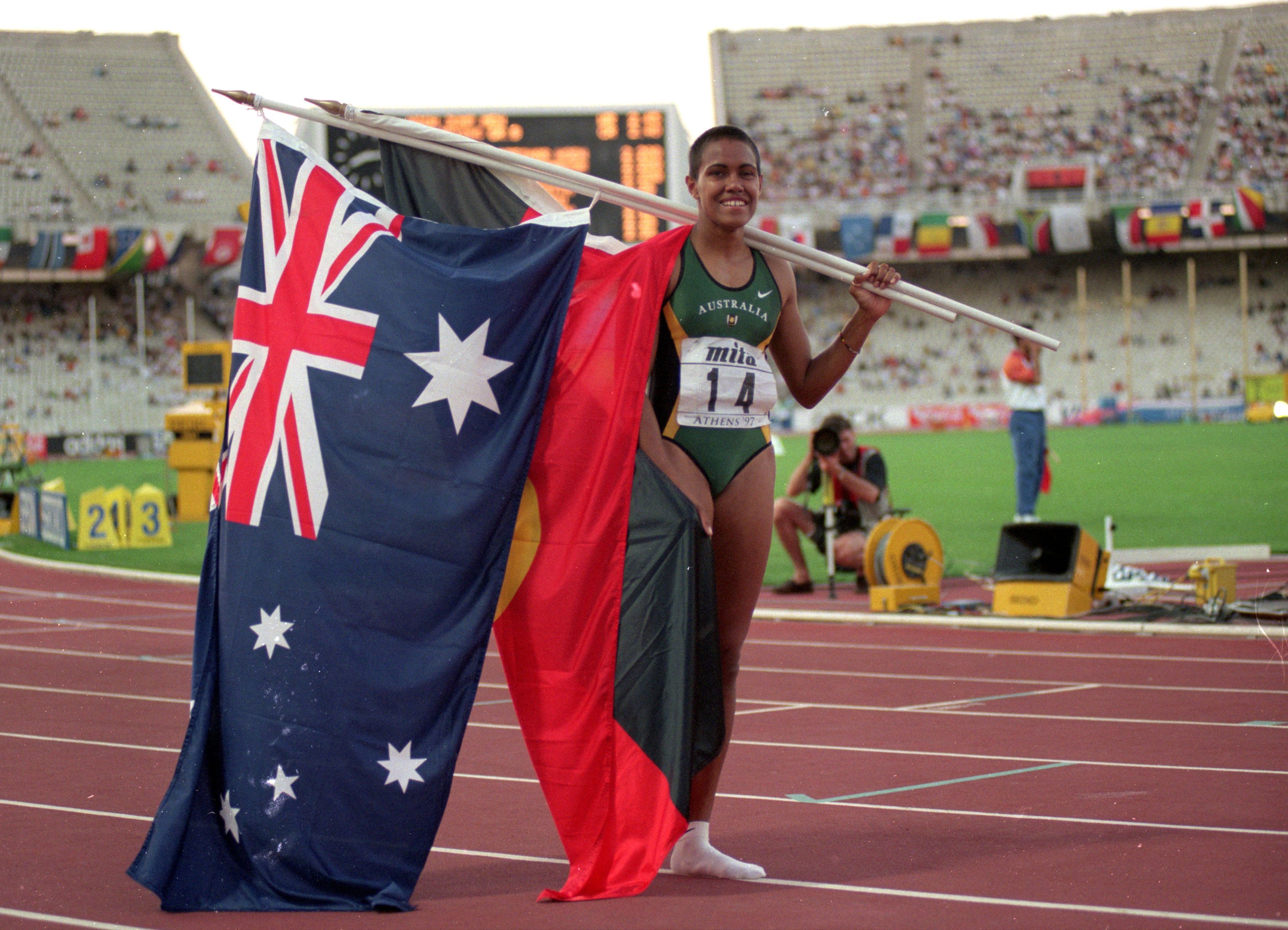
Cathy Freeman celebrates her 400m win at the 1997 World Championships in Athens (© Allsport / Getty Images)
Motherhood: From silence to structural change
Alysia Montaño
When Alysia Montaño competed at the US Championships while eight months pregnant, the images quickly travelled around the world. Already a six-time US 800m champion, she used the moment to spark conversation about how pregnancy and motherhood were viewed in elite sport.
“I wanted people to see what pregnancy actually looks like,” she explained. “Strong. Powerful. Capable.”
In the years that followed, Montaño became an outspoken advocate for mothers in sport, highlighting sponsorship practices and helping push for changes that would benefit future athletes.
Allyson Felix
A five-time Olympian, Allyson Felix had already built one of the most decorated careers in athletics when she spoke publicly about her own experiences around pregnancy and sponsorship.
“I knew that if I didn’t say something, nothing would change,” she said.
Her decision to raise the issue helped accelerate reforms designed to protect athletes during pregnancy. She later returned to competition after becoming a mother and added further medals to her collection.
Faith Kipyegon
Faith Kipyegon’s story stretches from running barefoot as a child in Kenya to breaking world records after becoming a mother. Since returning to competition following the birth of her daughter, she has added Olympic and world titles to her career.
“Becoming a mother changed my mindset,” said Kipyegon, who has since helped establish a mother-and-child hospital in her rural hometown of Keringet. “I run with more purpose.”
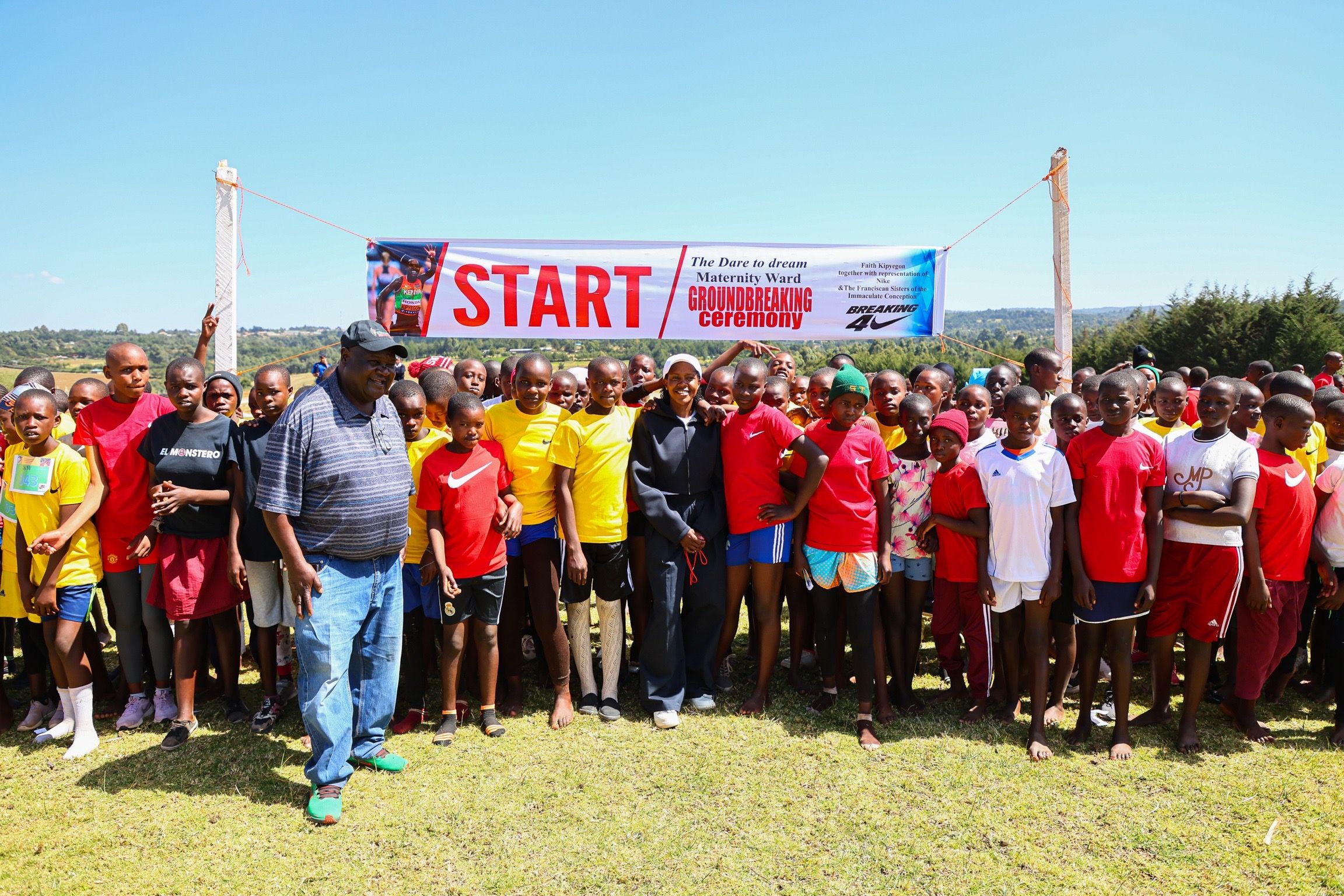
Faith Kipyegon at the launch of the Dare to Dream maternity facility (© Global Sports Communication)
Longevity: Excellence without expiry dates
Edna Kiplagat
Two-time world marathon champion Edna Kiplagat has enjoyed success across multiple decades, winning major marathons including London, Boston and New York.
“Patience is everything,” she has said, often crediting long-term planning and family support for helping sustain her career. Even into her 40s, she has remained competitive at the highest level.
Melina Robert-Michon
French discus thrower Melina Robert-Michon has competed across numerous Olympic cycles, building a career defined by persistence and consistency. Olympic silver medallist in Rio, she has remained a presence on the global stage for many years.
“Never closing the door too early,” she once said when discussing her approach to longevity in sport.
Shelly-Ann Fraser-Pryce
Shelly-Ann Fraser-Pryce first claimed Olympic 100m gold in 2008 and soon became one of the most recognisable figures in Jamaican sprinting.
After becoming a mother in 2017, she returned to win further world titles and run some of the fastest times of her career in her mid-30s.
“I’m not done,” she said – a simple line that summed up her mindset.
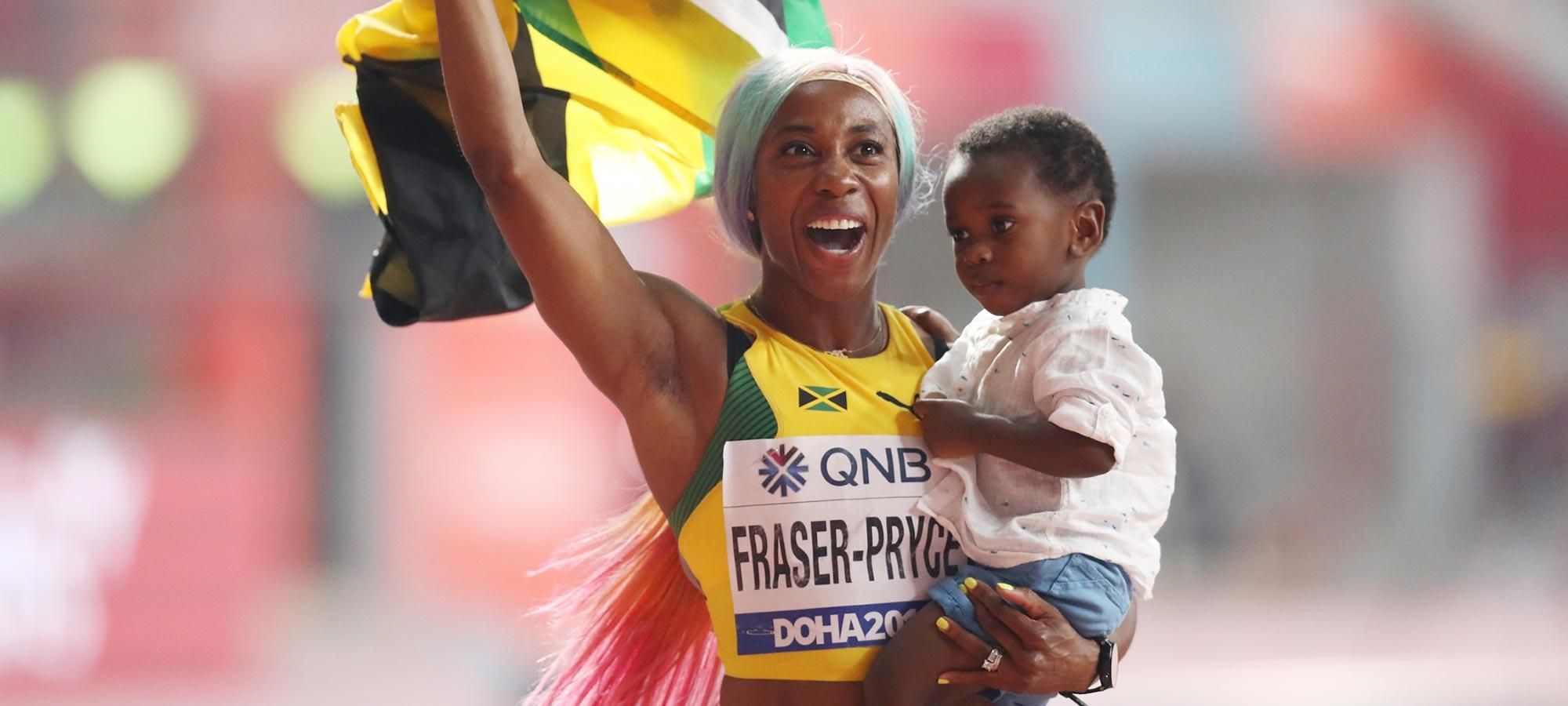
Shelly-Ann Fraser-Pryce after winning the 2019 world 100m title
From podium to policy: Leadership shaping the future
Nawal El Moutawakel
The 1984 Olympic 400m hurdles champion became the first Moroccan and Muslim woman to win Olympic gold. After her competitive career, Nawal El Moutawakel moved into leadership roles within sport and public life, including work with the International Olympic Committee and serving as a government minister in Morocco.
“Sport gave me a voice. I use it for others,” she once said.
Ximena Restrepo
Colombia’s 1992 Olympic 400m bronze medallist Ximena Restrepo later became the first woman vice president of World Athletics and now serves as senior vice president.
“We cannot talk about equality if women are not at the decision-making table,” she said, reflecting her long-standing focus on representation and governance.
Valerie Adams
Two-time Olympic shot put champion Valerie Adams now chairs the World Athletics Athletes’ Commission.
“It’s about making sure athletes feel heard,” she said. Her work off the field continues to shape discussions around athlete representation and welfare.
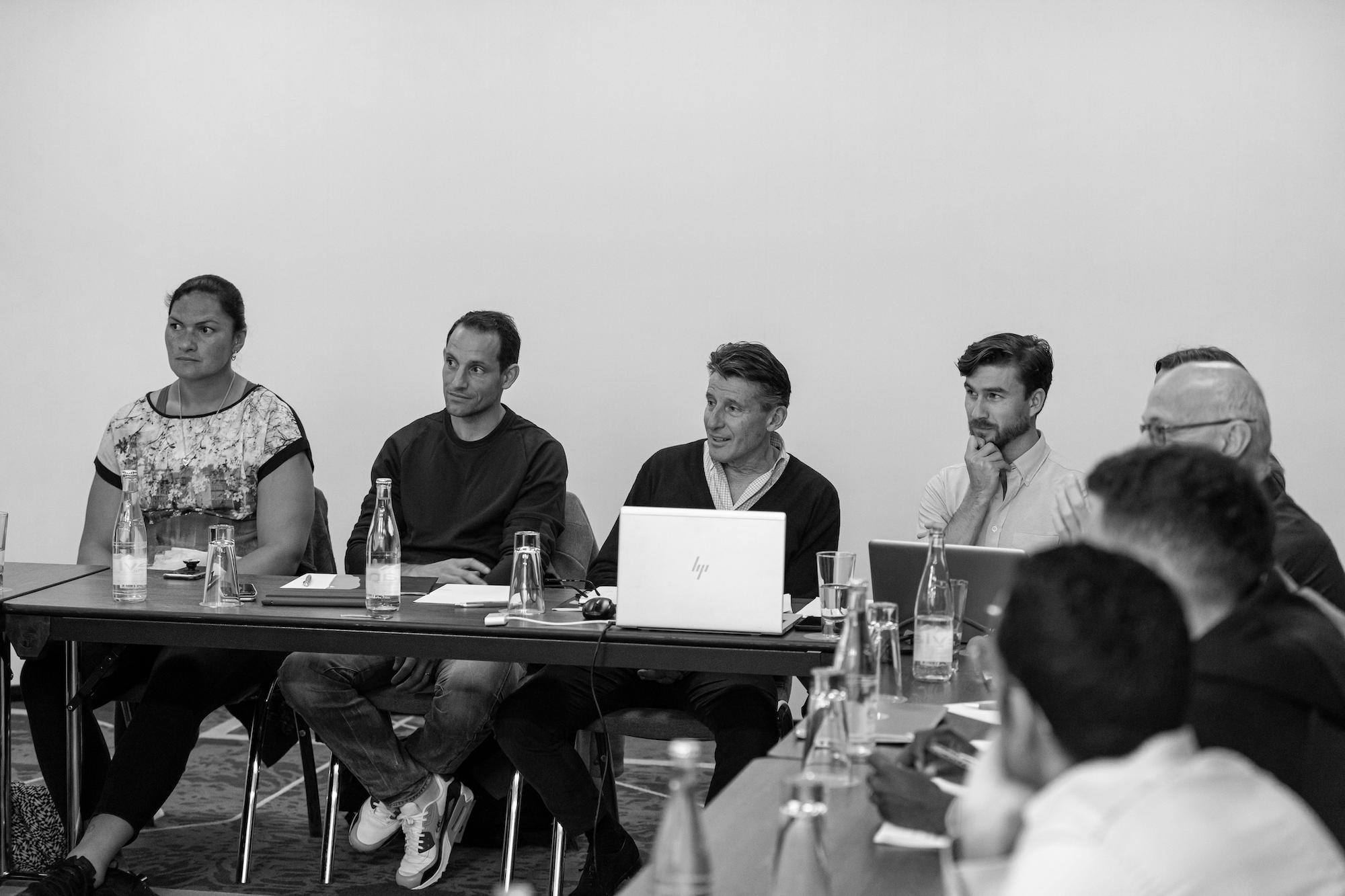
Valerie Adams, Renaud Lavillenie and Sebastian Coe at the Athletes' Commission Meeting in 2019 (© Philippe Fitte for World Athletics)
Mentorship: The multiplier effect
Jackie Joyner-Kersee
Widely regarded as one of the greatest athletes in history, Jackie Joyner-Kersee dominated the heptathlon and long jump during her career.
Today, many young athletes still seek her advice. “You don’t just train the body,” she often says. “You train the mind and the heart.”
Through her foundation and community programmes, she has continued to support youth development and education.
Mira Rai
Mira Rai’s path to sport was anything but straightforward. After a childhood spent as a child soldier in Nepal, she eventually discovered trail and ultra-running and rose to international success.
Now she mentors young girls in Nepal, helping them find opportunities through sport. “I don't know where I would be if I wasn't lucky enough to find support,” she said. “This sport can change lives for others like it did for me.”
Janeth Jepkosgei
Kenya’s 2007 world 800m champion Janeth Jepkosgei was a consistent presence on the global stage for several years.
After retiring, she turned her attention to mentoring younger athletes, including work with the Athlete Refugee Team. “I see myself in them,” she said.
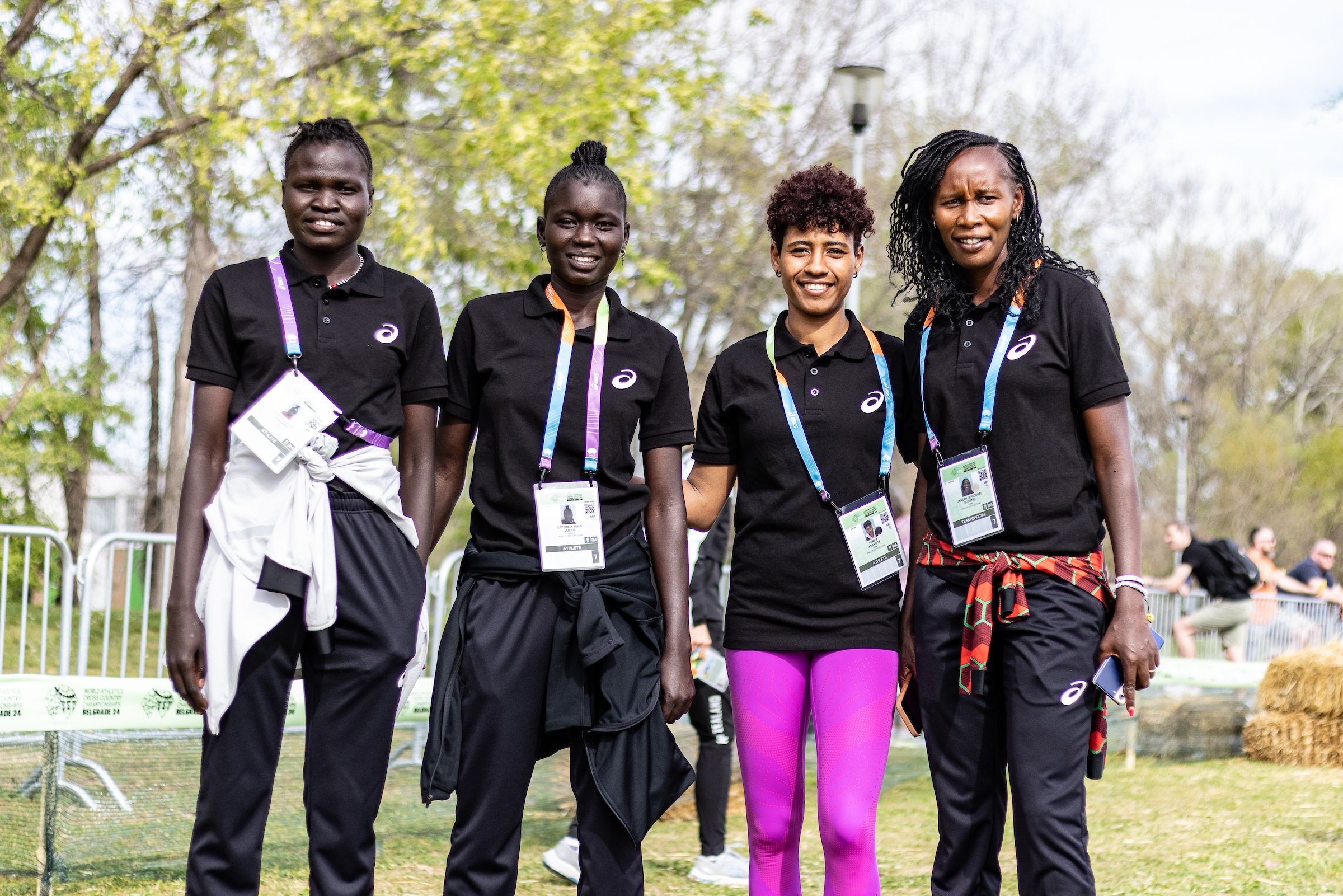
Perina Lokure Nakang, Esterina Irino Julius, Farida Abaroge and Janeth Jepkosgei on the course in Belgrade (© Christel Saneh)
Carrying the flame forward
These athletes competed in different events, different countries and different eras. What connects them is the way their influence has reached beyond results lists and podiums.
Each, in her own way, helped expand what was possible – and left something behind for the next generation to build on.
Ainhoa Serrano for World Athletics