

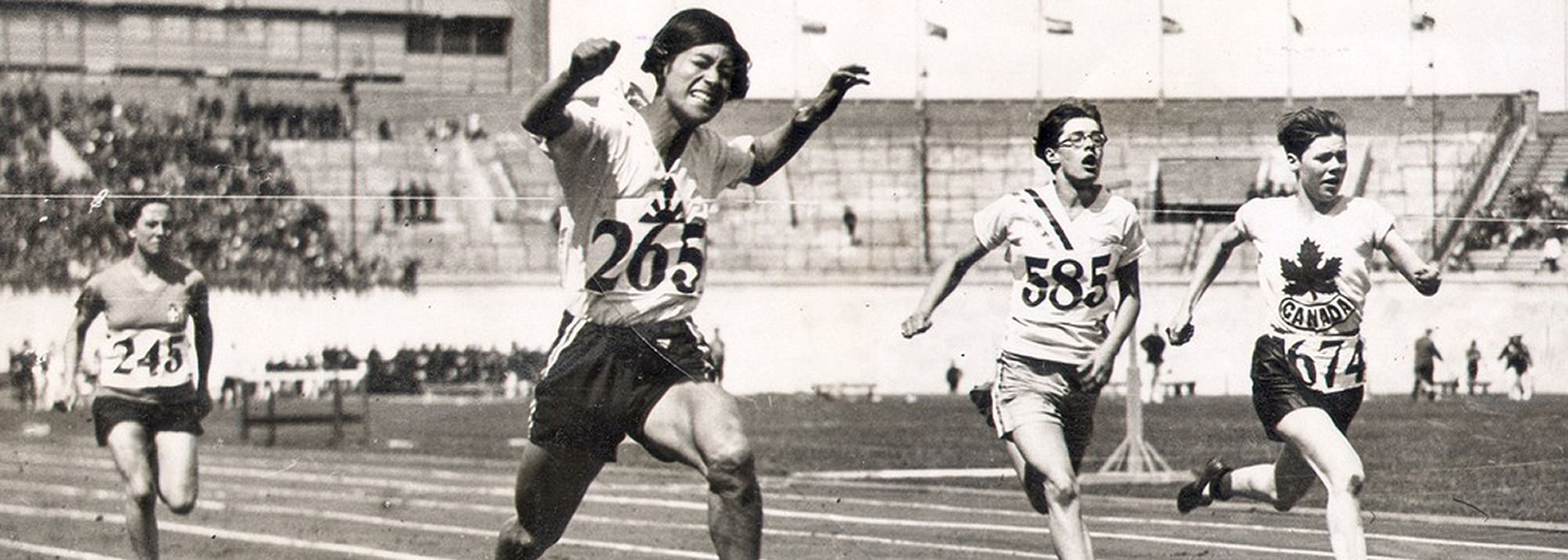


Kinue Hitomi at the 1928 Olympics (© Getty Images)
Today, 20 May, marks the centenary of the publication of The Latest Methods of Women’s Track and Field Athletics. Little known today, it was nevertheless the first athletics book written by a global female athletics champion – and its author, Kinue Hitomi, was only 19 years old.
The year of its publication, 1926, was also the year Hitomi set her first world records, two years before women were allowed to compete in athletics at the Olympic Games for the first time.
A century later, the 234-page book remains far more than a historical curiosity. Here are three reasons why it still occupies a unique place in evolution of the sport.
1. It features the first description of the use of starting blocks.
This centenary review of Hitomi’s 1926 masterpiece rewrites athletics history, shifting the credit for the earliest technical depiction of starting blocks from George Bresnahan to the Japanese pioneer herself. Her detailed illustration predates Bresnahan’s US patent for a “foot support” (filed April 29, 1927; patented February 5, 1929).
Although starting blocks were explicitly banned in 1935, the 1938 IAAF Congress authorised them with restrictions, ruling that they could be used “not as a material aid to the runner but to protect the track and to expedite carrying out the programme”; the subsequent rule book also reproduced Bresnahan’s patent design, naming him as the inventor. Yet, starting blocks had debuted as early as February 1910 at the Irish-American indoor games in New York.
Created to replace outdoor foot holes on indoor wooden tracks, where sprinters suffered ankle injuries and frequent slips that led to unstable, aborted starts, their early use was only pictured in triple Olympic champion Archie Hahn’s 1923 book ‘How to Sprint’, showing sprinter Jackson Scholz. Clearly drawing on Hahn’s work, Hitomi’s real breakthrough was to publish a detailed technical blueprint for her wooden blocks, an innovation that would later become an indispensable piece of equipment on athletics tracks around the world, establishing her as a true visionary of modern athletics.
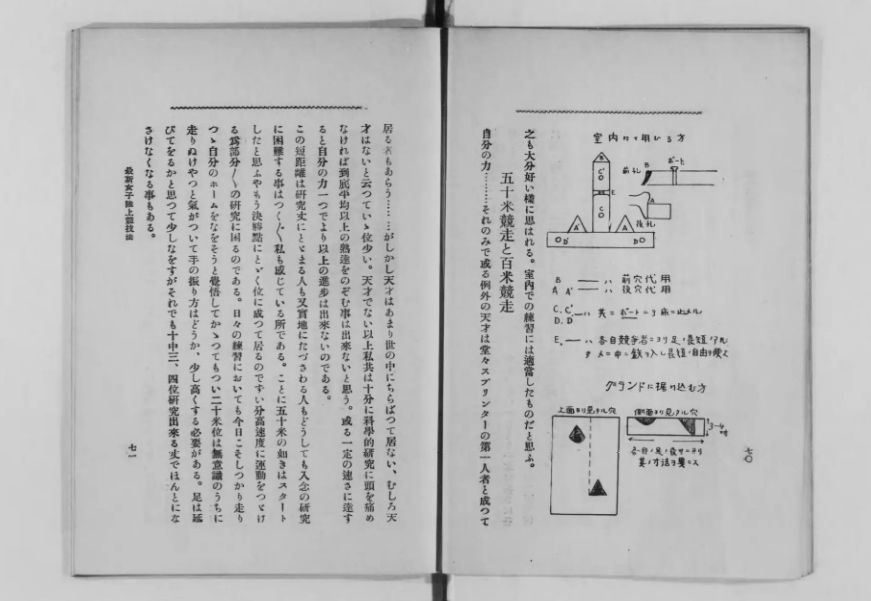
An excerpt from Kinue Hitomi's book
2. It gave women’s athletics a serious technical voice before the Olympic breakthrough
In the preface, Hitomi said the book was “eight parts” from her own experience and “two parts” from research in books, hoping with humility it might be of even slight use to a women’s athletics world that she described as advancing “with the force of a meteor.” Yet, she did not shy away from criticising the patronising tendency to treat female athletes as weak or childlike, which often produced guidance ungrounded in scientific research or lived experience.
Rather than debating whether women should practice athletics, Hitomi assumed they deserved proper instruction, formal rules, sound technique, and serious study.
Its 1926 publication coincided with fierce and heated debates within the sport's world governing body over women's participation in the 1928 Amsterdam Olympics. On 5 August 1926, the IAAF Congress in The Hague voted 12 to 5 in favour of their inclusion but restricted the debut programme to just five events (100m, 800m, 4x100m, high jump, and discus).
By contrast, Hitomi’s book boldly covered the complete men’s schedule. To compensate for the scarcity of female sports iconography, she used photos of male athletes to detail disciplines that would not reach the women's Olympic stage for decades, such as the triple jump (1996) and pole vault (2000).
Even as she bypassed institutional limits, Hitomi maintained a pragmatic outlook for daily training, noting: “Of these, some are suitable for women’s athletics and some are not generally practised. The method used in ordinary schools must be selected with attention to the strength and development of the students.”
Ultimately, her work belongs to that critical pre-Olympic era when women’s athletics was still being argued into existence, equipping the movement with an authoritative, unapologetic voice.
3. It offers rare insights into the daily life of Olympic athletes
Perhaps the most revealing aspect of Hitomi’s work is its meticulous focus on the athlete's everyday routine.
She documented fascinating four-week Olympic training schedules and meal plans from the 1924 Paris Olympic Village for elite Japanese athletes, featuring everything from miso soup and raw eggs to curry rice, sukiyaki, grilled fish, fruit, bread, coffee, and Western-style dishes.
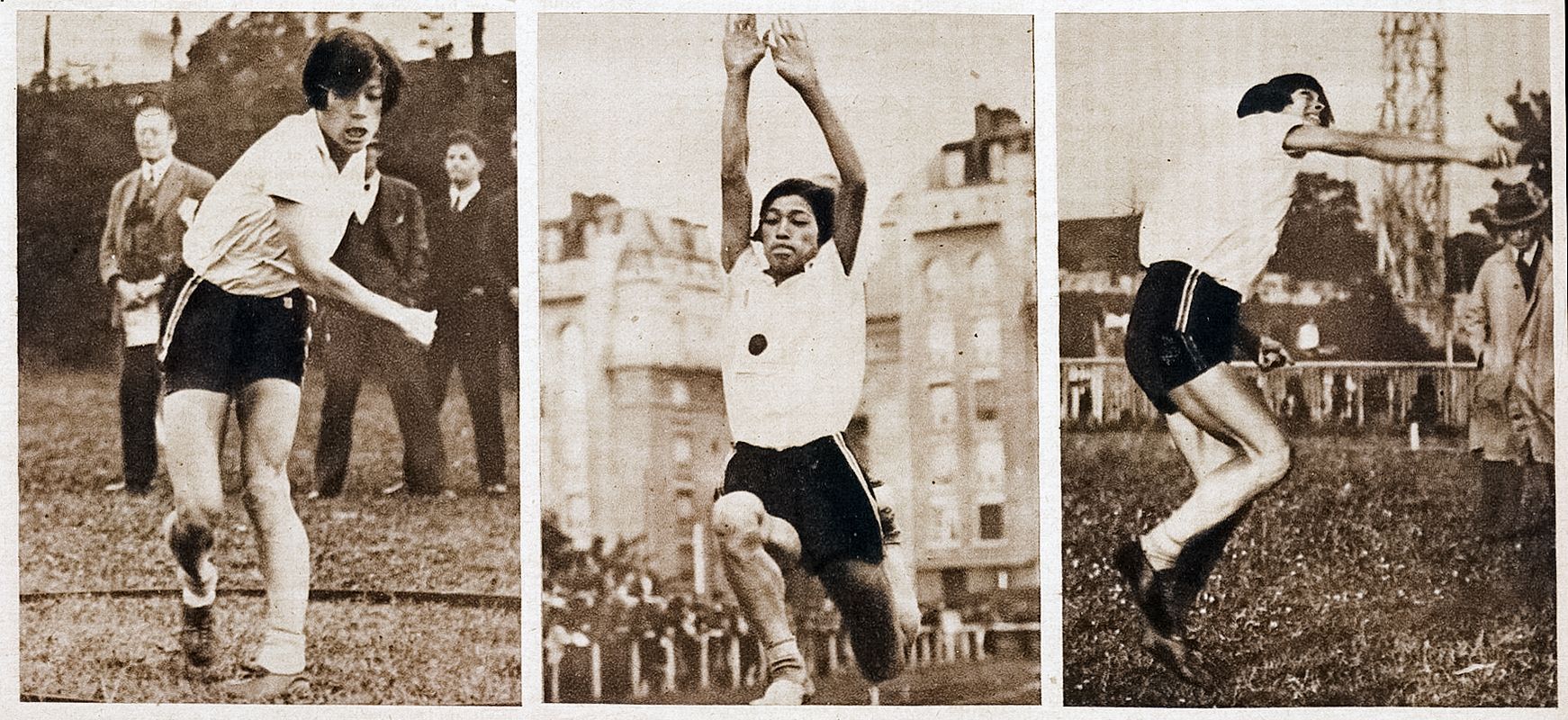
Kinue Hitomi competing in Paris in 1930
Although women’s athletics was not yet part of the programme, these multi-week training and dietary logs focused on sprinter Sasago Tani (who would become Hitomi's coach) and triple jumper Mikio Oda (destined to become Japan’s first Olympic champion in 1928). For sports historians, this is pure gold. It reminds us that the questions we consider cutting-edge today (nutrition, recovery, session management, and acclimation to global competition) were already being systematically dissected a century ago.
The terminology and high-performance environments have evolved beyond recognition, but the athlete's core challenge remains unchanged: how to train, recover, prepare, and perform.
Just three months after her book’s publication, Hitomi proved her theories on the track. Travelling as Japan’s sole representative to the 2nd Women’s World Games in Gothenburg, she won both the long jump and standing long jump. Two years later, at the 1928 Amsterdam Olympics, where she was again Japan’s only female athlete, she took a historic silver in the 800m, an event that was then dropped from the Olympic programme amid claims that it was too gruelling for women.
Hitomi was the inaugural world record holder in combined events (triathlon: 100m, high jump, javelin), ultimately setting six official world records and eight other world bests from the 100m to the 400m and across horizontal jumps. From 1928 onwards, she also dedicated herself to coaching her successors.
By merging world-class competition, prolific writing, and coaching, she entered 1930 determined to reform public perceptions of women’s sports in Japan. However, raising funds for the 1930 Prague Women's World Games in the wake of the global economic crisis proved an exhausting ordeal. The intense competition schedule that followed left her physically and mentally depleted, leading to her tragic, premature death at the age of just 24.
A century later, her pioneering manual remains a testament to a visionary who helped run women’s athletics into the modern era.
Pierre-Jean Vazel for World Athletics Heritage