

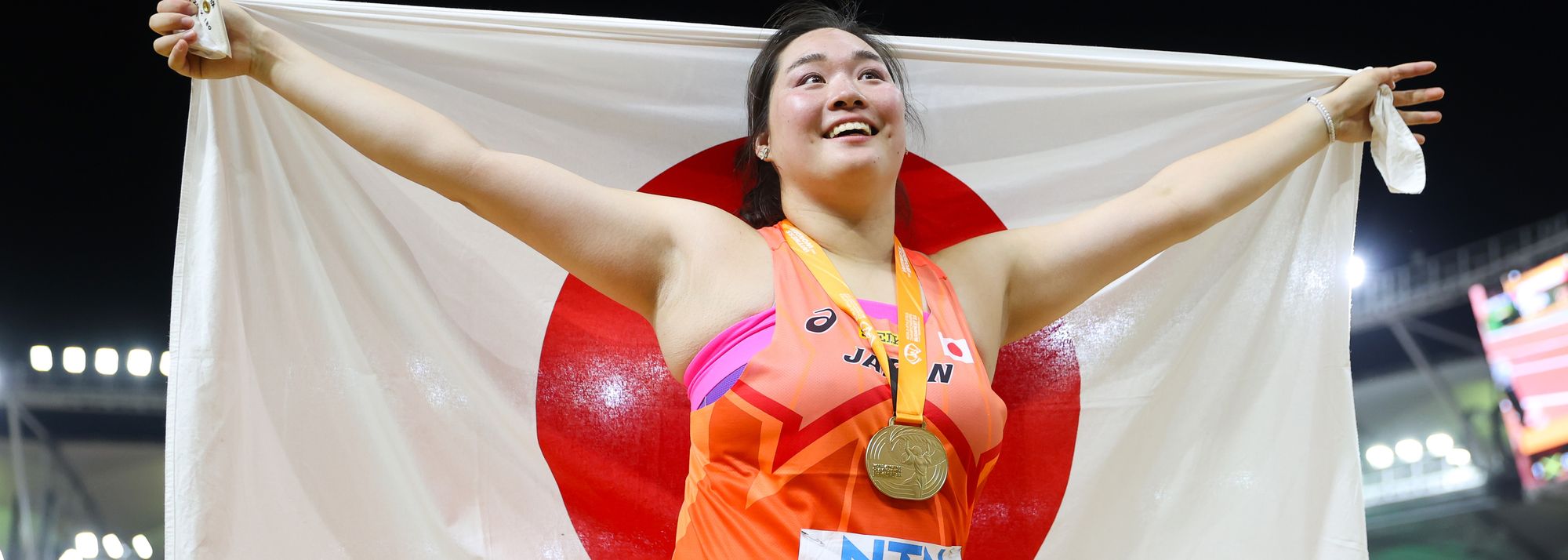


Haruka Kitaguchi celebrates her javelin win at the World Athletics Championships Budapest 23 (© Getty Images)
Later this year, the eyes of the athletics world will be fully focused on Japan with the World Athletics Championships Tokyo 25 taking place between 13-21 September.
The world’s stars will converge on the Japanese capital for nine days of action in the Japan National Stadium, the athletics venue at the Olympic Games four years ago, and the spotlight will certainly be on local hero and current javelin world No.1 Haruka Kitaguchi.
Expectations are running high that she can follow up her triumphs at the last World Championships in Budapest and the Olympic Games last summer with her third victory on the global stage.
However, the coming months will see not only preparations for the World Championships move up several gears but celebrations across the country as the Japan Association of Athletics Federation (JAAF) commemorates its centenary, having been founded on 1 March 1925.
Athletics had been part of the sporting landscape in Japan for the best part of half a century prior to foundation of the JAAF. After the Meiji Restoration in 1868 – a pivotal moment in Japanese history which saw the emperor restored and a rapid opening up of the country to western influences – during the 1870s and 80s, sports such as baseball and athletics became introduced into Japanese universities and schools.
Universities provide the spark
The first athletics meeting of note in Japan was held at the Imperial University (now The University of Tokyo) in 1883.
A British government-hired foreign instructor Frederick Strange was concerned about the poor physical condition of his students and introduced sports like rowing and cricket as well as athletics. In the case of the latter, the meeting became an annual fixture gaining the attention of athletes, fans and the media alike. Turn the clock forward nearly three decades, and Japan’s athletes were slowly becoming ready to make an impact on the international stage.
In July 1911, the Japan Amateur Sports Association, which doubled as Japan's National Olympic Committee, was founded with a view to sending a team to the following year’s Olympic Games in Stockholm and trials for athletes took place in November 1911.
Only a small team – just two athletes, sprinter Yahiko Mishima and marathon runner Shizo Kanakuri – was sent but was a historic one as it was the first time an Asian country sent an official team to an Olympic Games with Mishima distinguishing himself by reaching the 400m semi-finals.
“At the time (of the 1912 Olympic Games) it was noted that records set 16 years earlier at the 1896 Olympics nearly equalled Japan’s best records in 1912,” wrote the Japanese historian Professor Kei Ushimura in 2019. “Those concerned with the development of sports in Japan reasoned that if the country was 16 years behind the rest of the world, the next 16 years would offer an opportunity to catch up. And indeed, the beginning of the Taisho era (which lasted from 1912-26) saw a surge in publication of how-to books about track and field sports.”
Japan makes its mark internationally
With Stockholm being the inspiration, the first Far Eastern Games took place in Manila the following year and saw Zenji Inakagata earn gold in both the one mile and five miles road race.
At the third edition of the Far Eastern Games in 1917, which were staged in Tokyo and saw the country host an international meeting for the first time, Japan won eight of the 18 events contested.
Performances on the international stage gradually were improving and the Japan Amateur Sports Association joined what was then the International Amateur Athletic Federation in 1924 before handing over its membership to JAAF – then called the All-Japan Athletic Federation – when it was formed the following year.
Kinue Hitomi made headlines when setting world records in the long jump in 1926 and 1928 and, with the women’s long jump not on the 1928 Olympic programme, showed her versatility by winning an 800m silver medal In Amsterdam.
However, an ever bigger landmark moment in Japanese athletics came on 2 August 1928 when Mikio Oda, who had finished sixth in the triple jump four years before in Paris, became Japan’s first Olympic gold medallist in any sport, and Asia’s first athletics champion, when he won the triple jump with 15.21m.
In 1931, Oda went on to set a world record of 15.58m and following his retirement after the 1932 Olympic Games, where he finished 12th, he remained involved in athletics all his life as a coach and technical official.
Nambu follows in the footsteps of Oda
At the Los Angeles 1932 Olympic Games, Oda was superseded by his compatriot Chuhei Nambu.
Nambu had set a long jump world record of 7.98m in 1931 – which remained an Asian record until 1970 – and went into that event as the favourite but had to settle for third place.
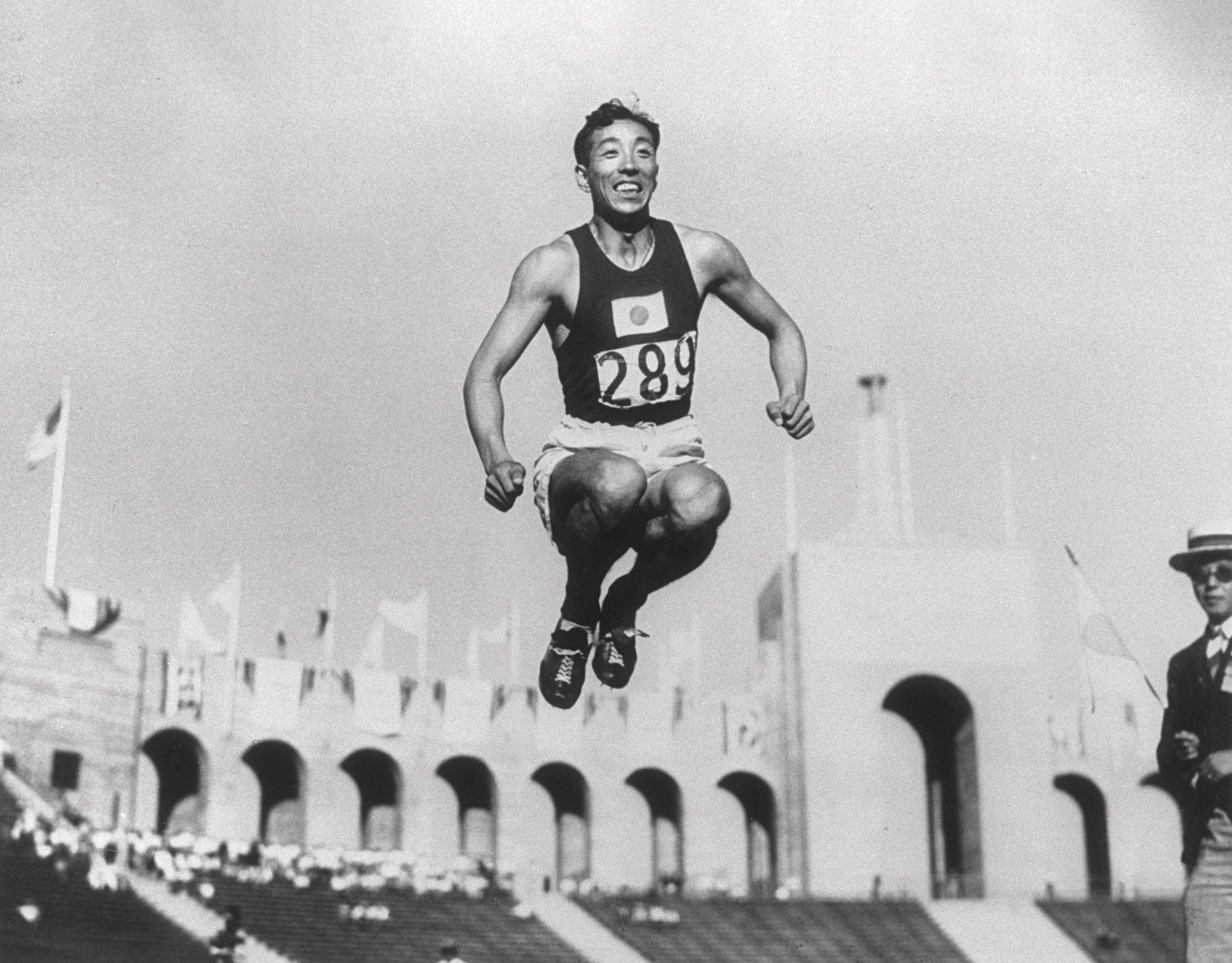
Chuhei Nambu
However, he bounced back two days later to win the triple jump, improving Oda’s mark with a fifth-round effort of 15.72m and becoming the only man to date to hold both the long and triple jump world records at the same time. World Athletics Heritage Plaques were awarded in 2022 to both Oda and Nambu and have been put on permanent display in the Japan Olympic Museum in Tokyo’s Olympic Park.
Appropriately, the plaques overlook the former site of Meiji Jingu Gaien Stadium in which Nambu set a world long jump record.
In 1936, Naoto Tajima became the third consecutive Japanese triple jumper to win at the Olympic Games, triumphing with a world record of16.00m.
Tokyo was awarded the 1940 Olympic Games, but the outbreak of the Sino-Japanese War meant that in 1938 the Japanese government decided it was unable to host the Games.
However, 21 years later in 1959, in the wake of the success of the 1958 Asian Games held in Tokyo, the Japanese capital the was chosen as the host city of the 1964 Olympic Games.
1964 Olympics herald a new era
Kokichi Tsuburaya ended Japan’s Olympic athletics medal draught – which stretched back to 1936 – by taking the bronze in the historic marathon won by Ethiopia’s Abebe Bikila.
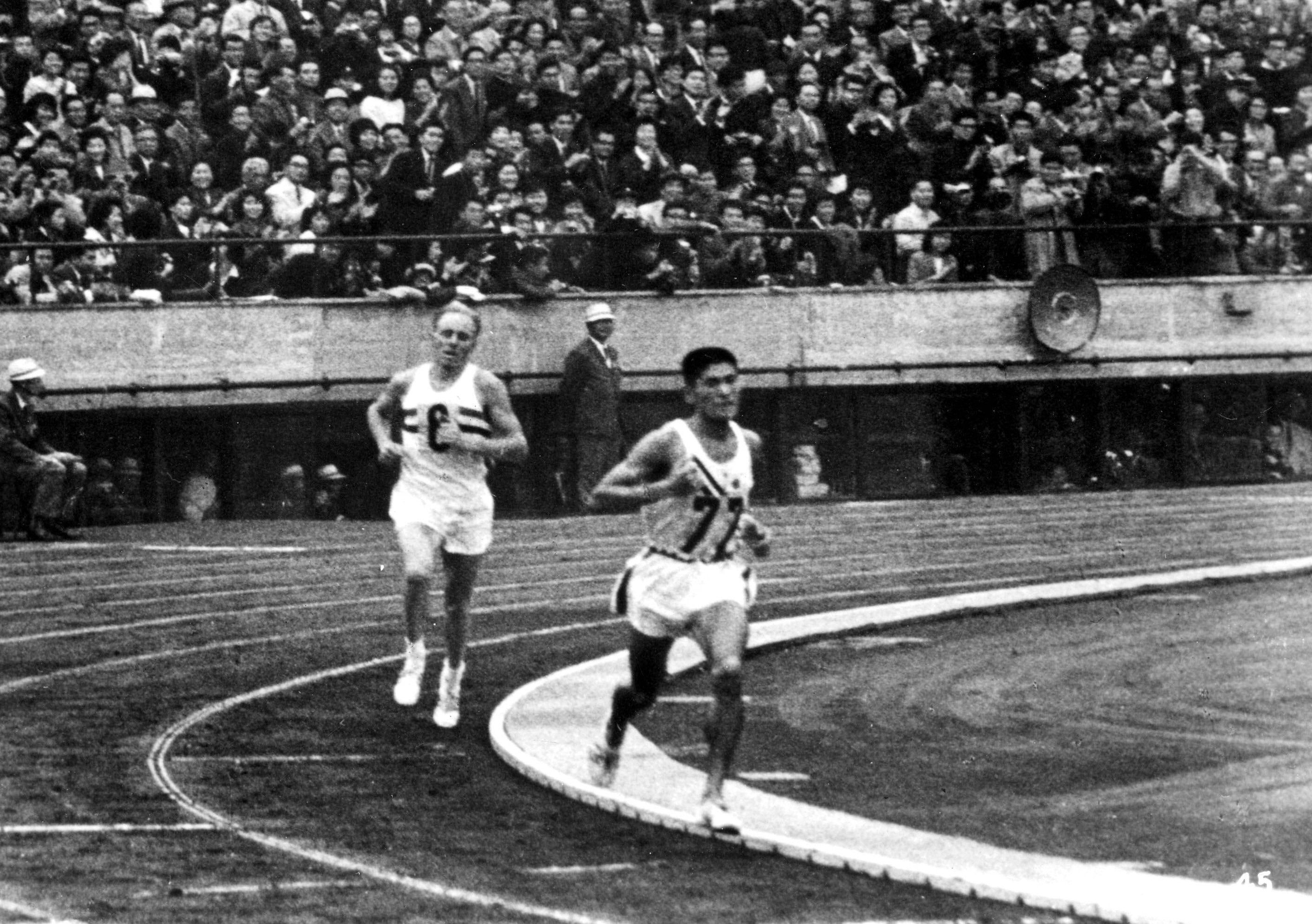
Japan’s Kokichi Tsuburaya in the Tokyo 1964 Olympic marathon (© IMAGO)
In the 60 years since those memorable Olympic Games, the first to be able to be seen around the world live as they happened, Japanese athletics has gone from strength to strength.
JAAF and their athletes have been major contributors towards the sport both on and off the track.
It is impossible to comprehensively list all its achievements in such a short space, but highlights include two outstanding World Championships: Tokyo in 1991 and Osaka in 2007.
Hiroshima hosted the 1994 Asian Games and, in the wake of the World Athletics Championships this summer, athletics will be the focal point of the 2026 Asian Games which will be held in the Aichi Prefecture and Nagoya.
Marathon triumphs, race walking victories
Among the Japanese stars of the past few decades, Hiromi Taniguchi won his country’s first world title when he took the marathon title in front of an ecstatic home crowd in 1991.
His success was followed up over the classic distance when Junko Asari won the 1993 world marathon title and Hiromi Suzuki followed in her footsteps in 1997 before Naoko Takahashi and Mizuki Noguchi won back-to-back Olympic marathon titles in 2000 and 2004.
The charismatic and popular Koji Murofushi, after silver in 2001 and bronze in 2003, completed his set of World Championships medals with a hammer victory in 2011 to add to his 2004 Olympic win.
In recent years, race walking has also become something of a Japanese speciality.
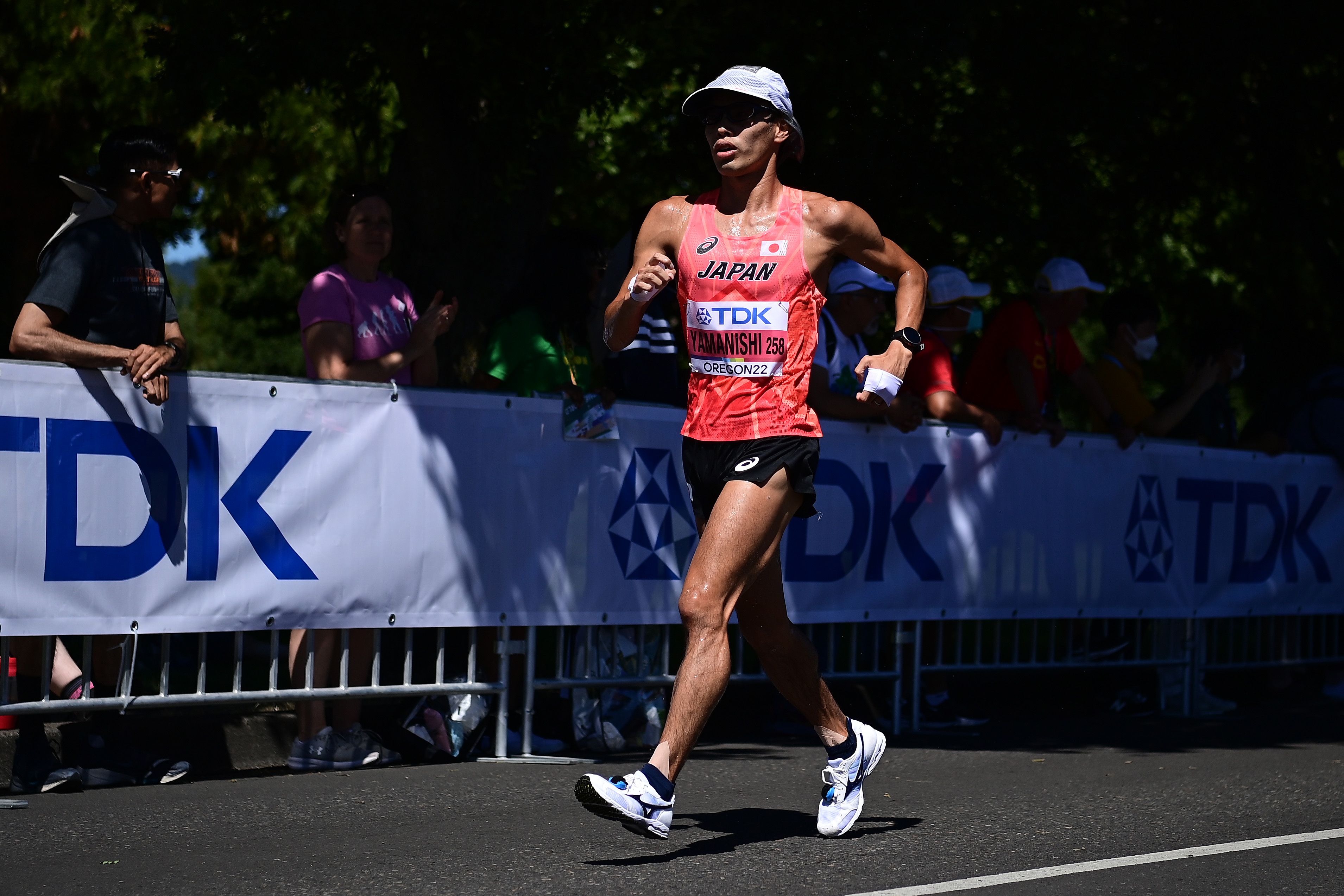
Toshikazu Yamanishi at the World Athletics Championships Oregon22 (© Getty Images)
Toshikazu Yamanishi and Yusuke Suzuki took the 2019 20km and 50km race walk world titles in the sweltering heat of Doha and Yamanishi successfully defended his crown three years later in Eugene.
Yamashini has started 2025 campaign in blistering fashion with a 20km race walk world record of 1:16:10 on home soil in Kobe just two weeks ago.
Like Kitaguchi, he will be hoping to add an extra radiance to the JAAF centenary celebrations with a victory in Tokyo.
Phil Minshull for World Athletics Heritage