
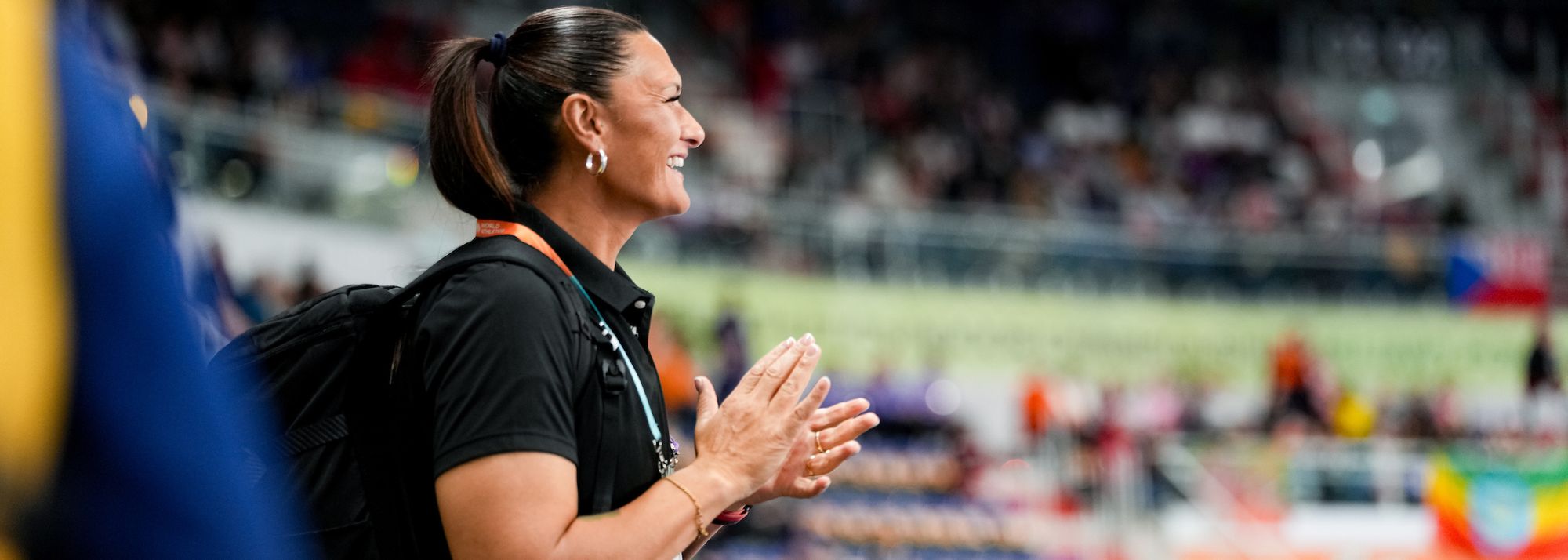


Valerie Adams at the World Athletics Indoor Championships Kujawy Pomorze 26 (© World Athletics  Christel Saneh)
Valerie Adams is a shot put superstar, but it’s not only in the throwing circle that she has made her mark on the sport.
New Zealand’s two-time Olympic and eight-time world gold medallist became Chair of the World Athletics Athletes' Commission in 2023 after serving as Deputy Chair since 2019 – the year she and Renaud Lavillenie became the first active athletes to join the World Athletics Council as full voting members.
At the recent World Athletics Indoor Championships Kujawy Pomorze 26, where she was the World Athletics ambassador, Adams reflected on her journey from athlete to Council member and reinforced the importance of mentoring women and young girls in athletics, to close the gender gap.
From athlete to administrator
You had an extraordinary career as an athlete, winning multiple global titles. What motivated you to move into leadership and become involved with the World Athletics Athletes’ Commission and Council?
“I come from a very small country, from a region that athletics is not very big in. As I started my career, I was very reluctant and shy. Over the years, as I got more successful, I found my voice and I saw the gaps. I saw things happening in Europe, for example, that weren’t happening in Oceania. So, then – how do you make change? How do you break the cycle or break the bias, so to speak?
“As I continued my career, I had an opportunity to create my brand. Through that journey, I saw there was an opportunity to help fellow athletes from my area navigate the system. So, I joined the Athletes’ Commission and then became Chair. I had this real passion and desire to help the athletes and make the organisation continue to realise that this is an ongoing situation, realise that athletics is a global sport. There is a lot of work to be done in this space and I enjoy being here, being the voice, connecting with my fellow athletes and being a part of this journey. Maybe I found my calling.”
How did your experiences as an elite athlete shape the way you approach decision-making and representation at the governance level of the sport?
“They gave me exposure to people and different environments. I had the opportunity to speak to people and gain allies. It takes other people to give you confidence – that they have confidence in you to bring something to the table.
“Also, my experience in being a competitor – working hard, being resilient, being uncomfortable, losing – that has shaped the way I am now. Being in this role now, I understand why decisions are made, because as athletes we can be very one-minded – we're competing, and all we think about is competing and training. I now better understand how the sport is run and how the organisation works. So, now it's my job to get the athlete buy-in and share with them a bit more about what goes on.”
Was there a particular moment in your career when you realised you wanted to contribute to athletics beyond competition?
“Yes – when I became Athletes’ Commission Chair. You’ve got to remember, it was the first time we had voting seats on the World Athletics Council and it was intimidating, I'm not going to lie. It was a very new space for us, but the President (World Athletics President Sebastian Coe) had faith in us; he wanted to empower us and be part of the conversation. It was the right thing to do.
“Now, this is my third term overall and my second term being Chair. It has been the most empowering and fantastic experience I've ever had. My experience continues to grow. I’m here to learn.”
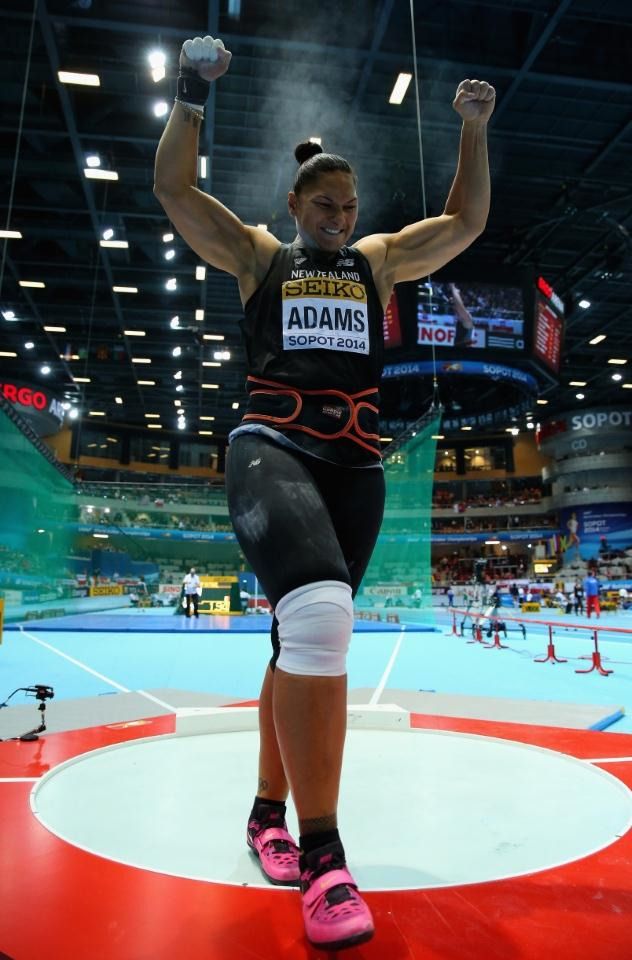
Valerie Adams celebrates her shot put win at the 2014 World Indoor Championships in Sopot (© Getty Images)
Representation and leadership
As someone who has transitioned from athlete to Council member, what do you believe athletes bring to leadership roles that is essential for the future of the sport?
“We (athletes) are the most important stakeholder. Without athletes, there's no Council, no organisation. There's nothing. It's completely different now in that we can bring the athlete's view and we can say they don't agree with this, or they do agree with it, or we need more consultation. We are more involved now that we have ever been.”
Why is it important for women to have a strong voice in decision-making spaces within athletics?
“World Athletics set a goal to have 50:50 representation on its Council by 2027. We reached that in 2023, which is absolutely great. The most important thing is for women to be given opportunities, and it's about creating allies who have vision – how do you mentor or create an environment where women can thrive? It's a difficult world out there, it's a man's world we live in, but that's changing, slowly.
“I'm a mother, I have a daughter, and this has become more and more important to me because everybody has a voice. Women out there are powerful, they have got a lot to contribute, and therefore they should be given an opportunity and an open door – not be stopped at the door because of their sex.”
Mentorship and closing the gender gap
Mentorship is an important theme in the push for greater gender equality in sport. Why do you believe mentoring women and young girls in athletics is so important right now?
“Mentorship is important, because if you can see someone in your likeness – same skin colour, same area, same country – it makes it seem more possible: ‘If you can do it, I can do it.’ There’s importance in sharing your knowledge, your journey. It's great to see someone leading the way and having the next generation come through. One on one becomes two on two and then three on three, and before you know it, we've got a whole lot of athletes and women coming through in leadership roles.
“Now, World Athletics has started a campaign for people to sign a pledge, to mentor women and girls across all areas of the sport. You can't pay for time; it's invaluable. For example, I had the chance to go on the High Performance Sport New Zealand board – I was asked a couple of times and I doubted my abilities, because I didn't have paperwork like they did. Everybody on there was 20 to 50 years older than me, and I was thinking: ‘what have I got to give?’ It wasn't until someone quite high up – a female, very strong, very powerful – said you me: ‘You can do it, you’ve got so much to contribute.’ I undersold myself because I didn't have the piece of paper, but what I soon realised is that if you want to make a difference, you’ve got to be at the table, not serving coffee to people at the table. Nobody at that table had my experience as an athlete, navigating the system, and as a Polynesian woman, navigating a system that is actually quite difficult to navigate.
“My job now is to help – how do we make that pathway a bit easier? I had an ally who believed in me more than I did. Through that, I've been empowered to do the same for others and mentor others along the way.”
How did the guidance of mentors or role models shape your path?
“My biggest role model was my mum. I lost my mum when I was 15. She was 39. She didn’t see my medals, she didn't see what I do now, or anything like that. She was such a strong woman who sacrificed so much to give her family an opportunity to find a better life. I am 41 now, so me turning 40 and her not making it to 40 – it was a very difficult time for me.
“I have a lot of strong women who I look up to. Beyond New Zealand and my mother, there are strong women in Polynesia who are doing amazing things – pushing boundaries, questioning people, challenging powerful men.
“I continue to challenge uncomfortable spaces. I have no agenda. It doesn't bother me if they come at me or say ‘no’, what bothers me is the impact it might have on the athletes and especially on our young girls coming through. Because, for them, it's a lot harder to find a voice, because of the consequences. So, hence why Valerie spreads her wings, stands up really straight, and speaks with confidence when she can. So, the other women see me do that and think: ‘I can do that, too.’”
What advice would you give to young female athletes who hope not only to succeed in sport but also to take on leadership roles in the future?
“Be there for the right reasons. The journey's not going to be smooth sailing, but the passion to make a difference – for young women, for young men, for the sport, for the organisation – plays a big part in your journey. If you're there with an open heart and an open mind, your journey is going to be fun, but challenging.
“If you are passionate about coming into this space, please, find that mentor, find strong women around you – within your community, your organisation, your area association. Someone that you can relate to, someone that you can trust and share with.”
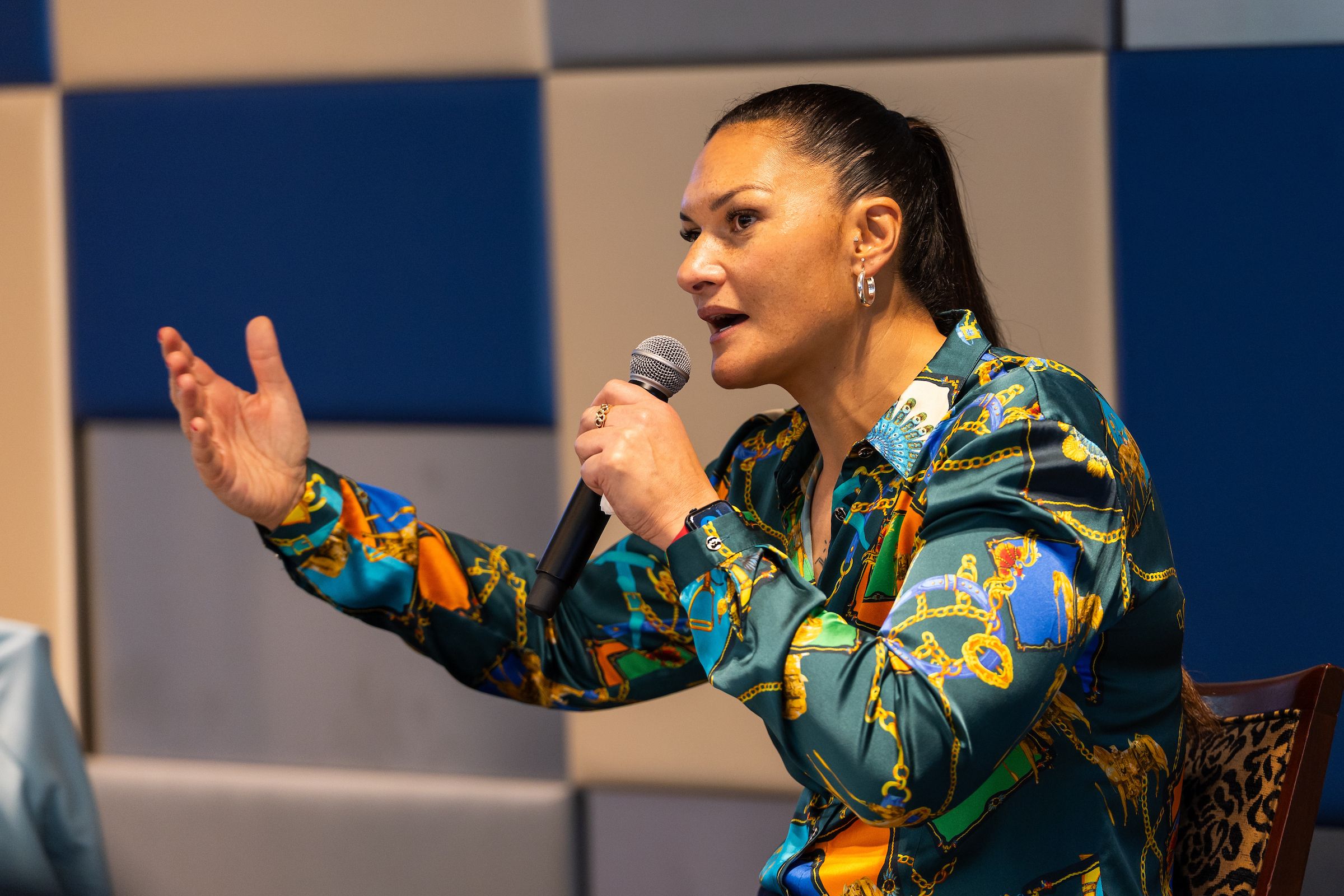
Valerie Adams during the Gender Leadership Conference in Tokyo (© World Athletics  Alisha Lovrich)
Legacy and impact
What changes would you most like to see in athletics over the next decade when it comes to opportunities and leadership for women?
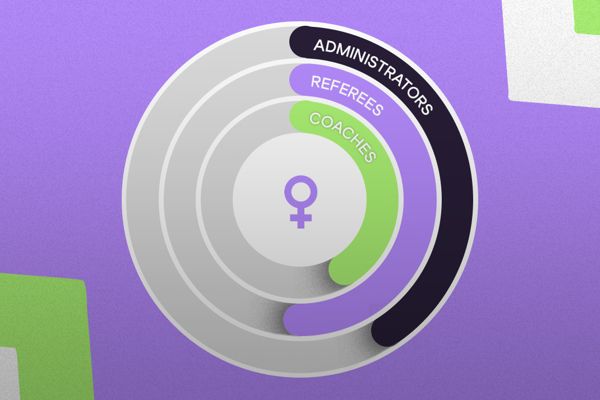
“One of the changes that I would love to see within athletics is having more female coaches. And obviously, within leadership – we need to see more women leaders. There are gaps for them – we have an opportunity to create change. It's not going to happen overnight, but it's happening.”
If you could leave one lasting impact on the sport through your role with the Athletes’ Commission and World Athletics Council, what would you like that legacy to be?
“At the end of the day, we've got to remember we're all people. And if I can empower, encourage, inspire the next Valerie Adams to come through the ranks as an athlete, as a leader, within their community, within the organisation, within the sport, within their areas, then I've done my job. There are so many Valerie Adams’ out there. They just need to be given the opportunity, help and support.
“Now I'm on this side of the fence. I'm the one giving the support and I openly do it. I'm more than happy to share my knowledge and share my learnings, because there's always room for improvement. I've been through it all, but it's all about learning – it's the constructive criticism from people that I respect, that only want me to do better, for me and for what I'm working on. I always want to give my best.
“There are going to be so many more Valerie Adams’ coming through and I'm hoping that they do so with an open heart and an open mind.”
Launched in March, the World Athletics pledge initiative forms part of the organisation’s contribution to the International Women’s Day 2026 global campaign, #GiveToGain, which calls on individuals and organisations to give their time, resources and support to help forge gender equality through abundant giving. By encouraging stakeholders to pledge mentoring hours, World Athletics is turning the #GiveToGain message into practical action across the sport. Learn more on the Women in Athletics website.