
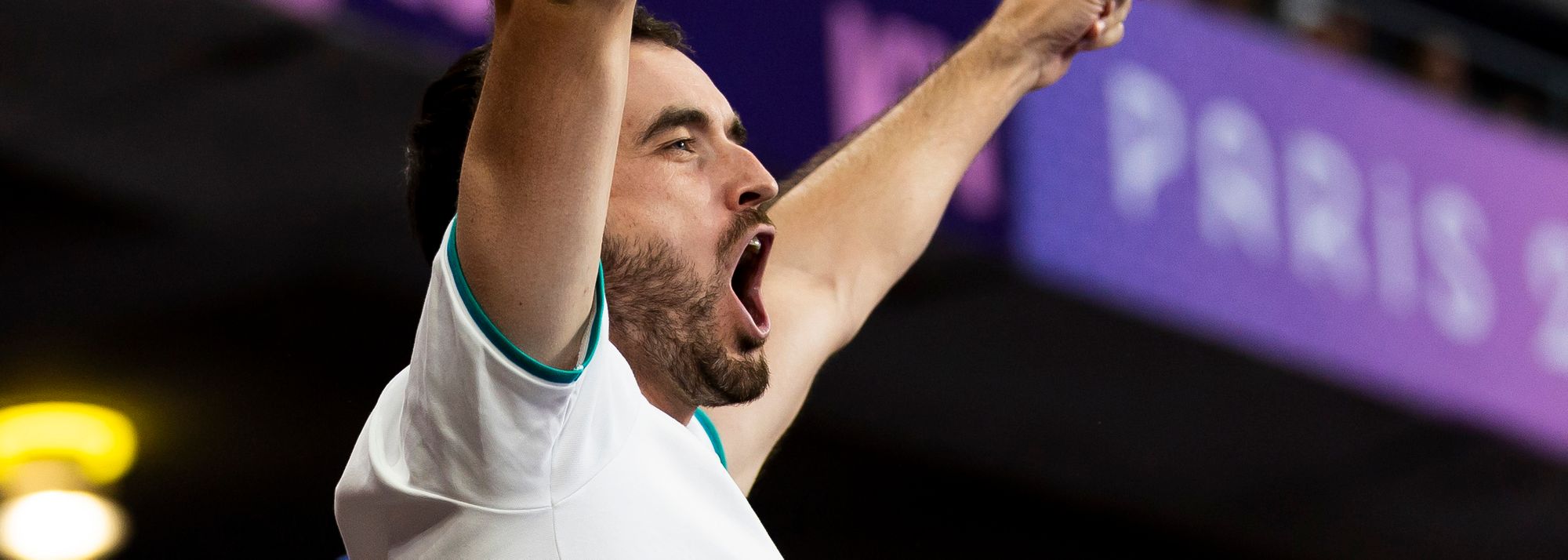
James Sandilands at the Paris 2024 Olympic Games (© Alisha Lovrich)
Few athlete-coach relationships have been more successful in the past two years than that of Olympic and world high jump champion Hamish Kerr and his coach James Sandilands. In the latest in the 'coaching class' series, the Kiwi coach looks back on his athletics journey and reflects on the partnership with Kerr.
As a coach-athlete combination, you and Hamish have had a remarkable amount of success in a short space of time. Do you get a chance to reflect?
We don’t get too many times to stop and reflect on the last three years or even less than that. I’ve known him for so long and worked closely together. As soon as we started the coach-athlete relationship, we got on to things really fast. His background with Terry Lomax, and Terry supporting us for the first year in Paris, meant we managed to keep the knowledge and legacy from that side, and then change a few things up. It was a fresh start in some ways, and maybe there was some surprise to a lot of people that it was a pretty quick turnaround. But Hamish had all components to succeed so they were relatively minor changes.
Was it a gamble for him to start working with you?
I think I would have seen it as a gamble at the time and would be surprised if he didn’t as well. But the thing was Hamish already had a great support team so it was not wholesale changes but refining a few things. He recognised he was jumping well over the last few years but was also willing to take a bit of a gamble. Fortunately that worked out.
As an athlete first, was it a gradual move from that to coaching for you?
I got into coaching in football when I was relatively young, 14 or 15 years old, and just enjoyed coaching and helping people out. As an athlete, I was a hurdler and high jumper in my younger years, and had aspirations to keep pursuing it. What I liked about sport was curiosity and problem solving. To my own detriment as an athlete, I was always trying to do new things and learning from everyone, so it meant I wasn’t super consistent and didn’t really progress. But it fuelled what I loved about sport – picking things apart, understanding them and seeing how to improve – so it was probably a natural progression towards coaching. That transition began in my early 20s, first with junior athletes at a club in Christchurch – mostly jumps and sprints. I progressed to junior club level then upper tiers of junior and senior athletes. It happened very quickly in a lot of ways.
How did coaching Hamish come about?
We’d known each other for six or seven years – we jumped together when we were young but didn’t know each other well. I worked in Hamish’s support team in performance analysis and assisting Terry with his training squad and a few other athletes. I travelled with Hamish a couple of times and then he asked me about taking a lead role the year before Paris. It was a bit of a transition with me and Terry, and keeping Terry involved was a massive part – I think we all managed that pretty well. Being a year before the Olympic Games was pretty dramatic, so we needed to move quick.
What makes a good coach-athlete relationship?
I think a massive part of it is honesty. You need to try to get across to athletes that you’re on a massive journey alongside them, that needs conversations and being direct. That can go both ways. It’s very much a cooperative relationship, particularly with Hamish. Our biggest strength is we’ve been friends for so long so it’s pretty easy to cut through all the nonsense.
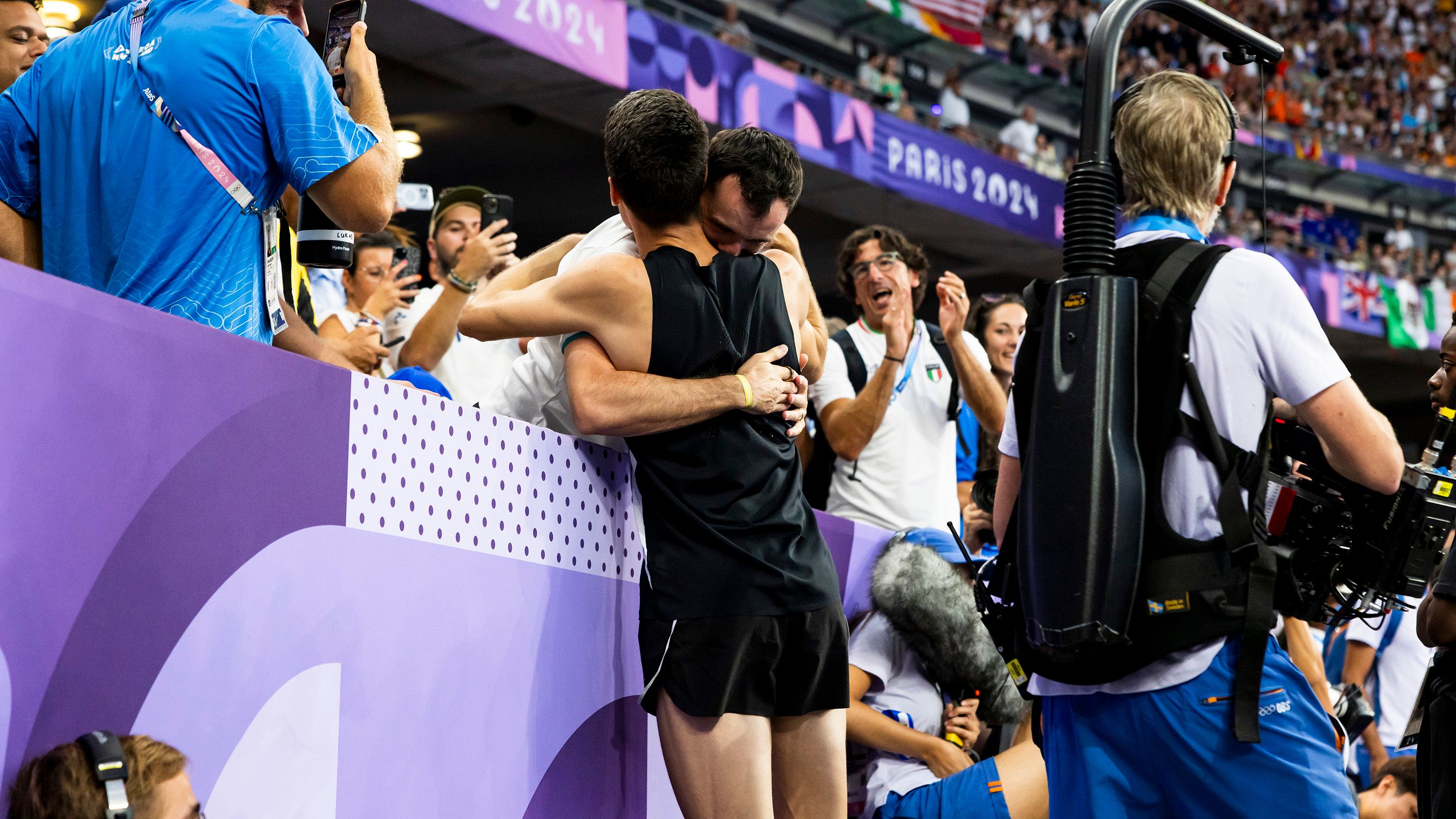
James Sandilands and Hamish Kerr at the Paris 2024 Olympic Games (© Alisha Lovrich)
But this is elite sport so that honesty must sometimes spill over into fractiousness?
It does happen. There are times where it’s challenging in early-season moments and you're not at the level you want to be at but you see the bigger picture and go through it. It’s not harmonious at all times and it’s good to challenge each other – it’s healthy and good to critically reflect, it enhances the relationship. There’s some risks but I think it helps having a challenge.
What’s your coaching philosophy?
It’s a difficult one as there’s so many parts to it. Ultimately, I think it’s about the relationship with the athlete, being able to stand next to them and go on a journey with them and problem solve. The athlete will know an awful lot more than I will but they might not be able to put it into words. My job is to set up the right environment to learn and grow and a lot of the time it's about messages you're trying to teach an athlete. I’m ultimately trying to set them up so they can be the best they can. If I can support that, great – it’s not about dictating and telling athletes what to do.
How as a coach do you get your athlete to peak for, say, the Ultimate Championship?
It’s the challenge of our sport. I think almost goal No.1 is jumping as high as you can at some stage or as best as you can. That goal is dictated by a date and time so you know in advance, and then absolutely everything is tailored towards that.
We see how tight a group high jumpers can be, even as rivals. Is it the same with the coaches?
It’s surprising how few coaches get the chance to travel, and the ones that do are not always speaking the same language as you. But what I like is that there’s a shared goal of getting people jumping as high as they can, and taking joy from a good competition.
How do you juggle coaching different athletes and different disciplines?
That’s quite common here in New Zealand. I’ve got nine athletes in total and the main part is that they each have one main person to talk to in me. I’ll call on other coaches to help with other technical aspects and the athletes all support each other, too. I’m fascinated by each event, sometimes to my detriment – it’s exciting to have new challenges and to problem solve. I enjoy that challenge. The main part is seeing myself as a coach rather than a high jump coach.
Is it fair to say you love coaching?
It’s pretty fun. As an athlete I had incredible coaches that instilled in me the desire to learn and grow and understand simple yet complex events. And often there's even more complex individuals trying to perform them. It's a really cool challenge. For me, it’s rewarding to learn more and unpack what we're seeing in front of us.

