
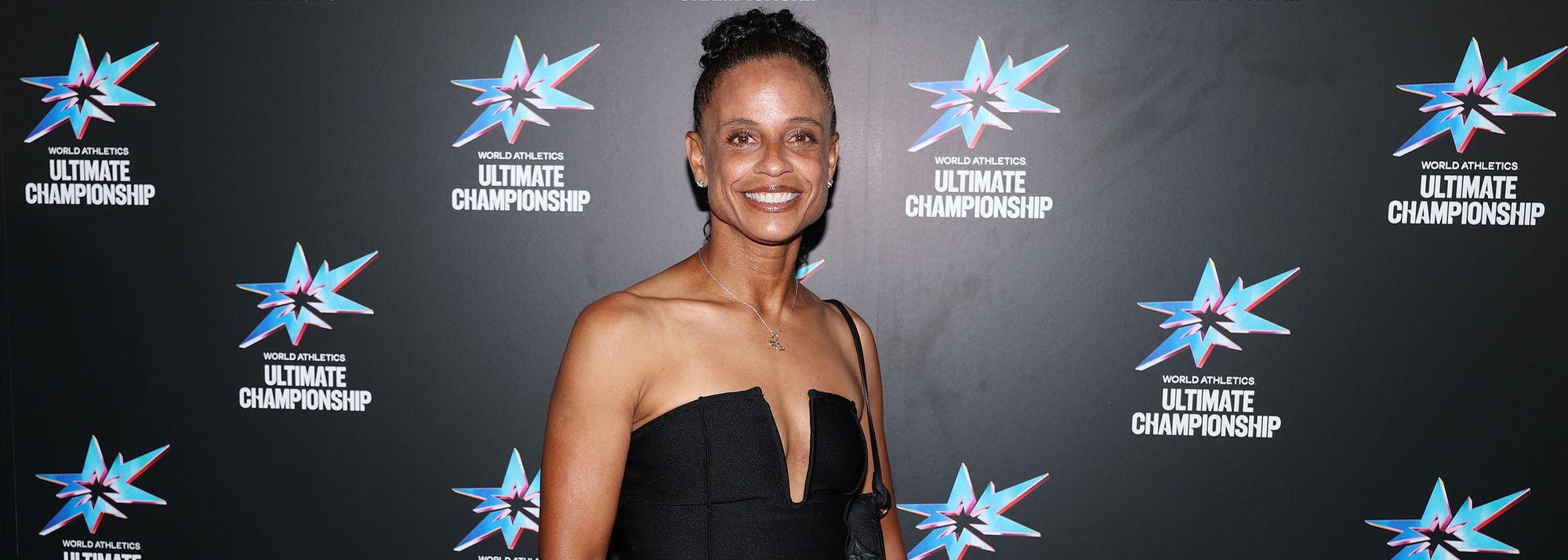
Joanna Hayes at the Ultimate Championship launch party in Tokyo (© Getty Images)
Joanna Hayes is a former 100m hurdler who won Olympic gold at the Athens Games in 2004 before later turning to coaching. She now guides, among others, the three-time Olympic gold medallist Rai Benjamin.
How was the transition for you from athlete to coach?
When I was a kid I wanted to be a teacher. I coached middle school kids years ago when I was still competing to make a little money on the side and then started coaching high school when I retired in 2009. I was also broadcasting and travelling around the world with my daughter but knew I needed to make a career decision. Some jobs opened up at college and I started at UCLA coaching. Then some of those athletes went pro but hung around so I sort of transitioned to coaching pro athletes.
How different is it coaching college kids to pro athletes?
It’s more round-the-clock with the collegiate athletes wheres pro athletes are grown-ups so you don’t need to police their lives. You know, for example, they’re always going to come to practice. But I really like doing both and you’re trying to make a difference to both. If the college athletes turn pro then great but, if not, they turn to the job field. So, you’re also helping them to prepare for and adapt to society. In the real world, no one’s going to hold your hand and, if you’re late for work, you’re likely going to get fired.
Does the coaching philosophy and approach vary between the two camps?
No matter what level you’re coaching at – little kids, pros, collegiate – it’s about the relationship and trust between the two. You really have to work to have a personal relationship with these people and have that trust factor – without it, it doesn’t work. For the younger ones, that can be harder as they’re often focused on others but I tell them to focus on their own journey and no one else. Ultimately, you have to trust your athlete and trust your coach. If both do that, things can work.
Is there an ideal athlete to coach?
You want athletes that love it and go all in. Again, you need that trust and to believe in the programme. And if it doesn’t work, I can say ‘my mistake’ and fix it. Then you build that bond: they win, I win, they lose, I lose. The harder they work the more personally you feel it.
What about Rai Benjamin – he makes it look easy, but that’s clearly not the case?
No, it doesn’t come easy. He’s had so many injuries throughout his career. The majority of championships, there’s been something wrong with him but he just locks in. He works hard, he has conversations, he’s open and honest – be that good and bad. Plus, he’s a jokester and he’s good at taking the pain out of the workouts. But when it’s time to go, he always locks in.
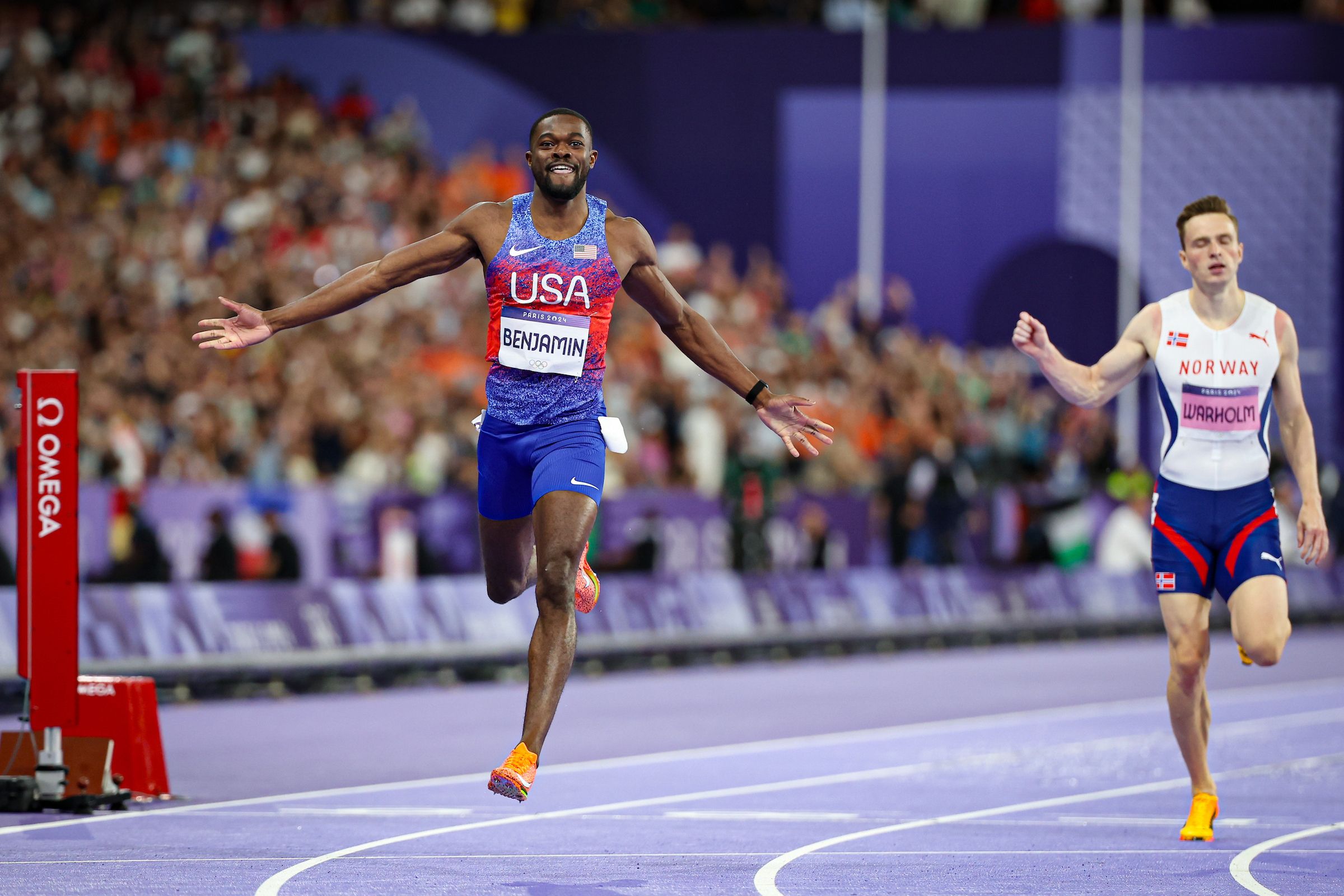
Rai Benjamin wins the 400m hurdles title at the Paris 2024 Olympic Games (© Dan Vernon)
Is there a moment or training session when you know he’s ready?
I’ll start putting in certain workouts or times to complete. If he can hit it twice, we’re ready to go. He’ll say X, Y and Z, and then I know he’s ready.
When an athlete like that wins major championships, how do you keep the motivation year on year?
That’s a good question as it’s hard to maintain the energy and will to win. With Rai before when he was getting silver medals, we had a talk. He just said I’m going to enjoy this, I’m not thinking about winning or a medal and that took off the stress and pressure. So he did a lot of enjoying the process and learning and getting better with new workouts. So, enjoying what you’re doing allows you to have energy each year. Take this year, we decided to run the 400m early on to keep things light and more motivated for the year.
As a coach are you on a perpetual learning curve?
Yes, I think I learn every day. I feel with the 400m hurdles I must have done all the workouts and then you still find ways to do new things. And as a coach everyone is different so you need a level of humility. I’m a human being not an AI coach, if I don’t know something I have the humility to ask a mentor or friend. Otherwise, I’m wasting time because I'm afraid to say I’m not sure. I know a lot and have a lot of knowledge but I forget things and my assistant coaches remind me of stuff when I forget.
Is there ever a point where you think you’ve failed with an athlete?
It doesn’t happen a lot but I’ve had a couple that have moved location and that’s not really a problem. If an athlete changes coaches they’ve clearly put a lot of thought into it so, for me, it’s not personal. I’m not going to be for everyone, not everyone will believe what I say and trust me. That’s normal. I don’t know any coach that has got everyone right.
Do you see yourself coaching for years to come?
When people say can I coach them, I need to know my bandwidth as I have to coach with everything I have. I have to be honest with myself. Right now, I don’t know how long I will coach. This is the career that chose me. What else would I do? I don’t have any more options! I could try to be an influencer!? This is the career path I’m on. How long it will last? I’ll do this until don’t think I’m effective anymore and then I’ll stop.

