
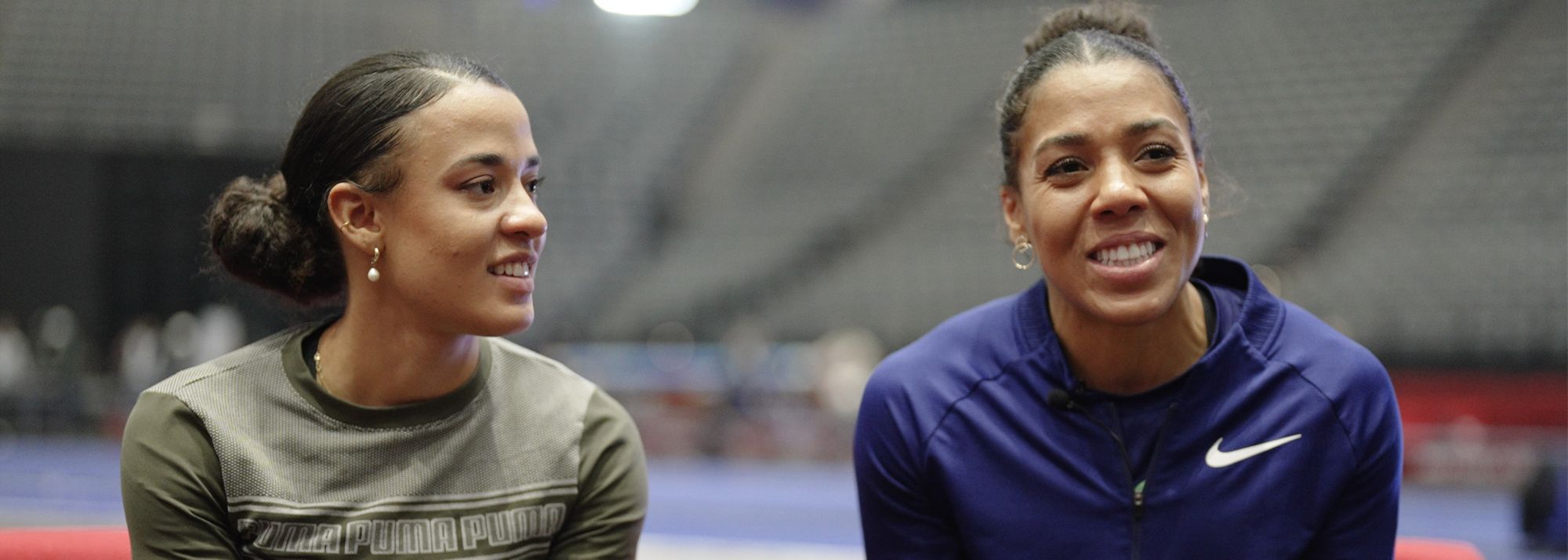
Ditaji and Mujinga Kambundji (© Athle.ch)
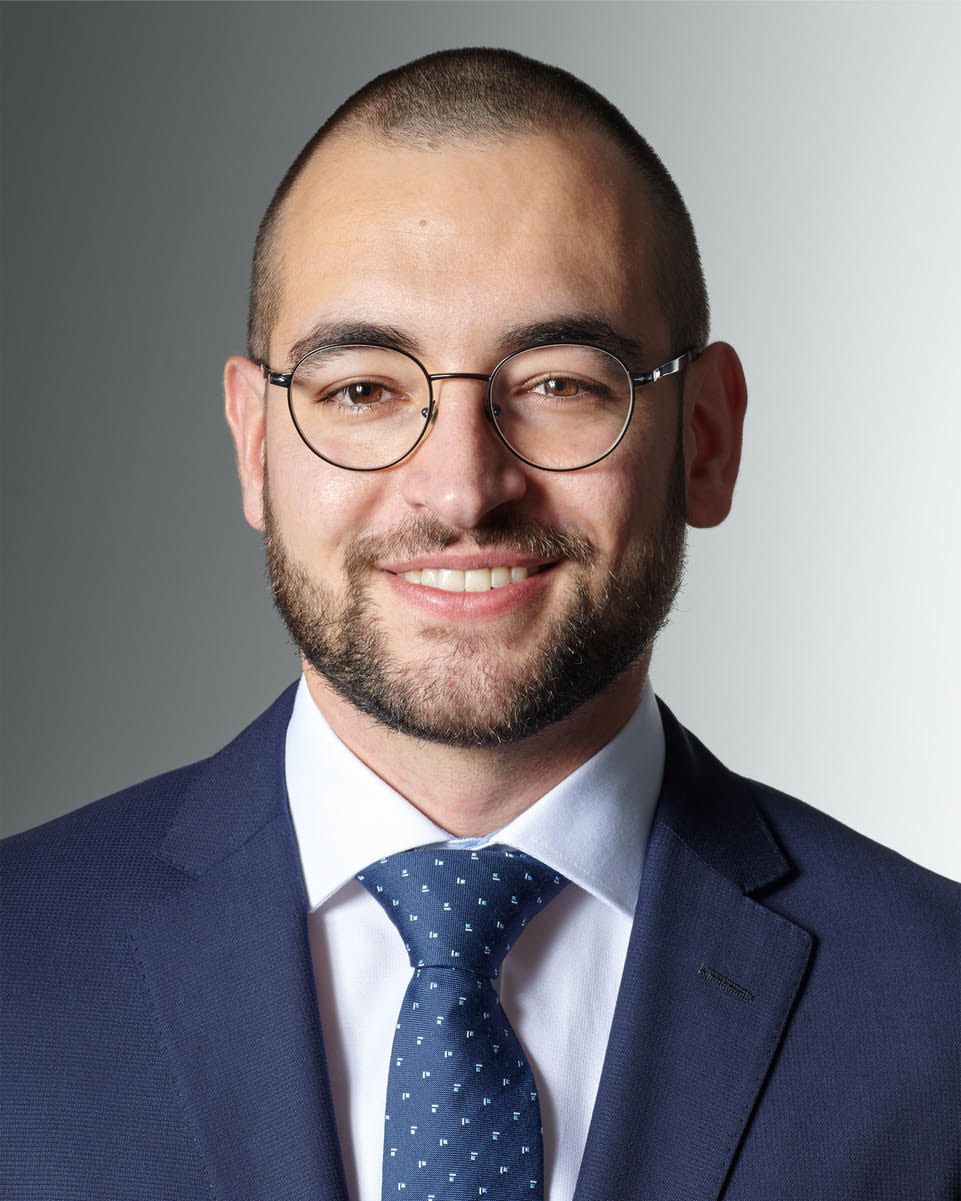
Florian Clivaz is in his relative infancy as a coach but has already enjoyed success at the top with his two athletes, Mujinga and Ditaji Kambundji – world champions indoors and outdoors, respectively. He reflects on his meteoric rise, the coaches that have inspired him, and more.
 How did you get into coaching?
It wasn’t my ambition. I am a sports agent; I studied law and am currently writing a PhD dissertation. I co-founded an agency in 2018 called EP Management. I was an athlete too but realised maybe I wasn’t talented enough and I could channel my energy and analytical skills into gifted athletes like those we represent today, and it all started with my partner, Mujinga Kambundji. As an athlete I already coached myself. I started in 2013 and, within three years, I was writing my own training plans. I discussed with other coaches, read a tonne of books and watched videos and so on, that’s how I learned.
What are you like as a coach?
I’m really analytical and think about the big picture. I’m not trying to find a magic trick of an exercise but trying to find the right balance and avoid mistakes at any cost. My coaching is a patchwork of my know-how, own experience and that of Mujinga and Ditaji. Every athlete is an enigma and it’s my job to find specific answers to every athlete. I’ve only got two athletes so that’s a lot easier as I only have to find two solutions!
It’s obviously not one size fits all with athletes. How do they differ in what they need?
They have a lot in common as they’re sisters but they’re still really different so I have to coach them differently. Mujinga is running more with her natural stiffness, her tendons make her extremely bouncy on the track. Ditaji is amazingly explosive – seeing her jumping in training is unreal. But they both attain speed differently – Mujinga is about being bouncy on the ground with the right timing and angles, Ditaji relies more on raw power, so both require different approaches.
How is it coaching your life partner? Is that a challenge to navigate?
Let’s just say that when it works and the results are there, it’s amazing to be able to share those moments with her. When things aren't going as well, it requires a bit more distance. But in the end, since we realised that everything was going to be a mix anyway, we figured we might as well go all in.
Both your athletes have become world champions. You must be doing something right!
That’s very special in that I did not aspire to make this a career as I don't define myself as a coach, I was just trying to help these athletes. Maybe in the case of Mujinga and Ditaji, I was the right solution but that wasn’t really obvious in the beginning. A lot of people were probably thinking what the hell are they doing working with this guy without experience? Ditaji was my first ever hurdles athlete. While I was able to rely on Claudine Müller’s fantastic work on her technique, the pressure on my shoulders was immense. Since they are people I deeply care about – family for me – I so wanted this to work. Seeing them reach their full potential is a fantastic feeling.
If we take Ditaji, was her gold medal in the 100m hurdles in Tokyo a surprise to you as it was to some?
I saw the training, the shape she was in, the fitness just growing in the right direction for Tokyo. The last few competitions before Tokyo the conditions were not optimal – in Lausanne it was raining, Zurich was not warm so the times were good but not great. Then in Tokyo all the pieces came together. Those pieces were slowly approaching each other and there was a high probability it would click but the level in women’s 100m hurdles is just insane at the moment. I was sure she’d be ready but I wasn’t sure what that meant which is the magic part of it. But she and Mujinga just love competition and performing when it matters the most.
How do you get an athlete ready for just two or three days at a major championships?
I mainly play with training volume, intensity and distances to get the athlete into the best possible shape. That being said, I think you always need a bit of luck. To be in peak form on the big day, you have to avoid injuries, illness, etc. Sometimes, it’s not just a matter of planning.
Is there an ultimate training session before a major championships?
I don’t think it’s a specific training session but finding the right mix. Steve Fudge once said that it’s about getting ready at the right moment, by making sure that they are not ready before. That’s how we approach it. That’s why Ditaji has not started the season on top directly but she’s building the season and her shape.
When an athlete wins a world title, how do you follow that success as a coach?
It’s a good question but first of all this is a question more for them than for me. I would say our approach is that we are searching for the limits, for the full potential. If you are world champion in 2025 then as an athlete you’re still thinking about more and what could be next. We’re more focused on the process, trying to find the limits and never finding limits but pushing towards that. Motivation is not, per se, the titles but more about the process and journey and searching where the limits are.
Is perfection the ultimate goal?
Exactly. This is probably the main motivation, trying for perfection but knowing that it’s not possible. In the end, Tokyo was fantastic but it wasn’t perfect so then you reach for the next step.
Is there such a thing as a typical training day?
Not really. What’s typical about it is that we arrive at the stadium and take our time discussing things for 15/20 minutes and then starting slowly slowly with the aim of achieving the right intensity 70-75 minutes later. It’s a lot of preparation, low intensity to achieve high intensity. In sprinting, you have so little volume, it’s so fast, so much impact, so brutal on your body that you’re more aiming for quality, high intensity and not searching for volume. In training, there’s always a why – why are we doing this type of speed and hurdles training? And that’s an important part.
Is it a bit of a tightrope walk that you’re pushing your athletes to the limit without them getting injured?
I’m more the brake man than the pusher. The training plan in my mind is always the maximum but then the reality is you’re trying to find right balance of energy invested, time spent and what you get in return. Some days, your athlete sleeps well, conditions are fantastic and they can do more. Some days they feel bad, the weather is awful and they do a lot less. I’m communicating a lot with the athletes – more like a sparring partner for how they feel and not always to guide them but translate their feelings.
Are there any particular coaches you look up to?
Actually, a lot of different coaches. You get different approaches from different coaches. Sometimes they’re like artists of coaching, like poetry, and sometimes they’re more like scientists. I’m trying to find my way in the middle of this. I really think of sprinting as an art but you also need some hard facts and to be really analytical – be Excel spreadsheet orientated but Excel’s not the solution by itself. You need to find the right balance. I’ve had a lot of inspirations: Stuart McMillan, Steve Fudge, Claudine Müller, Rana Reider, Patrick Saile, Henk Kraaijenhof, Charlie Francis, Valerij Bauer, etc. and they’re all so different.
What makes a good coach-athlete relationship?
It’s difficult because, for me, this is my family. But I think the key is honesty and, when I don’t know something, I tell them. When I know something, I tell them. I believe that full transparency creates long-term healthy relationships. So, when I say it’s fantastic they know it’s fantastic because the day before I would be honest enough to say things are shit.

