








“We are very pleased to have broadcast such an important event”: Ricardo Bermúdez, manager of Telepacífico (© Marabunta Agency)
Along with James Lord and Mark Fulton of World Athletics, Ricardo Bermúdez, manager of Telepacífico and his team, are some of those responsible for the television success of the Cali 22 World Athletics Championship.
For 6 days, millions of spectators from all over the world enjoyed the largest sports festival in the history of Colombia, which had more than 1,500 athletes from 137 countries in action, who arrived at the 'Sultana del Valle' with the hope of consecrating themselves as the next great stars of world athletics. Today, a week after the end of the championship, we highlight the human talent and technological resources behind the broadcast of the sporting event that will go down in the history of Valle del Cauca and Colombia.
Under the direction of James Lord, director of Broadcast, and Mark Fulton, executive producer of World Athletics and World Athletics Productions, more than 150 people, including nationals and foreigners, were in charge of bringing to television the broadcast of the U20 World Championships, the event that presented to the world, among other athletes, the record holder of the 100 meters and called to be the next Usain Bolt, the young man from Botswana, Letsile Tebogo. A milestone that required the teamwork of World Athletics Productions, Deltatre, Media Pro, Seiko, Event Presentation and Telepacífico.
"The Championships, due to its size, its importance, for what it means to have an event of international stature, forced us to have different technical standards and we worked for 6 months to get it ready on the date of August 1," said Ricardo Bermúdez, manager of Telepacífico, who also highlighted the joint work that made it possible to integrate the set of technical requirements typical of top-level sporting events.

For the realization of a successful television broadcast, it required coordinated work that began 6 months ago with strategic meetings held between 17 people from Telepacífico and 12 more from World Athletics, where they discussed the design, organization, coordination, and synchronization of the work that was to be developed in the first week of August.
"World Athletics Production directed the entire production and did all the technical design. We teamed up with them to complement all those requirements. Telepacífico coordinated the implementation here in Colombia and Cali of the whole system in alliance with Media Pro, which was one of the main technical suppliers", said Bermúdez, affirming that, for the assembly and operation, the human team was extended to 90 people working for the success of the event.
In addition to human talent, it also required significant technological support, as 80% of the television equipment installed was brought from abroad, among them are lenses, cameras, encoders, matrices, controllers, integration systems, servers, and automated audio consoles.
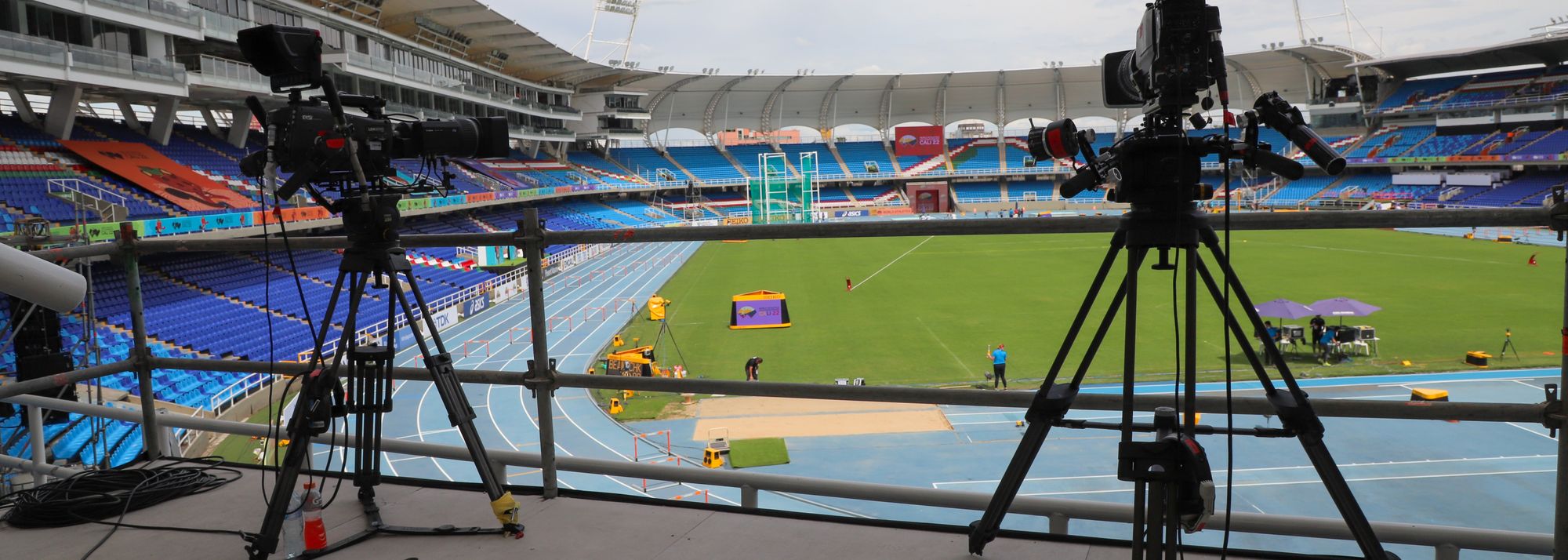
Carlos Marín, television technician and member of the support team and technology support for special events of Telepacífico, explained the location and function of the cameras distributed throughout the Pascual Guerrero Stadium to carry out the transmission.
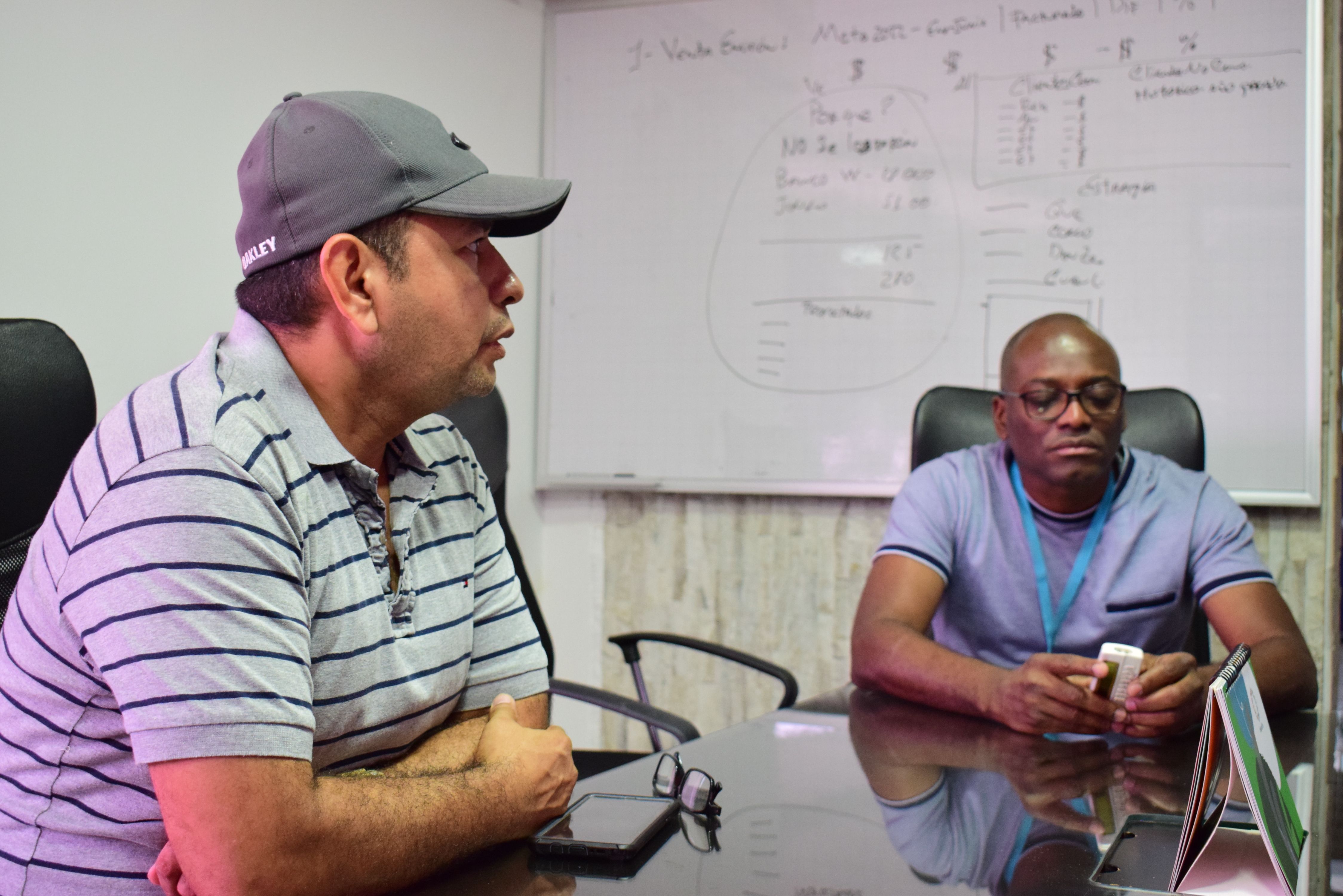
"There were approximately 36 cameras, divided into 3 modalities. One modality corresponded to the track competitions, another focused on the pole vault, triple jump, and long jump events, and the other modality was arranged for the throws, high jump, and javelin."
In turn, he pointed out that the incoming information was distributed in three major centers: two mobile units and a transmission center inside the IBC (International Broadcast Centre) tent. A total of 18 cameras were assigned to the production and transmission center and the remaining 18 were divided between the two mobile units.
Of the total of 36 cameras, approximately 20 were special cameras to capture details, mini-cameras that obtained much more eye-catching shots since some were at ground level, others were on the poles of the jumping competitions and there were also slow motion cameras that "captured very striking images of the athletes," said Carlos Marín.
In addition to the efforts made by WA, Telepacífico, and Media Pro, there were Seiko, Deltatre, and Event Presentation. The first one was in charge of the technology behind the timing and scoring, providing the information through the data section and through the video signals necessary to superimpose the graphics of the stopwatches and times.
Deltatre, on the other hand, was in charge of managing the graphics in the visual section for the starlists, statistics, and competition results. While Event Presentation, in addition to feeding the information presented on the screens through a network implemented by EMCALI, also had under its responsibility the pre-recorded products intended to generate entertainment. "They generated the Championships show as such, the event as a spectacle," said Ricardo Bermúdez.
John Carlos Hurtado Gamboa, Technical and Systems director of Telepacífico and in charge of the technology section during the Championship, highlighted the work done in the television production of the Championships.
"It was great, spectacular. It was something very coordinated since a good interaction was achieved with people from different parts of the world. To have achieved this coordination to generate a technological infrastructure of such a high level is something very positive for Colombia, which shows that the country is ready for world-class events".
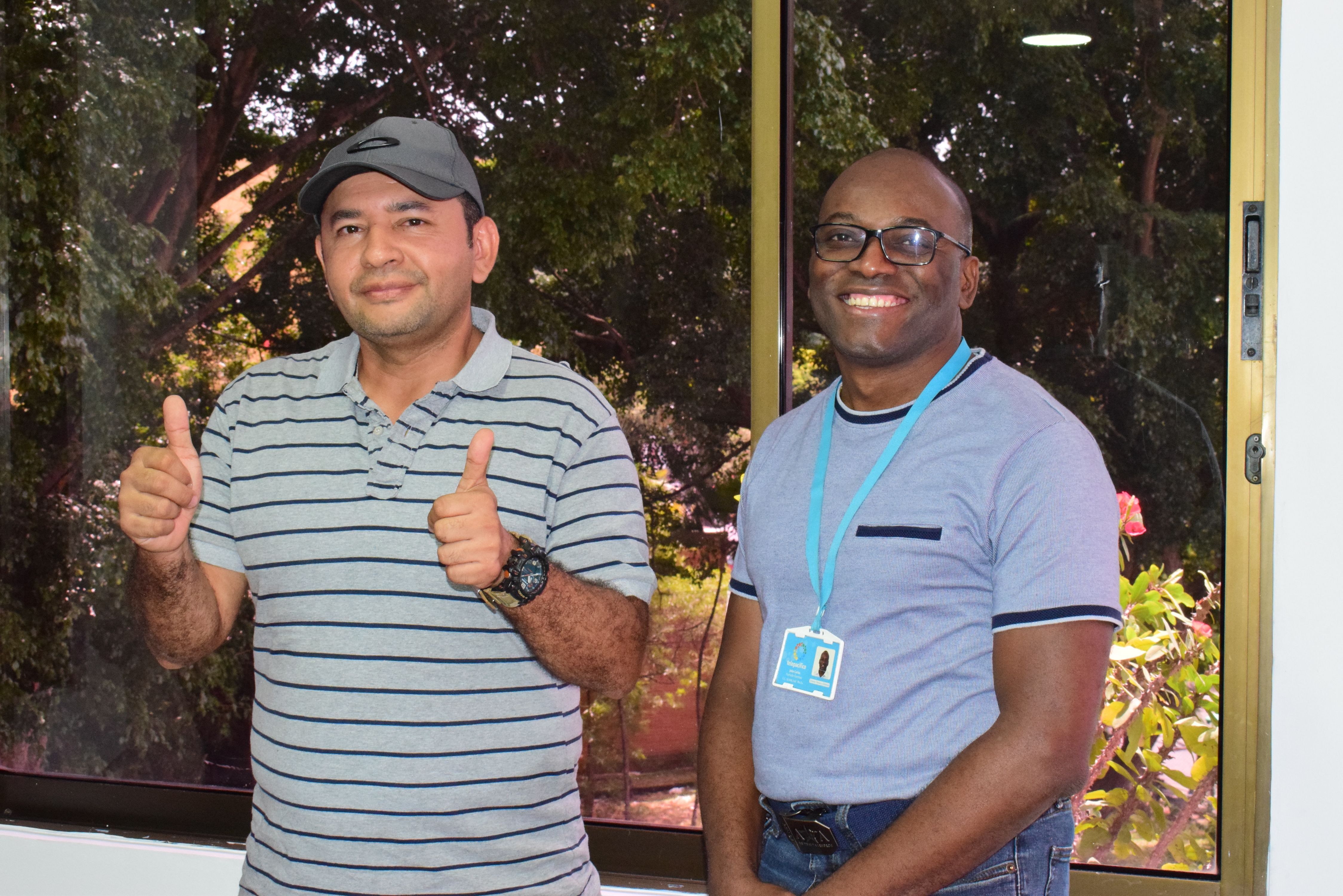
Hurtado Gamboa also emphasized how well received the broadcast was by local viewers and cybernauts. "We received many positive messages. People are not used to an event of such magnitude in a region like this one, especially in the high-quality conditions and state-of-the-art technology that was used. Seeing it in the United States or Europe is something normal, but here in Latin America, and especially in Colombia, we have never had the opportunity to offer this quality of production and transmission.
Finally, Ricardo Bermúdez, manager of Telepacífico, spoke about the legacy that the Championship leaves to the region and Colombia.
"We learned that better things can always be achieved, we have the technical and human capacity to transcend the border. That we can dimension the work beyond the region, that we can reach other spheres. That is the vision that this project has left us with," he said.
Undoubtedly, the World Athletics U20 Championships Cali 22 not only left a sporting legacy but also a technological legacy that highlighted our region's ability to join the best teams in the world and stand out worldwide with a successful production.
Communications LOC World Athletics U20 Championships Cali 2022.