

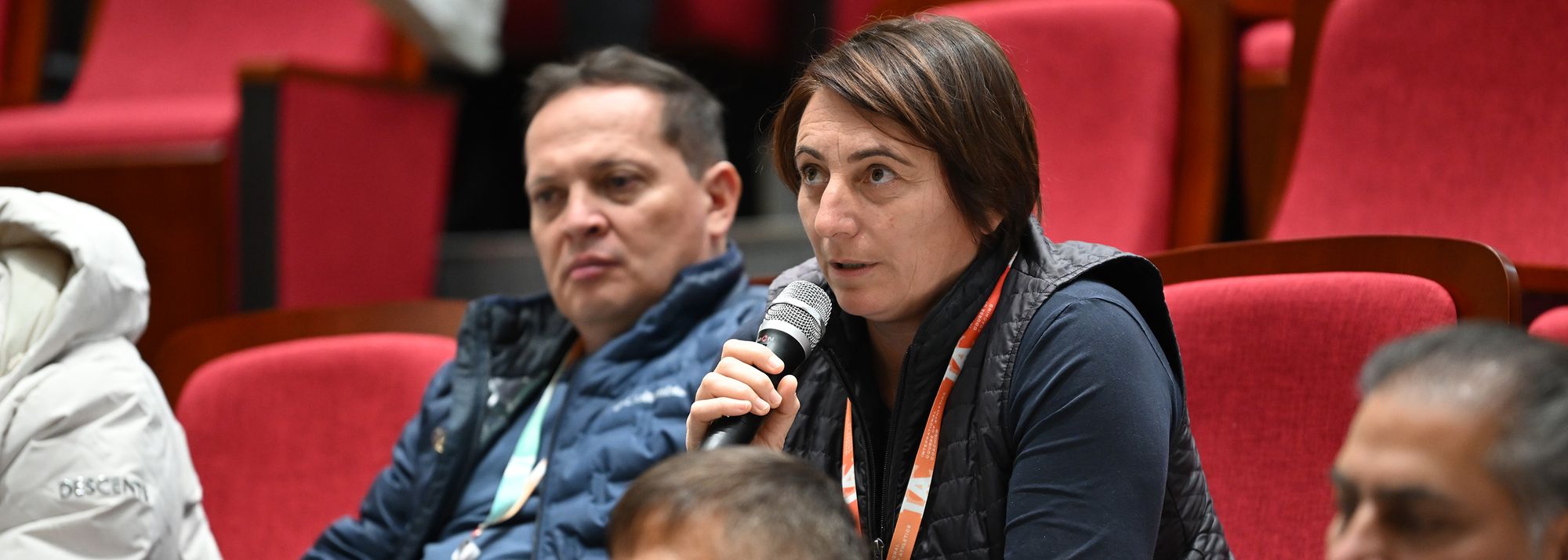


Vahida Kozic during the International Course of Athletics Coaching (ICAC) programme (© ICAC / Korea Association of Athletics Federations (KAAF))
Vahida Kozic attended the World Athletics U20 Championships Oregon 26 as national team head coach and team leader for the Bosnia and Herzegovina federation.
A lecturer and administrator, Kozic has completed the World Athletics Coaches Education and Certification System Level 3 and is a member of the European Athletics Coaches Association. She was a recipient of the European Athletics Women’s Leadership Award in 2018.
As part of a series on mentorship and gender leadership, she shared insight into her career in athletics.
What first inspired you to become involved in athletics?
“My journey began with my own participation in sports, especially athletics. I was driven by competing and winning so much, it became an undeniable passion. I competed at a national level in both athletics and football and constantly strived for those intense moments on the field, it's what made me feel alive. But soon I realised that what really fascinated me were the situations that happened around the sport
“During my competitive years, I took on supporting roles on the side. I often worked as an assistant, helping with competition and refereeing. It gave me an amazing insight into our sport. This is what really inspired me to stay involved long-term, because I realised that sport does not just bring excitement for a first-place achievement, but it also deeply shapes personalities and teaches core values.
“Through different experiences, I understood how much our sport depends on the people working behind the scenes, and how critical every role is. By choosing this path, I was naturally led towards coaching and education in the field of sports science. This is what inspired the rest of my personal education. I completed my PhD in kinesiology at the University of Zagreb and set my life on a secure path which gave me a good academic foundation.
“Besides the diplomas, what truly inspired and taught me the most was working directly with athletes, coaches and support people on the field. All of this was what shaped my profession and intensified my love for this sport. Throughout different contributions and developments for Bosnia and Herzegovina, I have found the one path I truly believe I can excel in.”
You wear many hats as a team leader, head coach, lecturer and administrator. How have these different roles shaped your understanding of the sport?
“Every one of these roles undeniably offers different perspectives, each vital and complex in their own way. When we look at the bigger picture, often as it is, smaller countries are understaffed. We always have people who work in multiple positions at the same time, to keep the sport alive. This is what athletics requires, whether we like it or not.
“When I first started working as a coach, it took me time to understand what focus on an individual meant. There are so many factors that must be considered – an athlete’s overall development, their performance and their wellbeing. All of this is not as pretty or easy as it sounds. Often, it is filled with trial and error, which becomes difficult as the years go by. Young athletes, for example, go through different stages in their early years, and understanding that process as a coach can be difficult.
“But of course, we must wear multiple hats, so by going from coach to team leadership or administration, I get a broader, but less personal, perspective. It showed me how a whole system should work. This is what made me a perfectionist obsessed with organisation and overall order.
“An unusual path I also had the chance to walk through was as a lecturer. Transferring knowledge in an understandable way can be difficult. It's not easy to be interesting, believe me, but I always try as much as possible to be engaging to my audience.”
How has your leadership style evolved as you have moved between coaching and administration?
“Nothing beats experience, and so naturally coaching and administration go hand in hand in that matter. As a coach, observing and listening to my athletes is what made me a good athlete profiler, and when combining that with the sense of responsibility and understanding of the bigger picture, I can say, with confidence, that it made me more assured in decision making.
“Combining both worlds has removed the tunnel vision I had before – both give people the free will to contribute and grow. Even when I don’t have all the answers, having a stable support system where people feel valued and essential to the cause makes any problem solvable, which is essentially the ingredient to our success.
“I hope in life I will never reach the final stage but will always find a way to better my work style and approach. Administration is what builds my character day by day, but coaching is what gives emotion to my work and sensibility, which I think is what we need in our system.”
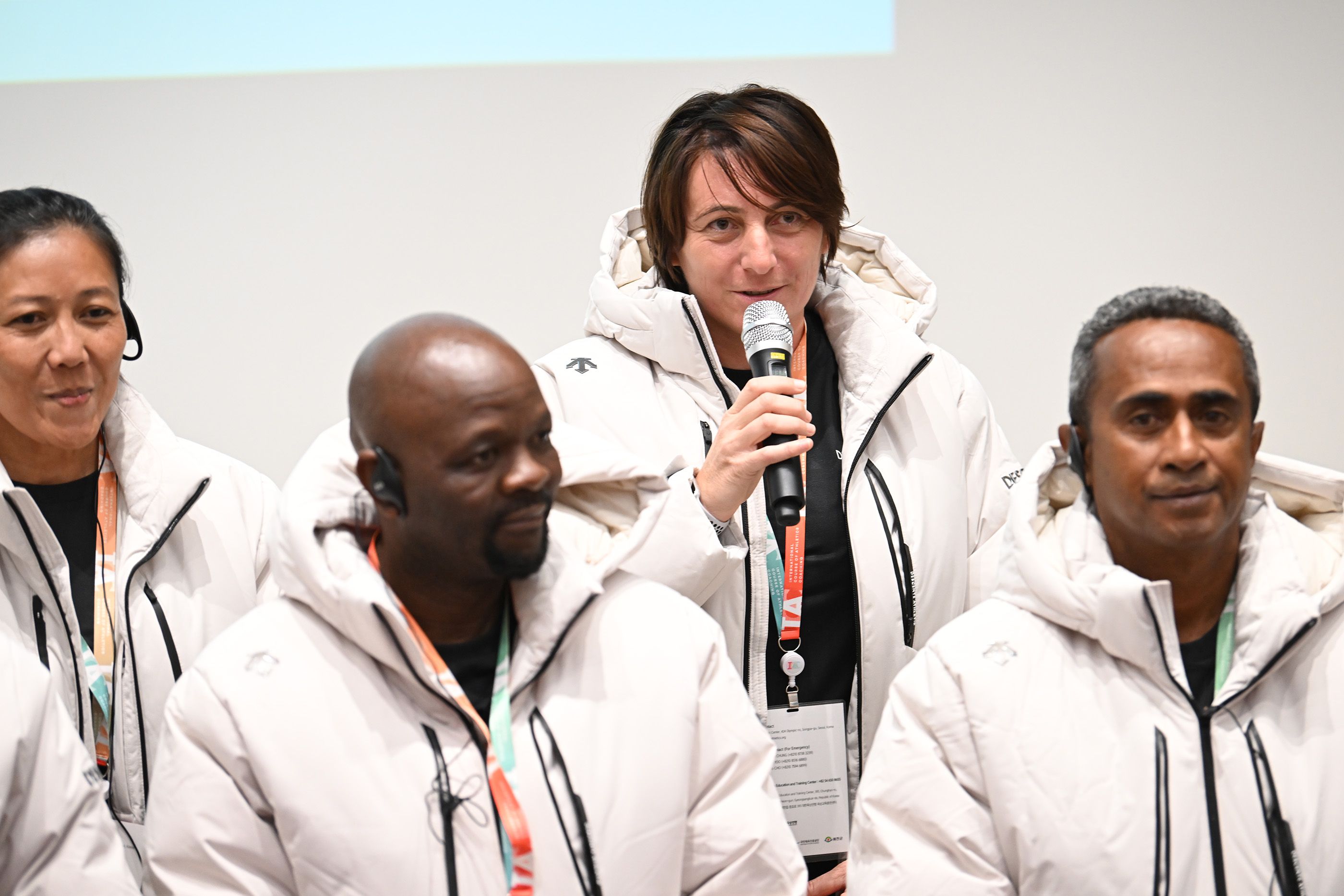
Vahida Kozic speaks during the International Course of Athletics Coaching (ICAC) programme (© ICAC / Korea Association of Athletics Federations (KAAF))
What qualities do you believe are most important for effective leadership in athletics today?
“Integrity and good communication. You can never go wrong in asking more and demanding answers. Everything is evolving, whether it is something we want or not, and so responsibility must prevail. I always look out for new discoveries and methods, especially with rising technology. But other than these technical aspects every leader must hold, we also need empathy and must lead by example.
“No matter how many new athletes and new coaches arise, all of them learn from actions rather than bland words, so we as leaders have to be structured and hold authority in every moment.”
What are some of the barriers that you have encountered as a woman in athletics, and how did you overcome them?
“As a woman, I come across cultural stereotypes in specific regions in Bosnia and Herzegovina. I try not to take any comments personally, but fight them off by working relentlessly and consistently. I have also faced limited resources that made preparation difficult. These things, whether I’m a woman or not, will always occur, but I don’t let it get to me.
“Working independently and professionally, I’m always confident I can overcome these challenges. It's important to establish a strong background, so people know you are not one to be messed with. To show people I can be a true leader, I always stick to my plans and my beliefs without letting any comments or opinions get to me.”
You received the European Athletics Women’s Leadership Award in 2018. What did that recognition mean to you, and how has it influenced your work since?
“Whenever my hard work is recognised, it fills me with confidence and a deep sense of gratefulness. This award in particular is proof that even when coming from a country with minimal resources and support, hard work and relentless trying pays off. Recognition to me is important as a woman, because we try our hardest to just have someone listen to our ideas and to achieve this award truly gives a new meaning to women and leadership.
“Throughout the years, the journey has not become any easier, but still I constantly strive against those odds. My work through different roles brings a deep sense of responsibility, and knowing I will come across obstacles no matter what gives me courage to fight back and give the future generations reason to believe in themselves and their work. This award is truly a goal achieved and a new stepping stone in my work overall.”
Why is mentorship so important for women working in athletics?
“Mentorship, other than teaching you different methods and different understandings, also brings out comfort in women. Having someone who believes in your abilities and supports you gives confidence.
“I was fortunate to have multiple mentors, all who have influenced my career heavily. Guidance is important for women and it is a responsibility that must be carried on. The best way to honour someone's mentoring is to carry that support with you and help others in need.”
Who have been the most influential mentors in your career, and what lessons have stayed with you?
“The two individuals that have helped shape my career are my athletics coach and the university mentor I worked with during my PhD. My university mentor was someone who valued discipline overall and who showed me how to think outside the box in order to understand the core of it.
“My coach was different. He was a committed person who showed me that even in work, consistency will always beat pure talent. This is what built my mental toughness and showed me immense discomfort I had to fight with. Pushing through failure and setbacks made me committed to the game, even when there was no motivation or happiness, just me and my mind. There I found solace in pushing my limits, because I knew success would follow either way.”
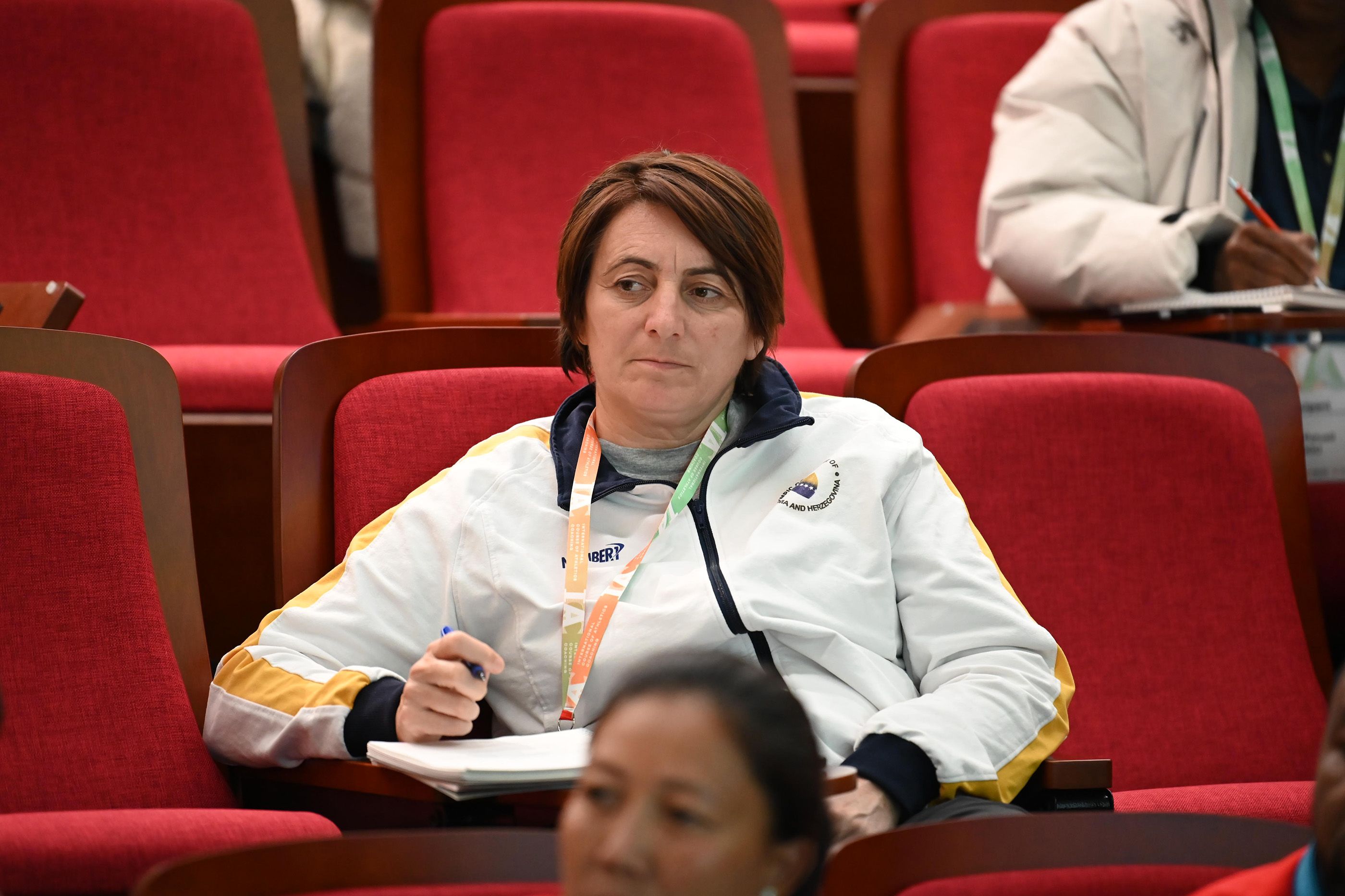
Vahida Kozic during the International Course of Athletics Coaching (ICAC) programme (© ICAC / Korea Association of Athletics Federations (KAAF))
As someone who now mentors others, what qualities do you try to instil in the next generation of women coaches and leaders?
“Be curious. Showing interest is the finest quality for a woman interested in coaching and leading. Having an immense drive to ask questions opens up endless opportunities to achieve valuable knowledge. From curiosity it would be fairly easy to gain competence and soon enough confidence, which is what I believe something every woman needs. Coming across high pressure and setbacks, I always want to instil resilience in young women.
“But mostly in athletics, success is what you build deep down. We should also develop empathy so that we can see our athletes on a more personal level and further help them see their true potential.”
Where do you see the biggest opportunities to advance gender equity in athletics over the next few years?
“To advance gender equity, evaluation of any past strategies is a must, so we can see what current demands should be. In reality, these things are not just numbers on paper. The biggest opportunities lie in transforming initiatives into permanent and stable structures. This requires a foundation of true competence that supports creating transparent pipelines and truly ensures women have equal access to high-performance roles. Elevating these ideas will show a greater picture of women as strong and competent leaders. I see these opportunities in education and proving that careers in sports leadership are possible and within reach.”
You were previously a national coordinator for the Kids’ Athletics programme in Bosnia and Herzegovina. What does grassroots development mean to you, and why is it so important?
“Grassroots athletics is a foundation for everything we built towards the elite level. While it is known that only a small percentage of the children in the Kids’ Athletics programme will become elite athletes, our primary goal is to implement a positive lifelong relationship between kids and sports.
“This programme represents an opportunity. It's an absolute must for the entire athletics system, for kids to be able to engage in physical activity. It serves as a talent pathway, finding future coaches, volunteers and leaders. It really represents the vital foundation for the sport’s infrastructure.”
How can federations create clearer pathways for young athletes, coaches and volunteers to stay involved in the sport?
“This is a very tricky question. I cannot help but be reminded of the limited resources we have in our federation. But, in my humble opinion, the most important step is to first design a career-changing guide that will help lead athletes and inspire them to be coaches, or be involved in officiating and sport managing.
“One of the most helpful ways of establishing this is by active networking. Everybody seems to be on their phones these days, so why not pair retired athletes with years of experience inside the sport so they can be mentored in the most direct way possible, online or in person.
“Other than that, another good option is giving people small volunteering roles, like helping during competitions or any events. This can also involve young people to stay connected to the sport.”
As part of the International Course of Athletics Coaching (ICAC) programme, you recently did your World Athletics CECS Level 3 qualification in South Korea. How has the course helped you grow – not only as a coach, but also as a leader and educator?
“When I attended the World Athletics CECS Level 3 course in South Korea, I was honoured, because it was a one-of-a-kind opportunity where I could reflect on my coaching tactics while simultaneously gaining insight into elite-level demands of today's world.
“As a coach, this event helped with my confidence and further helped sharpen my skills in planning and managing responsibilities. As a fellow educator, I feel like the vision I have for the future in my career, coaching and leadership is much clearer.”
Why do you think it’s important for other coaches, especially women, to take advantage of World Athletics’ coaching education and eLearning opportunities?
“Women in World Athletics programmes constantly upgrade in terms of teaching methods and offer new skills, which is essential for any woman starting out. Having women coaches is a great way of achieving a greater insight into a woman's physiological and emotional struggles and changes. With this, we can better understand our athletes and let them know they can be comfortable and open with us about their needs and health challenges.
“Different eLearning opportunities provide perfect solutions which allow a quality education. The more a women's coach is confident in understanding their athletes the better progress the athlete will achieve. Whether it is coaching, administration or technical organisation, eLearning gives you an opportunity to develop on a global level and be a part of a larger system.”
Nicole Montello for the World Athletics Media Academy
World Athletics is calling on Member Federations, Area Associations, coaches, technical officials, administrators, athletes and partners worldwide to commit their time, resources and support to mentor young girls and women in athletics as a commitment to help close the gender gap. Learn more on the Women in Athletics website.