

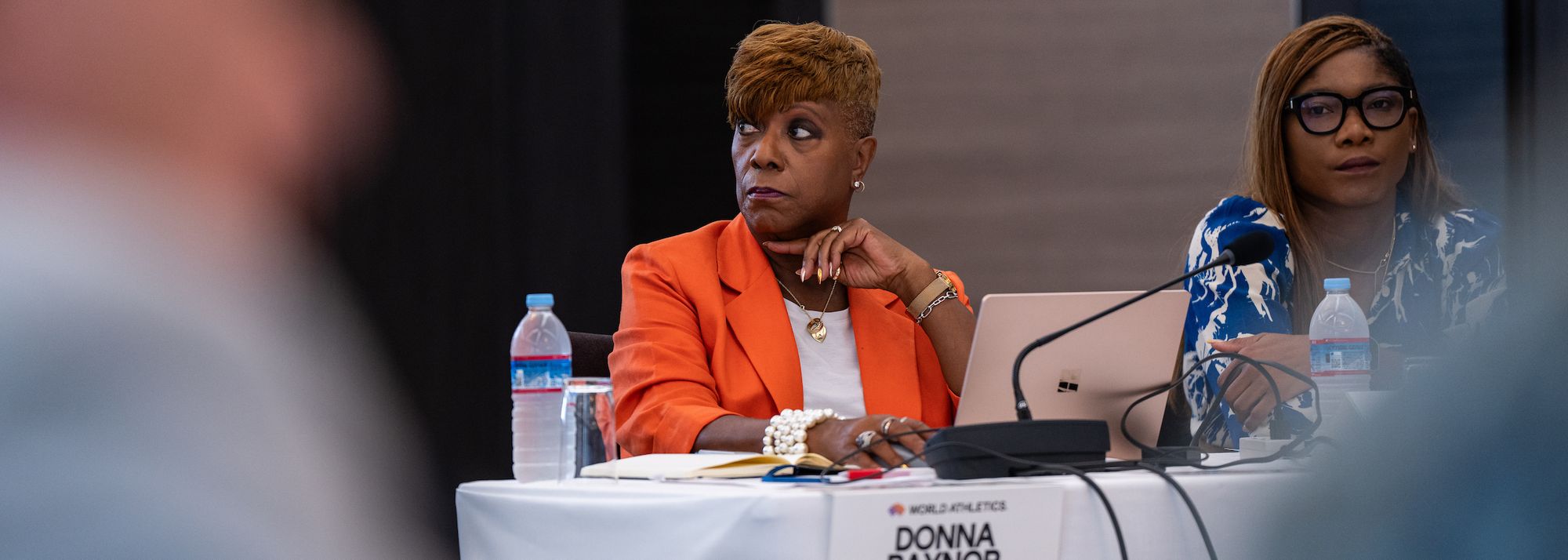


World Athletics Council Member Donna Raynor (© World Athletics  Christel Saneh)
Donna Raynor has dedicated decades of her life to leadership and service in athletics. She is a former president of the Bermuda National Athletics Association and is now a World Athletics Council Member. Through her work with World Athletics’ Gender Leadership Taskforce and as Chair of the NACAC Gender Leadership Committee, she continues to advocate for greater representation of women in sport.
Raynor recently reflected on the experiences that have shaped her journey, the barriers she has had to overcome, and why supporting the next generation of women leaders in athletics matters now more than ever.
You have spent decades in athletics administration and leadership. What first inspired you to pursue a career in this space?
"I have been involved in athletics since the age of 14. After earning a track scholarship, returning to Bermuda and representing the country in competition, I became increasingly aware that our athletics programme was beginning to decline. Determined to contribute to its revival, I chose to become involved from an administrative standpoint. I subsequently ran for the position of President and served in that role for 12 years, during which I worked to restore and strengthen the programme. Having stepped down, I felt a strong desire to contribute at the international level and therefore pursued a position on the World Athletics Council, following my service on NACAC committees and World Athletics commissions."
Looking back on your journey, which experiences or moments shaped you most as a leader?
"Building a strong team, cultivating meaningful relationships within my community – particularly with the media – earning the respect of those around me, and supporting Bermudian athletes in achieving their goals are all matters of deep importance to me. These principles play a significant role in shaping my leadership and informing the manner in which I serve others."
What barriers did you encounter as a woman rising through sports governance, and how did you overcome them?
"As a woman, I often felt that I had to work much harder to earn respect, be taken seriously, and prove myself. I put myself forward for several board positions, including our national organising committee, and I was never afraid to share my opinions during meetings. I also submitted ideas and led committees to demonstrate that I had a great deal to contribute and that I was knowledgeable. There were times when I had to make a deliberate effort to ensure that my voice was heard. I faced similar challenges in my professional life, so I brought that same determination into sport – pushing hard to make sure my voice was heard, respected and valued."
Was there a defining moment when you realised your voice and influence could help create opportunities and change for other women in sport?
"Fortunately, most of my team has been women, and throughout my career I have made it a priority to help women develop their skills because I have always believed that is important. As I mentioned earlier, women often have to give more than 100% to prove themselves. Having held leadership roles in both my professional life and athletics, and having faced many challenges myself, I wanted to make the path easier for other women by sharing my experiences and how I overcame those obstacles."
What qualities or perspectives do you believe women uniquely bring to leadership and decision-making in athletics and sport more broadly?
"I believe women bring strong organisation, critical thinking, commitment and a strong work ethic to leadership. Because women often have to work harder to earn respect, we learn to show up consistently, be well prepared and understand the issues thoroughly. We know we may be judged more closely, so we make sure we are ready and informed."
World Athletics has taken significant steps toward advancing gender equality in recent years. As a Council Member, how important is diverse representation at leadership level in driving meaningful change?
"Diversity is essential in an international body that makes decisions for our sport. It is important to hear a range of perspectives shaped by different experiences, including those of women, smaller countries and different cultures. As we often say, one size does not fit all, so major decisions affecting athletics worldwide must include all of those voices."
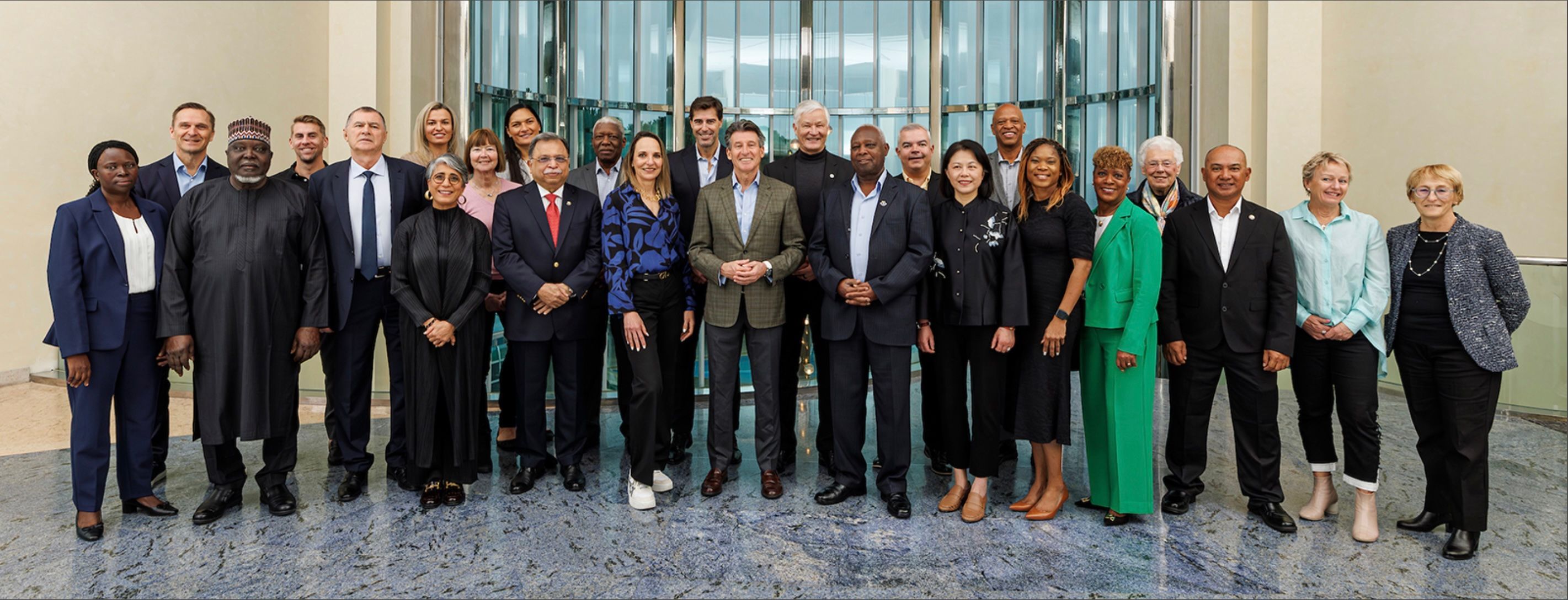
Donna Raynor on the World Athletics Council
Mentorship has become an important part of the conversation around gender equality in sport. Why do you believe mentoring women and young girls in athletics is especially important right now?
"Mentoring women and girls in sport is especially important because leadership needs a range of perspectives at the table. We must help women be ready not just to take a seat in boardrooms, but to influence decisions and make their voices heard. Many women hesitate to pursue these roles because they doubt themselves, so mentorship is essential in showing them what is possible, creating a path forward and helping them overcome barriers others have already faced. It also provides vital support through difficult moments, especially for women balancing multiple responsibilities. Seeing other women who have succeeded and broken through those barriers makes those opportunities feel real and achievable."
Why is mentorship particularly valuable for women aspiring to leadership positions in sport?
"Mentorship is especially valuable because many women doubt themselves and need consistent encouragement to believe that leadership is possible, even though the path is not easy. It helps build confidence, but for it to be effective, the support must be ongoing and the mentor must be available and maintain strong communication."
Have you had a mentor – male or female – who had an impact on your own career and leadership journey?
All of my mentors have been men, which is one reason I feel strongly about mentoring women and sharing experiences that can help them progress. I am grateful for my male mentors because they understood leadership, had mastered it, and taught me how to pursue it. Their belief in me helped strengthen my own confidence, pushed me to step forward and speak up, and made them true advocates for me when opportunities arose. They made sure my name was put forward and that I was ready when those opportunities came. As I said earlier, as a woman you have to be more than 100% prepared."
What advice would you give to young women who aspire to lead in athletics or the wider sporting world?
"My advice is simple: never doubt yourself and never give up. Be prepared – indeed, overprepared – because some people may expect you to fail. When you are unsure, do not hesitate to ask for support. I have seen many women step back when competing against men for leadership roles, but I always remind those I mentor that there are only two outcomes: success or a lesson. If you fail, learn from it and come back stronger. If you succeed, be ready for the opportunity and the scrutiny that may come with it. The road will not be easy, but stay true to what you know and do not let anyone discourage you."
Following the launch of World Athletics' mentorship campaign earlier this year, why would you encourage global stakeholders to pledge their time and expertise to mentor women and girls across all areas of the sport?
"It is important that we continue to mentor women and girls, because gender equality matters and women bring valuable perspectives and energy to the table. The world has moved forward in leaps and bounds, and we must ensure that progress continues. When we reflect on what was achieved in the last World Athletics election (achieving gender equality at the global leadership level of the World Athletics Council – the first Olympic sport to do so), we should be determined not to lose that momentum. In my role on the Council, I value the discussions we have and appreciate seeing women stand up for what they believe in, bringing strong voices to the table. We need to keep moving in that direction, and the best way to do so is by mentoring women so they are prepared for these positions. Our goal should be to have strong women at the table, not women who are there simply to fulfil a quota."
Finally, when people reflect on your contribution to athletics years from now, what do you hope they say about your impact and legacy?
"My hope is that I will be remembered as a positive influence on the sport of athletics. I hope to be recognised for contributing to the growth of the sport within my country, fostering strong and constructive relationships, and making a meaningful impact on both female and male athletes. Many of the athletes who competed during my tenure as President continue to reach out to me for guidance and support, which I consider deeply meaningful. Ultimately, I hope to be regarded as a strong and effective leader who helped athletes achieve their goals, both during their competitive careers and in their lives beyond athletics.
"As Chair of the NACAC Gender Leadership Committee, I hope to be recognised as someone who has encouraged women in our region – and, ideally, around the world – to pursue opportunities with confidence and present themselves with purpose. I have worked to support women aspiring to serve as administrators, coaches and officials by helping them prepare thoroughly for these roles. I have taken the time to discuss opportunities with them, assist in their professional preparation, and provide guidance throughout the process. Equally as important, I hope they know that even after achieving these positions, they can continue to seek my support without hesitation.
"I have reached goals many only dream of – becoming President of my Member Federation and serving as a World Athletics Council Member – and in doing so, I’ve proven that it can be done. Now, I want to inspire others by sharing my journey, showing them that no dream is too big and no goal is beyond reach."
World Athletics is calling on Member Federations, Area Associations, coaches, technical officials, administrators, athletes and partners worldwide to commit their time, resources and support to mentor young girls and women in athletics as a commitment to help close the gender gap.
Learn more on the Women in Athletics website