

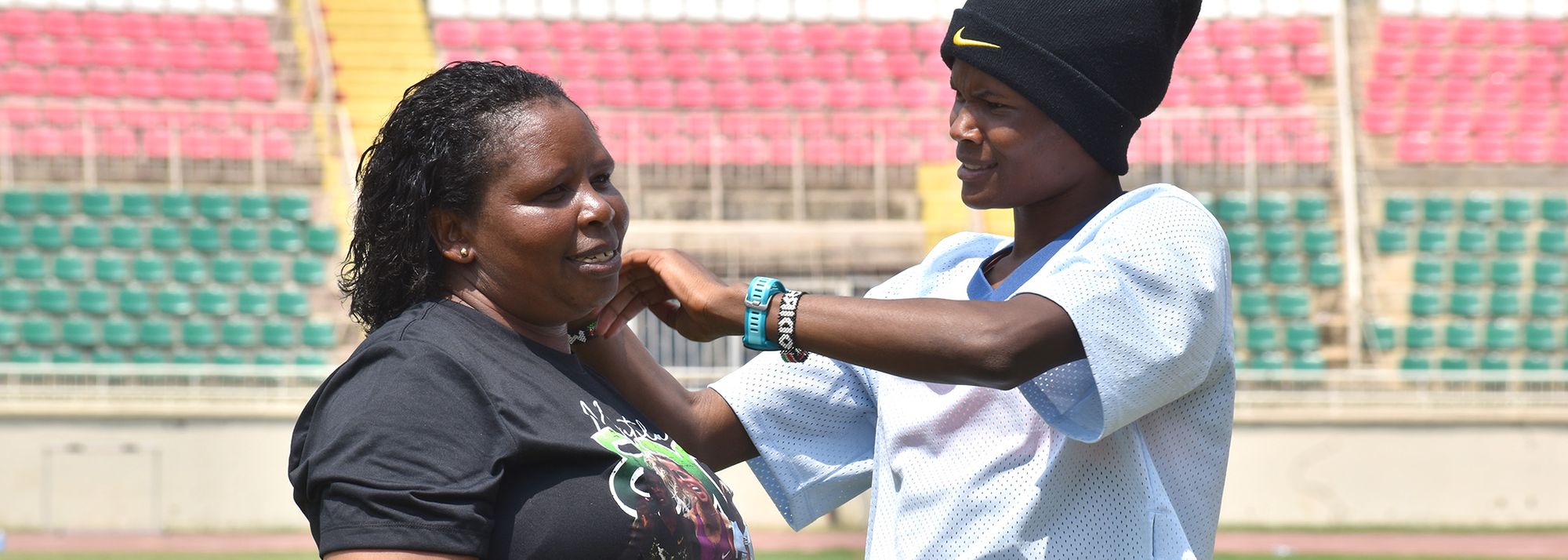


Lilian Odira with her coach, Jacinta Muraguri
With a focus on coaching, officiating and leadership opportunities, Athletics Kenya is working to close the gender gap by making greater inclusion of women a priority.
The initiative aligns with the World Athletics Gender Leadership Strategy, which sets a target for member federations to have a minimum of 40% female representation on their executive boards by 2029.
World Athletics has also set a target of at least 40% female representation among CECS Level 1 coaches by 2029, with an interim target of 35% by 2027.
“When we look at what World Athletics is doing, we do not want to be left behind,” said Athletics Kenya chief administrative officer Susan Kamau, who is also chair of athlete support personnel.
“We also looked at the goal of creating an environment for women so that they can be fully represented in athletics. Looking long term, we expect that this will inspire many girls.”
Athletics Kenya has already taken steps towards those targets. In October last year, the federation trained 44 women from its affiliated regions on a CECS Level 1 course delivered by the African Athletics Development Centre (AADC).
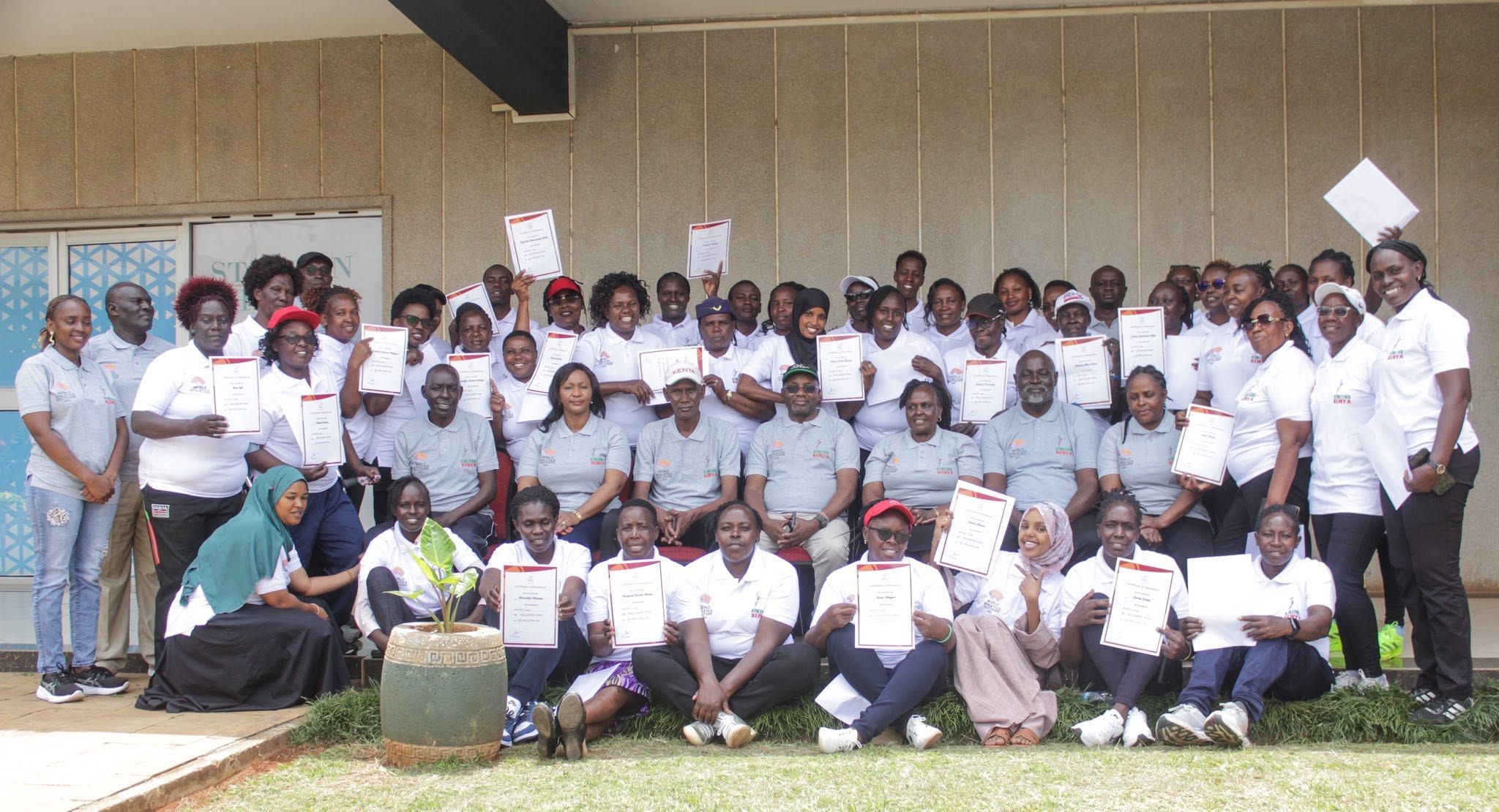
The Athletics Kenya coaching course
The programme was also open to affiliated institutions including the Kenya Defence Forces, National Police Service, Kenya Prisons, National Youth Service, Kenya Forest Service and Kenyan universities.
One of the participants was Jane Kiende, a teacher at DEB Kioru Primary and Junior School in Meru County, about 225km north-east of Nairobi. Kiende, who competed as a race walker in her younger days, is also in charge of sport and coaches at the school.
Through her work, she has seen the gender disparity in coaching first hand.
“I looked at the field and saw more men than women. I thought, how can we fill these gaps in coaching?” said Kiende. “Therefore, I had that interest to know more about coaching.”
Kiende also completed the World Athletics Gender Leadership online course in June.
The in-person World Athletics CECS Level 1 course covered areas including effective communication, mental skills, coaching philosophy, training principles, talent identification, athlete and coach welfare, athlete growth and development, and the planning of training and competitions.
Before the coaching programme, participants also completed mandatory online safeguarding training.
For Kiende, that training led to another opportunity. She was selected to serve as safeguarding officer and a coach for the Kenyan team at the African Championships in Accra, Ghana, in May.
“I was able to interact with the athletes, understand them, know their challenges, strengths and weaknesses. I was able to exercise skills such as team spirit, good communication, openness and cooperation,” said Kiende, who coaches several athletes and also works as a technical official.
“It was an eye-opener,” she added of her time in Accra. “The experience improved my skills and gave me more knowledge. Now I understand the athletes very well.”
Female coaches do matter
World 800m champion Lilian Odira is a strong supporter of the Athletics Kenya and World Athletics efforts to increase female representation in coaching.
Odira herself is coached by a woman, Jacinta Muraguri, and points to the importance of female coaches and mentors across the sport, including those working with athletes such as Agnes Ngetich and Audrey Werro.
“I love being coached by a woman because she understands more about me as Odira, that I'm a mother just like she is,” said Odira. “She knows what I go through when it comes to sports. When I come to explain it to her, she understands more than maybe when I explain it to a male coach.”
Muraguri welcomed the World Athletics target for greater female representation in coaching, adding that female coaches can offer particular insight into issues affecting women athletes, including reproductive health.
“It is very encouraging and it is high time ladies came up because who will fill this 40% if we are not there?” she asked.
Muraguri herself was a two-time national champion and has been coaching for several years.
Beyond coaching
Athletics Kenya, which has five women on its Executive Committee, is also pushing for greater gender balance in technical officiating, team management, physiotherapy, leadership, medical and safeguarding roles, as well as mentorship and training through the AADC.
“That is one area that the Executive Committee has taken a bold step in, to say that we are going to include it in our budget when we are drawing the budgets at the beginning of the year,” said Kamau.
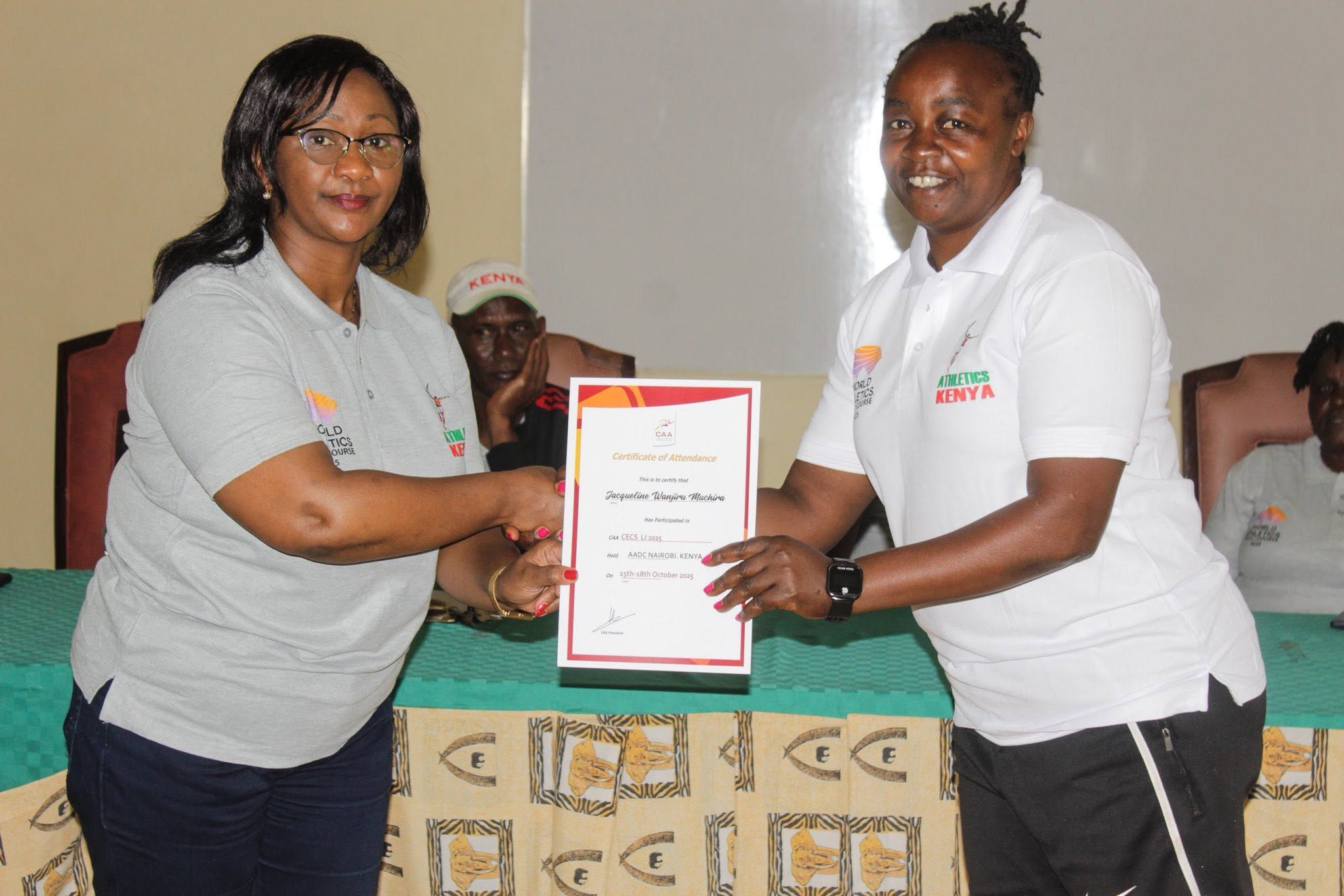
Susan Kamau presents Jacqueline Wanjiru Muchira with her coaching certificate
Kamau also highlighted efforts to give women greater responsibility within Kenyan teams, with women taking on leadership and support roles at major championships.
“This has really helped us because the athletes are supported through this transition, when they stop running,” she said.
Kamau singled out retired athletes Milcah Chemos, Janeth Jepkosgei and Rose Tata Muia among the women continuing to make an impact in athletics.
Athletics Kenya has also embarked on the registration and validation of coaches, medical personnel and technical officials under the government-funded Enhanced Programme, working alongside the Anti-Doping Agency of Kenya (ADAK) and the Ministry of Sports.
According to Kamau, there are currently 200 registered female coaches, with about 30 having been vetted and validated to a level that makes them eligible for selection as officials or coaches for senior national teams.
“We are happy because we have seen women are not sitting back,” she said.
Those who did not meet the required standard have been encouraged to repeat the process and undergo further assessment.
Looking to the future
Athletics Kenya also acknowledges the wider challenges facing women seeking to progress in the sport, including cultural stereotypes, family responsibilities, financial constraints and limited mentorship opportunities.
“We are encouraging the women not to look at what the culture says about women. Do not sit back,” said Kamau. “We have administration, technical and coaching courses that you can take.”
Odira agrees, adding that perceptions of female coaches also need to change.
“We should change the narrative that it is only the male coaches who are capable of doing it. Female coaches have also done excellent work,” she said.
“We've changed the sport narrative. People back then thought that women could not do well in sports but now the narrative has changed. When you look at the Kenya team, it is now the women who are performing.”
Rather than simply rushing to train more coaches this year, Athletics Kenya is monitoring and evaluating the progress of the 44 women who completed the programme last year.
For Kiende, the coaching journey continues with her athletes and at Athletics Kenya camps. She is also working to involve more sports teachers in her county and encourage more women to take up coaching.
Closing the gender gap will take time, but Athletics Kenya hopes that each new coach, official and leader will help create more opportunities for the women who follow.
Michelle Katami for World Athletics